Archive for the ‘Books’ Category
“Changing Faces,” the Fall Book Fair, and Transgender Men…
Recently, at the Washington Post, I read an article about how transgender men have seen differences in how they are treated based on their outward appearance. Born in a woman’s body, and then becoming the male they feel themselves to be inside, causes them to see the world in a completely different way than others.
When I read this, it reminded me of my character Elaine Foster from CHANGING FACES.
Why? Well, here’s a quote from that article.
From Zander Keig, a trans man from San Diego:
Prior to my transition, I was an outspoken radical feminist. I spoke up often, loudly and with confidence. I was encouraged to speak up. I was given awards for my efforts, literally — it was like, “Oh, yeah, speak up, speak out.” When I speak up now, I am often given the direct or indirect message that I am “mansplaining,” “taking up too much space” or “asserting my white male heterosexual privilege.” Never mind that I am a first-generation Mexican American, a transsexual man, and married to the same woman I was with prior to my transition.
So, you’re the same person. You have only changed how you look, outwardly. And now, you’re accused of “mansplaining.” Or worse, “asserting (your) white male heterosexual privilege,” even when you aren’t anything of the sort (as Zander isn’t).
And Alex Poon (only 26 to Zander’s 52) says in this same article:
My voice has started cracking and becoming lower. Recently, I’ve been noticing the difference between being perceived as a woman versus being perceived as a man. I’ve been wondering how I can strike the right balance between remembering how it feels to be silenced and talked over with the privileges that come along with being perceived as a man. Now, when I lead meetings, I purposefully create pauses and moments where I try to draw others into the conversation and make space for everyone to contribute and ask questions.
What Alex seems to be doing is trying to strike a happy medium, but admits there are privileges here and that he’s not used to them.
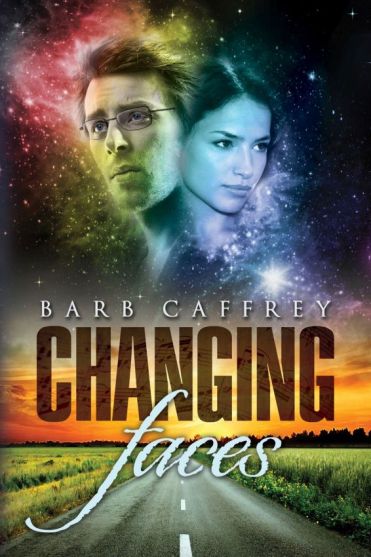 How does this relate to my novel CHANGING FACES? Well, Elaine is transgender because she’s always felt wrong in her body. And yet, she’s also gender-fluid, so if she became male, what would happen to her? Would it be easier, harder, or what? And how would you be the same person — as you are the same soul — in a different body?
The way I solved this (and created more problems) was to put Elaine and her heterosexual boyfriend Allen in each other’s bodies due to a car accident. Now they’re both transgender, but as Elaine was deeply damaged due to early abuse and rape before she ever met Allen, she’s in a coma, talking with a higher being who may as well be an angel. (This being, Moe, is neither male nor female, and comes from a long line of Amorphous Masses. So Moe can be anything Moe wants to be…more or less.)
This article in the Post reminded me that the person you are stays, regardless of how you are perceived. But that perception of who you are can change everything for you on the outside…and that can be a gift, or a curse, depending. (One of the other men, who’s African-American, has said it’s much harder to be a man in some ways than a woman, due to how African-American men are treated by the police.)
I had an interesting time with Allen, once he ended up in Elaine’s body. He still wanted to be with Elaine, no matter what body she was in (providing she wakes up from the coma, of course). But being seen as a beautiful woman rather than a geeky heterosexual male was a real problem for him; he’d never had to worry before about half the things he now must, and it all but precipitates a nervous breakdown in the poor man.
My hope in writing CHANGING FACES was that people would maybe understand each other a little better after reading this. But I especially hoped, as a woman, that other women would read about Allen’s struggles and feel his plight…and be able to put themselves in Allen’s shoes. (That I hoped a few would do this for poor Elaine, too, was a given. But don’t forget about Allen, as they come as a set.)
Yesterday, Viviana MacKade’s Fall Book Fair (which I’ve talked about all week) finished up with several young adult and new adult books, including CHANGING FACES (which counts as new adult as we’re dealing with college students). All of them are ninety-nine cent e-books. And at least one of them may tickle your fancy, even if my own quirky take on LGBTQ relationships does not.
(Though I hope it’ll do some good for someone out there. Or I’d not have written it at all.)
So do take in the Fall Book Fair, even though it’s now — technically, at least — over. The post is still there. The books are still there. And there are fifty books from the entirety of the week to choose from, all priced at just ninety-nine cents.
More Books at the Fall Book Fair…
Folks, as promised, I’m here to let you know about some more books at Viviana MacKade’s Fall Book Fair online event…all of them are e-books priced at ninety-nine cents, and all are interesting reads. (I’ve read all the promos and have read a few of the books, and may be picking up a whole bunch of others. They just look that good.)
Along with my own AN ELFY ON THE LOOSE (which was featured today), my friend Kayelle Allen’s THE LAST VHALGENN was also featured. While I’ve often edited for Kayelle, this story predates me knowing her, much less editing for her — so I can tell you without any prejudice whatsoever that it’s a cracking good story.
 See, Kayelle’s character Raik is a type of supremely loyal woman we rarely see in any stories these days. She’s not perfect, no, but she’s sexy as Hell, smart, funny in her way, loyal to a fault, and because she is a Vhalgenn — a type of super-courtesan for the highest nobles in the land, and completely unable to have children (so no bastards can be sired upon her, meaning most noble wives would probably not mind her as much as they’d mind other mistresses), she has a unique role to play.
And when she’s placed in an impossible position, what will she choose to do? (Because I want you to go to Viviana’s page, I am going to stop right there with my plot summary.)
When I read THE LAST VHALGENN a few years ago, I sat up and went, “Wow. That’s my type of woman!”
And it’s one reason why, when I had the opportunity to talk about one of my friend Jason Cordova’s books earlier this year, I also talked about one of Kayelle’s — because there’s something there that I’ve seen from both of them that I don’t get in a lot of other places. The military detailing is exceptional, and the characterization is so good, the characters almost jump off the page. They are both Navy veterans, too, and I think that makes a big difference when it comes to authenticity. (The rest of us, who aren’t, have to work that much harder…but I digress.)
That’s why my hope was that folks who like Jason’s work but had never heard of Kayelle would go take a look at her books, most especially the two novels about Pietas (a man who you shouldn’t like, considering his violent and extremely difficult and sometimes distasteful attributes, but you can’t help but like anyway — and ultimately, come to admire). I saw a lot about BRINGER OF CHAOS: The Origin of Pietas that I thought Jason’s readers, especially those who adored the three Wraithkin books, would appreciate…maybe down the line more folks will make those cross-connections, but at least I have it out there that if you like one of these writers and their military-themed work (and yes, THE LAST VHALGENN has a military element, too, as she’s not just a courtesan; she’s also a fully trained fighter and tactician and military strategist), you will probably like the other.
 In addition to Kayelle’s excellent work, my own AN ELFY ON THE LOOSE is also featured today. It is a funny fantasy that Jason (in a quote given to me for promotional purposes) said was “quick and witty” and “straddles the line between absurdity and suspense.” (When he gave me that quote, I said, “Thank you!”) And Viviana MacKade saw that, made up a nifty little graphic with that quote, and credits Jason for it (as she should).
How did she know about this? Probably because she read the quotes I had for AN ELFY ON THE LOOSE either at my blog or at my Amazon page, and liked Jason’s the best…and as Jason’s own profile has risen in the last few years, it probably can’t hurt me any that she picked his quote. (I hope it helps. I’d like people to actually read what I’m writing, now and again. Gives me hope that they might want to see some sequels or prequels down the line, as I had a whole lot of ’em plotted out at one time.)
So, if you haven’t read AN ELFY ON THE LOOSE yet, please go take a look at it.
And of course keep an eye on Viviana MacKade’s book fair, as there’s still a few more days to go…lots of great e-books, all priced at just ninety-nine cents! (How can you go wrong?)
It’s Fall Book Fair Time…
Folks, over at Viviana Mackade’s blog this week, she’ll be featuring all sorts of books that are on sale right now (as e-books) for ninety-nine cents. And the first set of authors are up now — ten books, ten authors — so I figured I’d write a little bloglet and let you know this is going on.
Note that later this week, my booksAN ELFY ON THE LOOSE and CHANGING FACES will be part of the fair…so I will be promoting this book fair, and I hope you will check it out also.
Now, back to your regular programming, already in progress…
Fighting Disappointment, and Moving On…
Folks, I’ve written about disappointment before. (Many times, in fact, with my most recent example being here.) But it seems to be a good time to write about it again, and I have a different take on it…so why not?
I have known some other authors besides myself to have intense struggles getting their work before the public. They’ve put their books out there, and gotten no response at all. They’ve slaved over their creations, taken care of the edits, the book covers, tried to get reviewers interested, all that…and still, nothing happened.
Some of success is being in the right place at the right time. I know one author rather well — Loren K. Jones — who put out several novels in late 2009 and early 2010. None of them did much. He was, I believe, extremely frustrated at the time, and thought no one cared about his writing.
Fast-forward to 2018.
Now, Loren has a thriving career as a novelist. He has ten books out, with more on the way. His six books in the “Stavin DragonBlessed” series did exceptionally well, and put him on the map as a fantasy novelist. (Don’t believe me? Go read ALL THAT GLITTERS for yourself; it’s only ninety-nine cents for the e-book version.)
Loren’s not the only one I know who’s had this sort of thing happen, but he’s possibly the best example right now.
So why am I talking about him, when the theme is disappointment? Well, sometimes you have to learn how to roll with the punches, keep your chin up, and keep trying.
That is what Loren did.
It’s what I’m trying to do, too.
Do your best to fight on, no matter what odds you face. Believe in yourself, and your dreams. Work hard, learn much, and keep fighting.
Sometimes, that is literally all you can do. (Because you can’t control the market. You can only control yourself.)
August #MFRWhooks, Elfy Style!
Folks, it’s been a while since I did anything to remind you of my books, so I decided I’d start talking about them again.
So yes, this is a Marketing for Romance Writers BookHooks post, otherwise shortened to #MFRWhooks…and yes, it’s done Elfy style! (What could be better?) As this is a blog-hop, I’ll be posting links to other writers and their work below, and hope you’ll go check them out, too.

The first one I decided to highlight is A LITTLE ELFY IN BIG TROUBLE, and what better way to go than to show my hero and heroine’s first kiss?
“Tomorrow is Ba’altinne, Sarah.” Bruno rubbed his fingers through his hair and tried not to look too hard at Sarah. Goddess, she was beautiful. But he had to stay on topic. “That’s your May Day. Tomorrow.” He shook his head and tried not to frown. “How can we get everything together in time to stop this nasty Dark Elf?”
“I have faith in you,” she said. Her eyes darkened. Bruno felt as if he were falling, before she gently brushed her lips against his. Before he got a chance to do anything except feel how soft her lips were, she drew back. “I–didn’t intend to do that, Bruno,” she said, sounding shaken. “Why did I?”
“I liked it,” he admitted. “If we had more time, I’d try to start it.” Then, getting his mind ruthlessly back on track, he said, “What are we going to do, though, in only one day?”
“The best we can,” she said.
Be sure to check out Sarah Birch’s bucket list as well, as that was one of my favorite guest blogs, written for Kayelle Allen’s Romance Lives Forever blog.
Read A LITTLE ELFY IN BIG TROUBLE at Amazon, at Barnes and Noble, or if you want to try more before you buy, here’s a link to some sample chapters. Enjoy!
And do remember to check out my BookHooks compatriots; go here to check them out, or follow the list below!
Timing, and Jason Cordova’s DARKLING
I read Jason Cordova’s hotly awaited new novel, DARKLING, over the course of three weeks. (Normally I would’ve devoured it in one sitting, but the fact that I had a crisis going on with a family member’s health made me put it to the side for a time.) It is absorbing, intelligent, fast-paced, dark, depressing, menacing, and in its way a damned good read — but the timing of my life and reading this book were not fully aligned.

I submitted a review to Amazon, as per usual, but because I am much more scattered/distracted than usual, I didn’t make a copy of it before I left their page. (Edited to add: After waiting for nearly a full day, I gave up and reviewed the book at Goodreads.) Because of that, I can’t quote the review I’ve already written; all I can do is tell you to go read DARKLING, as it’s very good dark military SF with some absorbing political machinations. (Yes, you should read WRAITHKIN, the first book of Jason’s “Kin Wars” series, first. But you’ll easily understand DARKLING whether you do or not, providing you’ve read any military SF or dark SF at all.)
The rest of this blog is going to talk about aspects of the book that were tough for me to handle, due to the timing. If you don’t want your reading spoiled (though I will try to avoid the worst of spoilers), go do something else and return for the next blog, will you? (I won’t be offended. Promise.)
We have three brothers in DARKLING: Gabriel Espinoza, a Darkling soldier and second-class citizen dealing with dehumanizing treatment due to all soldiers of this type being recruited from the Imperfect class (meaning they could develop cancer, or have some other “genetic defect” that’s been rooted out by the galactic civilization they live in); Andrew Espinoza, a spy (a damned good one) who’s acted in many regards as a chameleon mole; Kevin Espinoza, a politician and born diplomat. Gabriel is a brooding hot mess from an emotional standpoint (it’s understandable, though; the love of his life is dead, he had to give up his daughter due to his line of work and because he didn’t want her tainted by the knowledge of his “imperfect” father, and he’s cut off from his family due to various considerations, even though his family wanted nothing of the sort. I can’t explain this fully because of spoilers, and also because much of it is explained at the very end of WRAITHKIN as I have written before, so I hope you can take this as read.) Andrew, as a chameleon mole, has other issues with trying to maintain his inner self, and also has been cut off from his family due to completely other concerns (again, his family certainly doesn’t want this, but with his job, there’s no other way). And finally, Kevin is a good guy, the only brother attuned to his emotions and fighting hard for the Imperfects as he views his society as closed-minded and hypocritical (and rightfully so). But he’s mostly there as a foil, to explain what the other two brothers should’ve been if not for the circumstances that led them to fight a war in their disparate ways…and that’s a conscious author’s decision that I can’t fault Jason for, as he needed that foil desperately due to the darkness of everything else.
Now, as to the circumstances of my life, and how it applies to how I saw DARKLING.
First, I was reading along, and enjoying the book immensely despite its darkness. (I knew what I was getting in for, as I read and enjoyed WRAITHKIN, and I really wanted to see what would happen next to the Espinoza clan.) Then, my family member’s health crisis arose, and suddenly the world stopped meaning much. I had to put DARKLING down, and deal with immediate realities; my blogs dried up for a bit (which I’ve already explained); I went to “work, sleep, go to hospital/rehab center” mode, rinse and repeat.
Finally, I was able to get back to DARKLING and realized two things; one, I hadn’t forgotten anything in the intervening time since I’d last been able to read and concentrate on anything. (This is the sign of a good writing and an absorbing read, that you don’t forget anything even in the midst of a crisis like this.) And two, the fact that these brothers are put through the emotional and physical wringer was all of a sudden more visceral, more immediate, than before, due to the circumstances of what was going on all around me.
See, writers are observers by nature. We have to be, or we can’t explain or show any of the stories we tell with any verisimilitude at all.
So, I was observing everything that happened around me, as per usual, whether I was picking up on that observation consciously or not. And all of that — all — hit me as I restarted my read of DARKLING. The injuries these men suffered were almost overpowering in their intensity, in this context, and it was difficult for me to keep reading despite the quality of the writing. (Jason keeps getting better and better, and tells a damned absorbing story, as I have said before.)
To my mind, DEVASTATOR is more my cup of tea (as I wrote here). I like Tori so much as a character, and her relationship with Dylan (the shy, almost innocent love she has for him) helps to enliven even the darkest of moments.
But DARKLING is quite good. Quite, quite good, in fact.
I just had a hard time reading it due to what’s been going on. So I tried to say that, without getting into personal details, in the review at Amazon (that still isn’t up as I type this, though if it does go up anytime soon I’ll add a link to the review so you can read it directly).
I do think Jason’s created a new genre, or at least fused a few, in DARKLING. I call this “grim-dark military SF.” (If you read it, you’ll understand why.) There is a palpable sense of menace in even its quieter moments; everyone is on edge, everyone is waiting for the next shoe to drop (or axe to fall, depending), and Gabriel in particular seems like a bomb waiting for a place to go off.
The writing is stellar, though, and if you know going in — as you should, providing you’ve read WRAITHKIN — that it’s going to be grim, you should be able to handle DARKLING just fine.
Just don’t read it before going to sleep if you have a weak stomach or are prone to nightmares. As this book will give you more than a few, else.
Language, Editing, and THUNDER AND LIGHTNING
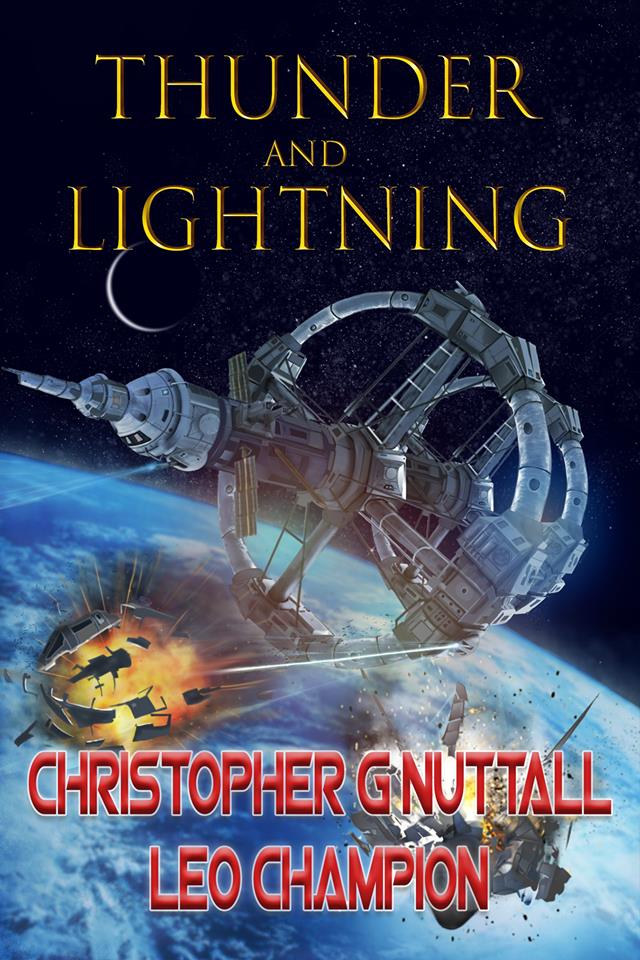
Folks, my most recently edited book is Chris Nuttall and Leo Champion’s THUNDER AND LIGHTNING, about first contact with aliens gone spectacularly wrong. I was very happy with this book, because I thought it showcased Chris’s gift for political machinations of the interplanetary sort plus Leo’s gift for the nuts and bolts of warfare. Putting them together in one book was a worthwhile challenge for me as an editor, and one I welcomed.
Both of these men did what they did best, and did it superbly. And I was not disappointed.
But, you must be sitting there asking yourselves, “Barb, what is this about language? Why are you talking about that with regards to editing and THUNDER AND LIGHTNING?”
Some of what I’m going to say is blindingly obvious, but here goes: When you’re writing about soldiers, you cannot take the high road all the time. And you certainly can’t use what I derisively call “sparkly language,” in that you dumb-down what soldiers say during a war.
Chris and Leo’s soldiers start off in a nasty fight in Africa against terrorists they call “the Wreckers.” These Wreckers are abysmal human beings who, like others in the past, have corrupted a holy book — in this case, the Koran — for their own purposes. The soldiers call them “radical Islamicists,” which is not that dissimilar to what is said overseas now in the Middle East or in other war zones.
And there’s a reason they do this. The reason is very simple. They are fighting a war. They cannot afford to see these people as worthy of redemption, for the most part, and they have many reasons not to see them that way either as the behavior of the Wreckers is truly abhorrent. (Hell, they even take female slaves.)
So, when I saw that, as an editor, I left it alone. I’ve heard from my own cousin, who’s served overseas any number of times in the Middle East as a member of the Armed Services, that what’s said about those we’re fighting (ISIS now, Al Qaeda earlier) is far worse than that.
But will some people be offended by this term? Probably.**
My job, though, as an editor, is not to dumb down what anyone says or feels even if I think it’s something someone out there will dislike. My job is to make that soldier sound and feel real. So you can get caught up in the story. And keep going.
If that soldier says some things you don’t like, well…I urge you to read James Clavell’s KING RAT. There’s lots of stuff that’s not said in “sparkly language,” but if it were, you’d never buy into it.
And you shouldn’t.
Anyway, THUNDER AND LIGHTNING isn’t just about soldiers. It’s about an idealistic woman scientist, Samra, who first finds evidence of aliens we later come to know as Oghaldzon (kind of like three-legged deer), and believes that any aliens coming must be peaceful. (She’s wrong, but you can see why she’d believe otherwise.) And what happens when she finds out the Oghaldzon are almost completely incomprehensible to humans, and humans to the Oghaldzon in terms, is scary, difficult to read, and sometimes incredibly sad, in turns.
We see her in lighter days, when she’s just a scientist at work. We see her finding the aliens’ signal (a fleet) in space, the scientific high point of her career.
And then, we see her disastrous fall, and with her fall, the attempted subjugation of Earth.
We also see a cyborg commando soldier, who saves Samra and stays by her side as they try, somehow, to stay alive and hope for better days. (Perhaps the commando is hedging his bets. Or waiting for a better opportunity. But it’s important to know that without him being there, Samra likely wouldn’t have a reason to fight so hard.)
Along the way, we meet numerous others. Some are politicians. Some are just average Joes. Some are Rockrats — that is, asteroid miners, extremely isolationist in outlook and incredibly hard-headed, to boot.
We need every last one of them to come together, in whatever ways they can, or we cannot save our own solar system from the Oghaldzon.
And along the way, the Oghaldzon are found to be, oddly enough, a different type of idealist entirely. But their idealism doesn’t match ours by any standard, and that is part of why we end up in a protracted war.
I don’t want to spoil the outcome of the book. So I will stop there.
Just know that as an editor, I maximized everything I could for the sake of realism, verisimilitude, and dammit all, for the sake of a damned good read. That is my job.
And if you read the book, and you like the book, do tell Leo and Chris that you enjoyed it. (You can come tell me, too. I’d enjoy that, also.) Reviews matter.
(I know that from personal experience. But I digress.)
In other words, when I edit, I try to find the authors’ voices. And I believe I did exactly what I should, to make THUNDER AND LIGHTNING the best it could be, in the hopes that people would feel, think, and enjoy the book and tell others.
Or in shorter form: Sparkly language, get lost.
—–
**Note that I, myself, have a Koran and have read it many times. My late husband admired the Sufi Muslims, and often called himself a “Zen Sufi Pagan.” And Chris Nuttall himself was exposed to all sorts of different religions when he lived in Malaysia, certainly including Islam, and knows, as I do, that people come in all flavors in all religions: that is, followers of the prophet Mohammad are mainly very good people.
Those who’d chain and enslave women, though, are hardly that. And if they’re using Islam as a way to make that palatable to their (mostly male) believers, that is disgusting.
There are bad apples in any bunch. These Wreckers definitely fit the bill for the type of people who’d try to turn religion to their own ends, rather than live in loving kindness and generosity, as I believe Mohammad truly wanted.
Thinking, Writing, and Illness
Most of us have to deal with illness, and somehow get things done. But when you’re sick (as I am right now), and you are an independent writer and editor, what are you supposed to do about it?
That sounds ridiculous to say, doesn’t it? Because we all struggle with illness. Very few people have charmed lives, and even they have to deal with the illnesses of beloved family and friends (or, sometimes, four-footed companions).
Still, when you’re in my position, and need your mind to do your work, but your mind isn’t at its best, and your body definitely isn’t either…what’s to do?
I’ve been trying to plot a book. This isn’t normally what I do, as I take an idea and run with it; I’m a pantser, not a plotter (that is, I sit down and write whatever it is, and then fix it on the fly). But plotting can’t hurt me, and thus, I’m trying to do that now and see where I get.
This is an exercise given to me by my friend Chris Nuttall (and if you don’t know Chris’s work already, go to Amazon and put his name in there; that’ll give you an idea). I often edit Chris’s work (my latest for him include THE ZERO EQUATION and THUNDER AND LIGHTNING, co-written by Leo Champion; I intend to talk more about both books in upcoming days, once I’ve regained a bit of my energy), and I know how he tends to work; he comes up with plots first, then writes, then tweaks (sometimes, if warranted), then sends to me (or another editor), then fixes, then I (or another editor) may see it one last time if the changes warrant it — otherwise, it goes up for sale. (This is for Chris’s independent work. The work he does through Twilight Times Books, Elsewhen Press, and 47North is a different story.)
I think his thought is interesting. And what I’m trying to do now is figure out who my characters are, what they’re doing, why they’re doing it, and just what’s going to happen along the way. (I also know, me being me, that some of this is subject to change. But it gives me a starting point, and it makes me feel a whole lot better to have work to do along with my editing. Which, by the way, I can still do — I just need a bit more time to do it right now, that’s all.)**
So, there’s thought behind this. Reasoning, purpose, function, and my hope is that it’ll flow into a form that is sensible, logical, and yet feels lifelike and real, like my “pantser” (seat of the pants, natch) novels do. (Or at least I hope they do.)
I’m glad to be able to continue to edit, though a bit slower than usual. I’m also glad that my friends, including Chris, came up with something for me to do of a writing nature so I wouldn’t feel stir-crazy while I’m not at my best. (Writing takes more out of me than editing, just as playing music takes more out of me, physically, than composing it. Though all of them require a goodly amount of mental and physical energy, some are easier to do while ill than others. I hope this makes some sense.)
Now for the big question: What do you do when you feel lousy, but are a creative person and need to express yourself? I’d appreciate hearing any tips you might have in the comments.
———-
**I suppose this is a good time to explain what I’m dealing with: exacerbation of asthma/bronchitis, an ear infection, plus a particularly wicked sinus infection. (I have two antibiotics, a steroid, and have to use my rescue inhaler four times a day until this is gone. When I get sick, I guess it’s go big, or go home. Except I am home…)
 Barb Caffrey's Blog