Archive for the ‘Informational Stuff’ Category
Book Recommendation: Leo Champion’s “Warlord of NYC”
Folks, I’ve been meaning to write this blog for several weeks. I knew about Leo Champion’s book WARLORD OF NEW YORK CITY for quite some time, mostly because I was one of his beta-readers and proofread the final version. But the time never seemed right to talk about Leo’s book.
Now, the time is right. The word is given. (Abandon all hope, ye who enter here? /snark)
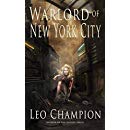 First, let me show you the book’s blurb:
In the twenty-second century, global civilization has moved into networks of arcology-skyscrapers that tower hundreds of stories above streets abandoned to anarchy. Inside the arkscrapers, a neo-Puritan cult of social justice rules absolutely; on the streets, feral gangs raid between feuding industrial tenements.
Diana Angela is a hereditary executive in the bureaucracy that runs the world, with a secret life as an assassin on the streets. A burned-out idealist, she’s long ago given up on trying to change the world – the best intentions of the past have only led to greater misery.
And she has no reason to think precinct boss Jeff Hammer’s intentions are even good. A former mercenary who may be a military genius, Hammer’s narrowly taken control of a small tenement. Now he’s facing vengeful exiles, aggressive neighbors, and uncertain internal politics.
Which might be the least of his problems now that he’s drawn the attention of one of the city’s most dangerous women…
And now, my comments.
Diana Angela, also known as DA, is a badass. There’s no question about it. She is tough, smart, strong, somewhat of a chameleon as her society requires it (she lives in the arkscrapers, and is a part of the Intendancy, an extremely corrupt yet also extremely politically correct society). She hates what she’s forced to do in her day job, and has worked all her life to do some good on the streets of New York City as an assassin.
(Yes, an assassin. And she’s damned good at it, too. But I’m digressing, and I shouldn’t.)
DA is a fully actualized woman. She cares about people and has compassion, but it comes out in very unusual ways. She also loves sex — why not? — and her society, with its beliefs that you have to do this (and “this” changes weekly, it seems) and you can’t do that (with “that” also changing weekly), makes it hard to enjoy it. (That you have to get permission for every sex act from the worst of the toadies she deals with — “Can I touch you here? Can I touch you here?” — drives her crazy. And it should.)
The fact that sex, itself, has become so far away from what it can be in taking you out of yourself for a moment and losing yourself in someone else is a huge symptom of what is wrong with the Intendancy.
Simply put, the Intendancy has got to go. But they have enormous power, and DA can only do so much topside in the arks.
She can do a great deal more on the streets, and she does. I do warn you, some of what she does is bloody and there’s a whole lot of violence. She kills people who “need killing,” and for the most part you’ll agree with her once you realize what these people have done — though in the moment, you may think, “Why be so happy about killing them?”
Diana is not a sociopath, though. She’s more of a frustrated idealist with a set of skills — judo, aikido, various other martial arts, swordsmanship, archery, guns — that allows her to live with the terrible things she has to put up with in the arks by balancing it with her vigilantism below.
But then, she realizes there’s a new player on the streets of NYC. A guy named Jeff Hammer (from Leo’s first book in the series, STREETS OF NEW YORK CITY) has overthrown the corrupt regime in his own tenement, and has started a new one. He’s an ex-flyboy (and flying, in his world, means using something akin to a bike with wings; I am not doing this concept any justice, and I apologize for that), he’s smart as a whip, and he knows things have been off for a very long time. And he’s going to do something about it…
DA goes to look in on Hammer, and can’t decide if he’s a criminal, a madman, or worse. That the last time someone like Hammer arose caused a bloodbath that DA, herself, was a part of, makes it even tougher for her.
So, will she decide to help Hammer? Or won’t she? And if she does, will NYC ever be the same?
Thus ends my plot summary, hoping I didn’t spoil it too much for you.
I still have one more comment, though: Leo’s book is damned good. Really, really good. It reminds me in some ways of Lois McMaster Bujold, even, though it’s far bloodier and DA’s overt sexuality is not something LMB would ever cotton to. I think the reason it does remind me of LMB, though, is because of the assuredness of the writing on the one hand and the capability of the female protagonist on the other. DA knows who she is, what she wants, and knows exactly how to get it…so don’t get in her way, as the only person she needs to fear is herself. (In that way, she reminds me a little of Cordelia Naismith Vorkosigan, or better yet of Elli Quinn or even Sergeant Taura. And if you don’t know who I’m talking about, go read every book LMB has ever put out, then come back, will you?)
In other words, you need to read this book, even if you’re normally squeamish regarding violence (as I am). It is funny. It skewers with manic glee many stereotypes regarding how “wonderful” a politically correct civilization would be if given its head. It has some interesting things to say about sex, power, and money. And the way DA is, herself, matters greatly…as does the way Jeff Hammer tries to change things for the better.
WARLORD OF NYC will make you think. And will make you root for DA, even when she’s at her most obnoxious…and wonder how on Earth she’s going to deal with Jeff Hammer when she can’t always see the forest for the trees.
It is, by far, the best thing Leo Champion has written yet. And he needs to be encouraged to write more in this vein. (Who knows what’ll happen next? I want to find out!)
Again, the Amazon link is here for WARLORD OF NEW YORK CITY. It is available on Kindle Unlimited. (Unfortunately, at this time, it’s not available at Barnes and Noble or anywhere else.) Or you can buy it outright for $3.99 (again, only at Amazon).
The Transformative Power of Writing
Writing is one of those activities that can transform you, if you let it.
How? Well, it’s simple. You have to throw enough of yourself into your writing to inform each character, at least enough so they’ll feel real. And in so doing, you can make more of your memories, or your abilities, or your hopes/dreams/fears, by working them out to their natural conclusions.
(Or, as I write a lot of fantasy and we all know it, their unnatural conclusions. But I digress.)
Giving yourself the permission to explore sides of yourself you’d rather not — such as when you write villains — helps you to harmlessly bleed off your worst impulses, and transforms that into something more. Something better.
Or at least something different.
Writing, as a transformative ability, is something writers almost take for granted. I can almost hear some of you going, “But Barb, really! Here we are, writing our stories, doing what we need to make our stories sing…why do we need to think about it as a transformative ability, anyway? What’s the point of that?”
Well, you don’t have to think of it as transformative, if you don’t like. But that doesn’t make it any less the case.
Every single thing we do as writers is intended to create something. Or transform something. Or inform something. Or maybe educate you, along with your enjoyment of same…no matter what book or story you might be reading (and no matter how awful it may be in the moment), there’s something you can take out of nearly every piece of writing. (Yes, even the dullest Puritanical “erotica” out there, that was Bowdlerized before Bowdler even came onto the scene.) Even if it’s just what you know you definitely don’t want to do, you learn something from everything you read — whether you realize it or not.
Some folks refuse to throw out anything they’ve ever read, no matter how boring or mundane or stupid or pointless. I’m not necessarily saying you need to go that far, because I think it’s more important you learn whatever it is from stuff you can’t stand as quickly as possible (thus keeping you from having to go back and read it ever again). But whether it’s mores, culture, language, description, dialogue, or all of the above, there’s something in just about everything to appreciate — even if you decidedly don’t like it.
ALTERNATIES, by Michael P. Kube-McDowell, is one such book. It’s well-drawn, the different alternate realities stark and compelling, and the characterization is professional. But the protagonists are, to a person, unlikable. There are some things done in this book, such as torturing of sex slaves, that turned my stomach so much that I would never read the book again even though it is very good.
What I took from reading this book at the time was, “Sex sells. And dysfunctional, sadistic sex sells even more.” But now, with the perspective of an author with three novels and any number of shorter works under my belt, I look at it a little differently. I think what Kube-McDowell was doing was masterful, in its way — but I don’t have to like it, and I don’t.
So, appreciate the craftsmanship, yes. Appreciate the time and effort and hard work, yes. (Respect the hustle, as Jason Cordova would say.) But don’t get lost in the depravity of it all, or the enervating sense of despair…because while that is in its way transformative, that isn’t at all what most people would like to be transformed into, if you get my drift.
And in your own work, look for ways to find hope, if you can. Even the worst situation may have one hint of hope; for example, all those French resistance folks trying hard during the occupation of France (Vichy France) in World War II had to deal with many stark and terrible realities. But they had hope nevertheless; they could believe their hard work would make a difference, no matter what it looked like, and no matter how long it took.
Ultimately, they were right.
So when you write a book with a lot of stuff that’s depressing or enervating or hopeless, try to find at least a few moments of comedy or light to balance it out. When you’re able to do that, that’s when a book really sings.
And if you’re writing something lighter (as I tend to do), finding moments of darkness to set off the light also works. (It’s all in the contrast, ultimately.)
So, how do you feel about the transformative power of writing? Tell me about it in the comments!
Monday Reading — Time for a New Book (or Four)
Folks, I have been remiss about letting you know about a few books that are out that I’ve either had something to do with, or that I have reviewed. I even managed to find cover photos this time. (Yay, me!)
So, without further ado:
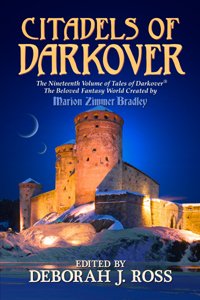 THE CITADELS OF DARKOVER is out in e-book and trade paperback. I have a short story in this called “Citadel of Fear,” and I hope you’ll enjoy it. I also was interviewed by the editor, Deborah J. Ross, at her blog; I did the interview in February (I think), and it went up in April. But I missed it at the time and only saw a link to it on Twitter a few days ago.
 I was one of two editors on Chris Nuttall’s newest novel, CURSED, which is out in e-book form now. CURSED is the seventeenth book in Chris’s long-running Schooled in Magic series, and I’ve been fortunate enough to edit all but two of those books. His heroine, Emily, is a young woman originally from Kansas who’s been transported to another world entirely (Chris calls it the Nameless World). But during a recent battle against a crazed monarch, Emily nearly died…and woke up without access to her hard-won magical powers. Now she must get them back, and has to cope with a host of unexpected challenges. (Further editor sayeth not.)
 Kayelle Allen has a new entry in her long-running Sempervians saga called BRO. It’s a fun story about two brothers who meet at an odd time; one (Senth) had no idea he had a brother, while the other (Khyff) has had the wrong idea about his long-missing brother for quite a few years. Neither is in an ideal situation, though both are making the best of things…will they manage to find common ground before it’s too late?
I was fortunate to edit Kayelle’s story, and know it’s excellent. It is also available via Kindle Unlimited, so if you have that, you should give it a try forthwith.
 Finally, I reviewed Jason Cordova’s newest novel, SONS OF THE LION, and as usual Amazon is playing silly buggers with the review. In case Amazon kicks it out (or just eats it), here it is:
SONS OF THE LION is a very well-written book filled with characters I adored and cheered for. The action works. The military ethos and care is profound. The distaste for child slavery and the uplifting of one exceptional child saved from the slavers into the merc company was perhaps my favorite thing overall.
So, you may be asking me, why didn’t I give it five stars if I liked it so much?
It’s the ending. I didn’t like that at all. And as I don’t want to spoil things, I will just say this: as an editor myself, I would’ve chosen a different route. I am unsure if the writer was boxed in by other issues in the Four Horseman Universe (I’ve read all the books to date, but the writer may be aware of things coming that I am not; surely the publisher, Chris Kennedy is). But I was very pleased with everything up to three chapters from the end.
Even with that — something that threw me out of the reader’s trance with great force — I thought this an exceptionally well-written book that did everything and then some that it was supposed to do. Military SF fans will love it. Four Horseman Universe fans will, too — that should go without saying — but anyone who loves military adventure (even if they don’t usually read SF) should appreciate it as well.
Four very solid stars. Recommended (despite its jarring and frustrating ending).
Barb Caffrey
I was happy to review SONS OF THE LION, though I had to tell the truth, the whole truth, and nothing but the truth about how I felt about that ending without revealing spoilers. That proved to be difficult.
But do I think you should read it anyway if you enjoy military adventure, military SF, or have read any of the other novels or anthologies in Chris Kennedy’s wildly popular Four Horsemen of the Apocalypse universe? Yes, I do.
Why? The writing is stellar. The characterization is great. And while I hated the ending — let’s get real here — everything until three chapters from the end was exactly what I wanted. (Am I going to make up alternate endings like some of the folks signing petitions asking for a different ending to Game of Thrones on TV? No. But would I like to if I had enough energy? Hmmm…have to ponder.)
So, there you have it. Some books to whet your interest that you may not have known about, and I hope at least one of them will be to your liking. Have at!
Asthmatic Thoughts
Folks, I’d intended to write two more blogs starting with “The Transformative Power of” rather than this, but here’s what I’ve got. Enjoy?
The last few days for me haven’t been that wonderful. I had an asthma attack that was bad enough to force me to go to the emergency room — something that hasn’t happened in years — and interrupted my rehearsal on Thursday night with the Racine Concert Band for the upcoming concert at Case High School on Tuesday, May 21.
At least, for me.
I hope I didn’t interrupt it for anyone else. But I had to leave. I couldn’t breathe well. And about fifteen minutes into rehearsal, I took four hits on my albuterol rescue inhaler — the max dose. But all that did was get me to the break without passing out. It didn’t allow me to regain my energy or breath well enough to continue playing my saxophone, and I only barely had the energy to concentrate on driving to the ER.
I’ve been asthmatic most of my life, but it wasn’t diagnosed until age 27. Most of the time, I’ve been able to do everything I want to do, including five K walk/runs (I used to power walk, when my back still allowed me to do such). With a little prudence, even on very hot and humid days, I can do what I need, providing I rest a great deal and be sure to have my rescue inhaler handy.
But that’s why this was so frustrating. I know what to do. And yet, I was running a bit late, was afraid I’d get into rehearsal late, and I didn’t want that. While I’d taken my rescue inhaler around five p.m. — meaning it should’ve still been able to help for the 7 p.m. rehearsal — I had just done the fastest walk I’m capable of from the parking lot, with my cane, sax, and big, heavy purse in tow. So that, right there, was probably all I had, breathing-wise…and that’s why, fifteen minutes in, I had to take four puffs of albuterol.
What also was difficult for me, then, was not realizing how bad off I was. My stand-partner, Vivian, who’s known me since I was 18, is the one who realized what was going on. She told me I should go seek medical attention, and get a breathing treatment; I told her that I wanted to stay at rehearsal, so I’d try to take the rescue inhaler instead.
And you already know what happened then.
When I got to the ER, they took me right back to a room. (The local hospital, Ascension-All Saints, takes shortness of breath in an asthmatic seriously, which I greatly appreciate.) Within a half an hour or so, I was given a breathing treatment on a nebulizer, and my mind started to clear. (That my oxygen saturation when I got there was approximately 85% did not help, though it did go back up after I sat for a few minutes.) They then gave me three tablets of prednisone, and while that made me very jumpy and jittery, it also allowed me to have enough energy to drive home a few hours later.
I didn’t call my parents, or my sister, until I knew what was going on and could talk without gasping. (My sister works very early in the morning, and I was in the ER until after midnight.) As my brother lives in another state entirely, I didn’t think to even tell him about this, either. But I wasn’t thinking too clearly at the time.
I did text a few friends who were expecting to hear about my rehearsal, and had been worried as they knew I didn’t feel that wonderful when I left on Thursday for rehearsal in the first place. I did that mostly because I knew they were waiting to hear from me. I always try to keep in contact when someone’s expecting to hear…anyway, fortunately for me, one of my best friends I’d texted lives in town. She came over to the ER, sat with me the last half-hour until they let me go, and drove behind me all the way home to make sure I’d get there all right.
This gave me great comfort.
I was told by the doctor to take it easy over the weekend. No practicing at all. No heavy shopping trips for my mother, if I could avoid it. (Light stuff was OK providing I took my time about doing it.) No editing, if I could avoid it. I could write, to tolerance, and I have — not just this blog either. (1000 words of fiction, yay!) And providing I do take it as easily as possible, he said I could play the dress rehearsal on Monday night, and the concert on Tuesday night — providing I take my rescue inhaler beforehand and after, and continue to take steroids for several days to aid my breathing overall.
I still have hope that I will play this concert. It isn’t going to be easy for me. I am not going into it with much strength, energy, or clarity of mind. But I can do it, and have promised I would…so I will find a way, if at all possible.
I was very scared by this episode. I used all the biofeedback techniques I have learned recently to stay as calm as possible on the road to the ER, and was able to “stay in the moment” to drive safely over there even feeling the way I did. (Why did I do this, you ask? They tow cars if you leave ’em at the practice site overnight. I can’t afford that!)
But I was fortunate. My stand-partner knew I was ill, which prompted me to take my rescue inhaler in the first place. She also urged me to go to the ER when I was still ailing after. And after that, I got good attention in the ER; my friends helped as much as they could from where they were; my family, while being miffed that I didn’t call or text or do anything to let them know in the moment, has been very understanding of how little I’ve been able to do over the last two days since that happened.
I promise you all, I will take my meds on time. I am not going to ever forget to take my rescue inhaler directly before practice again, either, even if I’m already fifteen minutes late…though I hope I won’t be late at all, so I can go in without feeling like I have to “haul ass” and thus have almost nothing to work with from the get-go.
All I can say, else, is that I survived this. And I’m glad, though I wish I hadn’t had to deal with it and had just been able to play as normal.
Anyway, I do hope to write the other blogs about “the transformational power of” later this week, if all goes well. And I would like to know what you think about this, the most personal of blogs I’ve written in a very, very long time…tell me about it in the comments, please. (You are reading, right?)
It’s All Grist for the Mill…
As a storyteller, no matter how halting I find the process to be sometimes, I’ve learned one thing and one thing only in this life:
It’s all grist for the mill.
What do I mean by this? Well, everything that happens, good and bad — but most especially the bad — can be used in a positive way toward illuminating your stories.
Why?
Well, think about it. When someone tells you off, how do you feel in that moment? What would you do differently, if you could? What would you do better? Or what, if the devil on your shoulder was in charge for a moment — for story purposes only, of course! — would you do worse, to get a bit of your own back?
See, we’ve all been there.
We’ve all had someone tell us off. We’ve all had someone treat us terribly, for no reason, without warning.
And we’ve all been unable to do what we wanted in those moments, for good or ill…and the virtue of storytelling is, you get to figure out what you might’ve done, and how it might’ve been, without hurting yourself or anyone else. (While making it fun to read, too, if you do it right. Otherwise, why bother?)
Mind, the good things are also grist for the mill.
We’ve all had wonderful, amazing, spine-tingling things happen. Maybe they’re split-second things, like seeing a double-rainbow (or better yet, the Northern Lights — I hope to see that someday). Or they’re the most astonishing things ever known to man, like climbing Mount Everest…or, closer to home, finding someone who loves you, warts and all, and cares only about you and nothing but you — not your bank account, not your health or lack thereof, not your putative beauty or lack thereof either, but YOU.
These things all illuminate your stories. They make them deeper. Richer. More intense. More believable. More relatable. And more interesting by far.
So, the next time you have a bad day, try to remember this: it’s all grist for the mill. It may help. And even if it doesn’t, you can tell yourself in your best Evil Writer (TM) voice, “Hey, I’m going to remember this person, and– (insert worst possible thing you’d do to him/her here)” and that may get you to laugh.
What’s grist for your mill? Tell me about it in the comments!
Continuing to Battle…(Dealing with Adversity, Part the Nth)
As the title says, I’m hanging in there. My health is no better, but it’s no worse, either. And I have been able to do a little writing, even a bit of fiction writing, over the past several days. I also was able to help a friend out with a novella, and that gave me a great amount of personal satisfaction.
So that’s a positive step. And I’ve needed those, as temps fell to fifty below zero with wind chill factor for most of the past week in much of the Midwest — including where I live.
I don’t enjoy being shut in the house. (I don’t think most of us do.) While the work I do is internal and creative, it helps to be out and about at least a few times a week. I enjoy being around people (and dogs, and cats), for the most part. And it gives added richness to my life to do more things, competently, than to just sit in the house and figure out why I’m not writing. (Or sit in the house and wonder why the current story isn’t speaking to me; what have I missed?)
But I have tried to look at it positively, or as positively as I can under the circumstances.
What’s helped me most is to realize that every day, I get to make another attempt. It’s like what former President Jimmy Carter said about spirituality and being a better person: every single day, you can choose to do better. Be better. Or at least do more with what you have. (This is my best paraphrase. But I do encourage you to seek out articles and books about the former President and his beliefs on faith and spirituality. They are definitely worth reading.)
The obstacles I have in my path are different from others. And they’re different from what they were before my husband passed away. But if I am careful, and try not to put undue pressure on myself (always difficult, as I am a perfectionist; you may have gathered this?), I can do a little at a time.
And those small things can add up to bigger things, over time, if you don’t get frustrated with the lack of instant satisfaction, the lack of instant creativity (ha! is there such a thing?), or your own lack of patience.
For those of you facing long-term health issues, way too much stress in your lives, or simply wondering whether or not what you do makes any difference at all: It does. Keep doing it. And try not to question your need for creative solace, if you can…because that’s one of the things that makes life worth living.
What are your tips on dealing with adversity of a health-related nature or anything else that takes away from your writing time? Tell me about it in the comments.
How You Treat Cashiers Says A Lot About You…(A Rant)
I decided to write this, to explain what I saw, as an exercise in narrative framing…and I hope it will make sense to all of you.
Folks, I was out shopping a few days ago, laying in supplies for myself and my Mom due to the incoming snowstorm. And I witnessed a terrible man lighting into a cashier for no reason at all…so I thought I might talk about this, and why it showed so much of this man’s negative personality.
First, it was busy in the store. The shelves were bare in some places. It was cold outside, we were anticipating snow in the next six to eight hours, and most folks with any planning sense at all were in the store. Which means the cashiers were overworked, harried, and tired.
How do I know this? I’m a former cashier. I also have some common sense. And I know that if you’ve been dealing with a lot of people with big orders for hours, you are tired, you are stressed, and you haven’t had any down time to even grouse to fellow cashiers about how cold the weather is, how worried you are that your car won’t start, or that you won’t make it home until the storm is well underway.
But you can’t help but think this. You do what you can to shove it away, and give the best customer service you can. You tell yourself that no one can control the weather, and that it’s not your fault all these people are cranky (oft-times, crankier than you are), and you do your best to be ultra-polite and get them out of the store as fast as you can.
Anyway, I was in line, paying for a large amount of groceries (especially by my standards), and heard a man behind me yelling at a cashier in the next lane over. (I turned to get a description. He was fortyish, with graying-brown hair, rather short, with a combative expression.) He’d just asked her if anyone had called in sick; she said no, and had turned her light off as she was about to go home. (I know this because the manager had just been over telling her to go home a minute or so prior.) He apparently took great exception to this, and started yelling at her about her “unprofessional behavior,” “bad attitude,” and suchlike. All he did was rant at this poor young woman, who did nothing wrong, and then insisted that a manager be called. All delaying her in going home, and souring her experience of working hard and well during a difficult day.
This guy had no reason at all to do this. She had tried to de-escalate the situation after he started yelling, asking if there was anything she could do. He said he wanted a manager, and he kept yelling and making an ass out of himself.
Look. I know it’s frustrating when the weather is bad, and you’re worried about driving, and you have kids (he had two, I think), and maybe you couldn’t find everything you needed. But yelling at a cashier who did nothing wrong says more about you than it does about her.
And none of it — none — is flattering.
As I am a former cashier, I decided to stick around and talk with the folks at the service desk to give them a better idea of what had happened. I didn’t have to do this. But I didn’t want them thinking this young woman had done anything wrong. (She was probably under twenty.)
I wanted to give that angry man a piece of my mind. But by the time I got out of my line, he was already with the manager. Then he stormed out, his kids in tow…there was no point to engaging with him, not under those circumstances.
Had he not been the final person in this cashier’s line, and had I been behind him, I might’ve asked him why he was getting all upset over nothing. (Then again, I might’ve just waited and then told the cashier she did nothing wrong, and that I was sorry she had to put up with asinine people like that.)
But he was. And he behaved very badly, so badly that he gave his two kids a lesson in bullying. Not to mention rudeness, completely misunderstanding the situation, and a show of just how obnoxious this particular individual can be on any given day.
I did what I could to repair the situation for the cashier. (She’d already gone home by then, or at least was counting her drawer somewhere I couldn’t see her.) But I don’t know how many other patrons would do that.
So I am here to ask you: If you are in a bad mood, please do not take it out on an innocent person like a cashier. Do not make a spectacle of yourself in public, and give bad examples for your kids (or other people’s kids).
And if you have a legitimate beef, be calm. Be courteous. Be respectful. Treat others the way you would want to be treated.
That’s the only way to be an adult. And don’t you want to be one? Especially if you have two kids looking up to you, trying to learn decent behavior from you?
Finally, I will tell you this: Any guy who behaves like this to a blameless cashier is not one I want to spend any time with whatsoever. Period.
Word Counts: Don’t Believe the Hype
Folks, lately every time I’ve turned around, I’ve seen writers bragging about how many words they’ve written in a day. And while telling people once in a while is just fine–or telling ’em every day when your readership knows full well you have a book due for turn-in Really Soon Now (TM)–some of these counts seem, well, excessive.
I tend to believe the following maxim, which I’ve already stated above: Don’t believe the hype.
Yes, some writers can and do write thousands of words a day when they’re on a roll. And there are a few who can do this for week after week, month after month, maybe even year after year until there’s some sort of major crisis in their life where they can’t. (Because we’re all human, and we all face various difficulties and crises, I can’t help but say that.)
But here’s the thing. If someone is pushing how many words she’s written, and does so constantly, you have to ask why. (Unless it’s the issue of your book is due in, and readers are clamoring to know what the hold-up is, of course.)
Is it to reinforce their own self-image of a hard-working writer?
Is it to let their publisher and/or readership know they’re working as hard and fast as they can?
Or is it just to brag, because no one can say you’re wrong because writing is an individual activity?
Look. I know there are writers–many of them, in fact–who write faster than I do. But it’s not a competition. Or, rather, it’s a competition only with myself, as to what I can do creatively despite the obstacles in my path.
Someone else may have different things going on. He or she may have a supportive spouse. (Or not.) He or she may not have any bill problems. (At least, for now.) He or she may be in robust health, and has never missed a day at work, whether it’s at the keyboard or at a day job…
And none of that, not any of it, applies to me as a writer.
I can only do what I can do. My best is my best. And while I’m glad to see my friends happy and fulfilled with their word counts when they’re on a roll, I usually can tell by other means that they’re on a roll other than the “4800 words completed today” cryptic little posts on their Facebook or Twitter or Instagram pages.
They may well be telling the truth. But they may have other reasons to say what they’re saying, too–see above reasons for a starting point.
And again: None of it applies to me, so I don’t have to believe the hype.
The most important thing to take away from this blog is this: Do what you can do. Not what anyone else can do, or worse, what anyone else is saying they’re doing (without any proof at all, most of the time).
Anything else is time-wasting persiflage, at best.
Very Small Steps, Continued…
I figured it was time for another small bloglet, letting you all know how I’m doing.
The last few weeks have been a trial, to put it mildly. I still can’t edit for more than a few minutes at a time, and I can’t write much at all. (Note how infrequent my blogs have become, for example. And no fiction — none — since mid-December.) I have ideas galore, for both words and music, but my energy level is so low that when I try to write them down, they fly away into the ether.
One of my best friends told me that if these ideas are good ones, they will return when I am feeling better. I sincerely hope she’s right.
Yesterday, I fought off a nasty migraine that took out the entire day. Every plan I’d made went out the window as soon as that showed up — which is what migraines do, granted. And I mostly suffered, hurting but unable to sleep, and wondering when I’d be able to return to what I like to call “baseline functional.”
I remind myself daily — and sometimes more often than just once — that I am not this illness. I am not defined by it, and it does not have to make me feel useless, or valueless, or stuck.
We all face illnesses, either our own or that of our loved ones, and we all have to deal with this from time to time. I am reminding myself of that, too.
Mostly, though, it’s taking a series of very small steps, one after the other, to try to shake this illness off and return to what I need to be doing: writing, editing, playing music, composing music, maybe writing a few poems here and there…and helping others.
I will keep taking these small steps, even though on days like yesterday, it feels like ten of the small steps got wiped out, and I’m starting from way behind.
Still. I will continue to do the best I can, and I will find a way to get better. That’s all that I know how to do, and it’s all I can do right now.
Thanks for bearing with me during these struggles.
Sick at the Holidays…
Folks, I have meant to write a blog or at least drop in a little bit of something for the past week-plus. But I have been quite ill.
I’ve been to the doctor twice and a third visit is in the offing. All I know is, I have had two ear infections (one in both ears, or a double ear infection), a bad sinus infection, an upper respiratory infection, and all of this happened more or less at the same time. As I have asthma, too, and other health issues already, none of this has helped me feel productive or like I have a place in the world.
Being ill is hard enough, but being sick at the holidays is even worse. I don’t know why that is, but it seems to add insult to injury somehow…and adds a bunch of stress to an already stressful situation.
I have so much stuff to do. Stuff to write. Stuff to edit. Stuff to read, even…and I can do none of it right now. I can’t even help my family members when they need help, as I usually do. Because I can’t get out to do anything for them right now. And that adds to my feelings of stress, not to mention that “do I have a place in the world?” thing I discussed above.
All I know is, I have to somehow heal up. That means another trip to the doctor, to figure out what happened this time, and how to fix it. Maybe I didn’t respond to the last bit of antibiotics? Maybe I caught something else on top of all the other stuff? Maybe something else is going on and I haven’t a clue what?
This is what’s running through my mind, as I write this.
So, folks: Don’t get this, whatever it is. And if you do somehow get something like it, get your rest as fast as you can, and don’t insist — as I unfortunately did — on trying to do any of your normal activities. As bad as it is to feel useless, it’s even worse to feel useless and sick…so pick the best of your available bad options, and rest/heal as best you can.
Oh, and try to laugh, too. That does help.

