Archive for the ‘Prescient observations’ Category
It’s All Grist for the Mill…
As a storyteller, no matter how halting I find the process to be sometimes, I’ve learned one thing and one thing only in this life:
It’s all grist for the mill.
What do I mean by this? Well, everything that happens, good and bad — but most especially the bad — can be used in a positive way toward illuminating your stories.
Why?
Well, think about it. When someone tells you off, how do you feel in that moment? What would you do differently, if you could? What would you do better? Or what, if the devil on your shoulder was in charge for a moment — for story purposes only, of course! — would you do worse, to get a bit of your own back?
See, we’ve all been there.
We’ve all had someone tell us off. We’ve all had someone treat us terribly, for no reason, without warning.
And we’ve all been unable to do what we wanted in those moments, for good or ill…and the virtue of storytelling is, you get to figure out what you might’ve done, and how it might’ve been, without hurting yourself or anyone else. (While making it fun to read, too, if you do it right. Otherwise, why bother?)
Mind, the good things are also grist for the mill.
We’ve all had wonderful, amazing, spine-tingling things happen. Maybe they’re split-second things, like seeing a double-rainbow (or better yet, the Northern Lights — I hope to see that someday). Or they’re the most astonishing things ever known to man, like climbing Mount Everest…or, closer to home, finding someone who loves you, warts and all, and cares only about you and nothing but you — not your bank account, not your health or lack thereof, not your putative beauty or lack thereof either, but YOU.
These things all illuminate your stories. They make them deeper. Richer. More intense. More believable. More relatable. And more interesting by far.
So, the next time you have a bad day, try to remember this: it’s all grist for the mill. It may help. And even if it doesn’t, you can tell yourself in your best Evil Writer (TM) voice, “Hey, I’m going to remember this person, and– (insert worst possible thing you’d do to him/her here)” and that may get you to laugh.
What’s grist for your mill? Tell me about it in the comments!
Appearance Vs. Reality
In daily life, I am struck often by the difference of appearance versus reality. And as a novelist, this strikes me with at least triple force, because I see how it could be otherwise, with just a bit of tweaking…and yet the pathos remains because the person (or people) in question just can’t make that tweak…
But I’m getting ahead of myself.
You may be asking, “So, Barb, what brought this on, hm?”
I’ve been thinking about the difference between appearance and reality for months, if not years. Not just because of the differences between reality starlets’ shows and their real lives (real lives are far more messy, are unscripted, and definitely have fewer camera operators and makeup personnel), but because of the difference in how people I know well — or at least people I once knew well — show off their lives in public but are all different in private.
This, of course, is not new to the 21st Century. We may have different ways of showing ourselves to be different and better and “all that” in public than in private than previous centuries, but it’s still the same old song.
Very few people, in short, feel confident in letting people know they’re real, with warts and all. They don’t want to admit they’re anything less than perfect, because they’re afraid the jackals may be circling…and sometimes, they’re probably right.
But most of the time, showing ourselves in our best light all the time is, to my mind anyway, self-defeating. It’s like a good friend of mine put it: “You see everyone else’s glamour shots, and your own blooper reel.” And you measure your blooper reel — that is, your real life with warts and all — against these highlight-reel things, and come up short.
Which, by the way, anyone would.
Back to why I’m talking about this today, though.
The whole “appearance vs. reality” thing has always been a particular interest of mine. This is only partly because I, myself, decided early on for whatever reason that I would not “fake it ’til I make it.” (That is, put on a front and pretend things were better than they actually were.) And I’m not sure what the rest of it was, excepting that I’ve always been someone who observed others keenly–and in so doing, figured out that all was not as it seemed.
I believe in leading as close to an authentic life as possible. That doesn’t mean burdening people with all my troubles, though sometimes it does seem that way. And it doesn’t mean, either, that I won’t share my triumphs, when I get them…it’s just that I won’t put on that false front, because I see it as wasting time and energy.
(And I don’t have enough of either, so let’s get on.)
That said, are there still things I keep private? Hell, yes. I don’t need to tell all and sundry everything about me just to lead that authentic life. And yes, it’s a balancing act, for certain.
In essence, what I want you to think about today is this: Is your life what you want it to be? What’s the difference between how it appears, and how it actually is? And what can you do about it to make it any better?
These questions will also work well when you’re writing, mind, as every character ever written struggles with this (as well as more common motivations). And if you use it just right, it’ll deepen and broaden your writing to a degree that’s startlingly real…and may just help others in the process. (Not that you have to, in art, but it’s a good side benefit if you can.)
Holidays Are Hard, AKA Christmas Ramblings
So, the holidays are coming. And they’re tough to take.
You see all the folks rushing here, rushing there (sometimes literally; today I saw a horrific car accident on the Interstate, and was very spooked by it), and you wonder what all that rushing is all about.
Then, there are the Christmas movies. The Christmas music, everywhere you go. (Even at the casino/hotel last night, where I was enjoying a rare night of R&R, I heard all Xmas music, all the time. I actually would’ve rather heard the 149th rendition of Britney Spears’ “Toxic,” which is not exactly my favorite song in the world, than that…because at least Britney is being honest.) The Christmas sales. The Pajamagrams. The Vermont Teddy Bears. And all the other ads you see, most especially for jewelry…
Everything is about conspicuous consumption. (Gag.)
Or about the assumption that every family is perfect (news flash: they aren’t), and that Christmas can make miracles happen out of even the most dysfunctional situation (and dysfunctional people). And while I want to believe that’s true (I know miracles can and do happen, for example), I don’t think it’s as easy as the movies make it out to be.
Look. Call me a curmudgeon. (Please.) But as I’ve said before, holidays are not about presents. They’re about presence.
As in, showing up, paying attention, making memories. Those are the only things that matter. Not how much you spend.
So, this may be an obvious take, but holidays are hard. We’re confronted with all we’re not, and we’re told we must aspire to be things other than what we are.
When you see stuff like that, or hear stuff like that, or think things like that, step back and take a breath. Then, realize that all you can do is take it moment by moment, give yourself permission to have human feelings (and human failings), and keep trying to do whatever good you can, wherever you can.
That’s what I’m going to try to do this year.
More Musing About Editing
Most of my life, I’ve worked hard at being a reliable, steady person.
(My family might laugh at this, but it’s the truth.)
A big part of that is embodied by the phrase “finish what you start.” And I try to do that with everything I do, even if it takes me longer as a writer to finish things than I’d like…even if my overall writing process has changed drastically since my late husband died, and I’ve never quite regained my fluidity or facility since.
It’s easier with editing, mind. For whatever reason, my mind goes into a mode there where I can see the story, manipulate the story (or at least ask the author to manipulate it for me), fix what needs fixing, suggest what needs suggesting, and try to do the best job I possibly can for my editorial clients.
Working hard is important. Even if I’m the only one who knows how hard I’m working, I still want to work hard, do everything possible, and make a positive difference in someone’s life. Even if it’s “just” in helping them realize their own artistic vision a little better, with a bit more clarity and sharpness…because these things are important, too.
A good friend, years ago, told me that when I started editing, I’d see manuscripts — even my own — differently. It’s a hard thing to turn off, Editorial Vision (or as I call it, “Editor Voice”), and that can get in the way of my own writing.
Mind, I do appreciate Editor Voice. I can do many things with it that others can’t. Including, of all things, being able to look at a manuscript as if I’ve never seen it before, even if I’ve seen it several times in the past. This ability seems unusual; the other good friends of mine who are editors don’t report having this type of track, though they have other things that work just fine for them.
(I also see, at the same time, what I’ve done, what I want to do, and what the author hopes me to do if I haven’t already figured out a way to do that, which makes it a way of looking at a story in two ways: with great knowledge, and with almost no knowledge. I call it a “dual-level ability.”)
I take what I do seriously. (Maybe too seriously, at times. Though I also try to be humorous when I can…or at least laugh, as life is too short to live it without laughter. Really.) I give everything I’ve got, and then some, toward helping others find their unique voices, and give them (in the buzzword of the moment) “agency.”
I’m glad to do whatever I can to help my clients, most of whom become good friends in the process, tell the best stories they need to tell, in the clearest and most distinct manner they can possibly tell their stories.
And otherwise, when I write? I try to tell myself I don’t have to do everything today. If I get down at least some of what I need, I can add to it tomorrow. Refine it. Maybe reimagine it, if need be…work with what I have, and make it as strong and resilient a story as I can make it. And tell the stories I need to tell, too, so I can say with good grace to clients that I know exactly how they feel, as I, too, have been there. (Been there, done that, bought the T-shirt, etc.)
That’s what I’m thinking about, now, as I continue my journey forward.
Oh, one more thing…next week, I’m going to tell you about the newest anthology I’ve placed a story in. So don’t go anywhere…I’ll have a table of contents, even, to pass around. (Yes, I am a working writer. Thank God/dess.)
What’s going on with y’all? (Tell me in the comments.)
Moving Forward, Slowly…
Folks, I continue to recover from the Nasty Respiratory Ailment (TM). I am much better than I was, and have completed two novel-length book edits in the past two weeks. Working on two more, too…and I have started writing a bit again, so I’m feeling much better about things overall.
That said, I wanted to talk a little bit about how sometimes being persistent means accepting the fact that you have to move more slowly than you might like. Illness does this, you see. Injury, too. And in either case, when you want to do more than you are physically capable of doing, it feels like beating your head against a brick wall.
Or maybe beating your wings against the bars of a gray, barren prison. (Whatever works as an image for you, though I definitely am more partial to the prison idea.)
It’s hard to deal with, the feeling of hopelessness. It really is. You want to be up and doing. Up and creating. Up and being the best self you can possibly be. But sometimes, to do that, you have to ration your strength and know your limits.
The way my husband put it was, “If you can’t do it today, you’ll do twice as much tomorrow. And if you can’t do it then either due to Real Life (TM), you’ll do three times as much the next day.” His view was that you had to believe you would keep moving forward, no matter how long it took, and no matter what in life stood in your way.
See, if you know your path and stay on it, good things will happen. You have to look hard sometimes to find those good things. But they will happen. You’ll meet good people, and you’ll be able to talk with them about things that matter to you. You’ll have exchanges of viewpoints, and sometimes may have your mind changed — or at least challenged — in ways you won’t expect. (Personally, I find that among life’s best of treasures, though it is woefully unappreciated by many who’d rather stay with whatever their personal status quo is. Too bad about ’em, isn’t it?)
And you will create. If you keep trying, you keep working on it, you keep thinking about it, and you do whatever is in your power on a daily basis, you will create.
That’s the hard lesson I’ve had to learn. And because I’m stubborn, I learn it over and over and over again. Because every single time, I want to be healthier than I am; I want to be stronger than I am; I want to snap back from ill health faster than I’m capable of; I want to do more, be better, create things of lasting worth…and I often wonder if I’ve failed at the lot of it.
That said, at least I keep trying. I move forward, slowly.
And that’s perhaps the whole trick of life. Find your path. Move forward on it, no matter how slowly it may be at times. Treasure the people you meet. Find common ground when you can, accept the stuff that will never be in common, try to delight in it when you can…just find whatever you can, and do that, and keep doing it as long as it makes you happy. (And, of course, hurts no one, is ethical, principled, etc.)
This is what matters. (Don’t let anyone tell you anything different, either.)
“Changing Faces,” the Fall Book Fair, and Transgender Men…
Recently, at the Washington Post, I read an article about how transgender men have seen differences in how they are treated based on their outward appearance. Born in a woman’s body, and then becoming the male they feel themselves to be inside, causes them to see the world in a completely different way than others.
When I read this, it reminded me of my character Elaine Foster from CHANGING FACES.
Why? Well, here’s a quote from that article.
From Zander Keig, a trans man from San Diego:
Prior to my transition, I was an outspoken radical feminist. I spoke up often, loudly and with confidence. I was encouraged to speak up. I was given awards for my efforts, literally — it was like, “Oh, yeah, speak up, speak out.” When I speak up now, I am often given the direct or indirect message that I am “mansplaining,” “taking up too much space” or “asserting my white male heterosexual privilege.” Never mind that I am a first-generation Mexican American, a transsexual man, and married to the same woman I was with prior to my transition.
So, you’re the same person. You have only changed how you look, outwardly. And now, you’re accused of “mansplaining.” Or worse, “asserting (your) white male heterosexual privilege,” even when you aren’t anything of the sort (as Zander isn’t).
And Alex Poon (only 26 to Zander’s 52) says in this same article:
My voice has started cracking and becoming lower. Recently, I’ve been noticing the difference between being perceived as a woman versus being perceived as a man. I’ve been wondering how I can strike the right balance between remembering how it feels to be silenced and talked over with the privileges that come along with being perceived as a man. Now, when I lead meetings, I purposefully create pauses and moments where I try to draw others into the conversation and make space for everyone to contribute and ask questions.
What Alex seems to be doing is trying to strike a happy medium, but admits there are privileges here and that he’s not used to them.
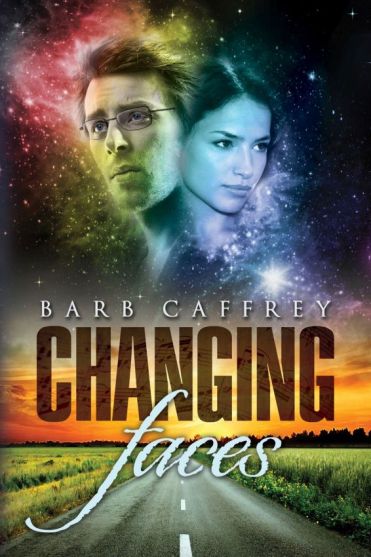 How does this relate to my novel CHANGING FACES? Well, Elaine is transgender because she’s always felt wrong in her body. And yet, she’s also gender-fluid, so if she became male, what would happen to her? Would it be easier, harder, or what? And how would you be the same person — as you are the same soul — in a different body?
The way I solved this (and created more problems) was to put Elaine and her heterosexual boyfriend Allen in each other’s bodies due to a car accident. Now they’re both transgender, but as Elaine was deeply damaged due to early abuse and rape before she ever met Allen, she’s in a coma, talking with a higher being who may as well be an angel. (This being, Moe, is neither male nor female, and comes from a long line of Amorphous Masses. So Moe can be anything Moe wants to be…more or less.)
This article in the Post reminded me that the person you are stays, regardless of how you are perceived. But that perception of who you are can change everything for you on the outside…and that can be a gift, or a curse, depending. (One of the other men, who’s African-American, has said it’s much harder to be a man in some ways than a woman, due to how African-American men are treated by the police.)
I had an interesting time with Allen, once he ended up in Elaine’s body. He still wanted to be with Elaine, no matter what body she was in (providing she wakes up from the coma, of course). But being seen as a beautiful woman rather than a geeky heterosexual male was a real problem for him; he’d never had to worry before about half the things he now must, and it all but precipitates a nervous breakdown in the poor man.
My hope in writing CHANGING FACES was that people would maybe understand each other a little better after reading this. But I especially hoped, as a woman, that other women would read about Allen’s struggles and feel his plight…and be able to put themselves in Allen’s shoes. (That I hoped a few would do this for poor Elaine, too, was a given. But don’t forget about Allen, as they come as a set.)
Yesterday, Viviana MacKade’s Fall Book Fair (which I’ve talked about all week) finished up with several young adult and new adult books, including CHANGING FACES (which counts as new adult as we’re dealing with college students). All of them are ninety-nine cent e-books. And at least one of them may tickle your fancy, even if my own quirky take on LGBTQ relationships does not.
(Though I hope it’ll do some good for someone out there. Or I’d not have written it at all.)
So do take in the Fall Book Fair, even though it’s now — technically, at least — over. The post is still there. The books are still there. And there are fifty books from the entirety of the week to choose from, all priced at just ninety-nine cents.
Why Can’t We Communicate?
Over the past few weeks, I’ve been quite frustrated, I will admit.
It seems like the world has forgotten how to communicate. Left can’t talk with right, centrists like me trying to find common ground are ostracized, and it seems impossible to just talk with someone — even with the assumption we’ll disagree about nearly everything, but civilly — most of the time.
I don’t know why we can’t communicate. And it bothers me.**
The cultural assumption in the United States used to be that anyone could say anything (except yell “fire” in a crowded theatre, of course), and we’d agree they could do this. So long as people were peacefully protesting, that was just fine.
That’s what we are supposed to be about, in America. Free speech, yes, and peaceful protests, yes.
But we’re now looking at a scenario I’d never envisioned.
Instead of people agreeing to disagree, we’re mostly staying in crisis mode and assuming our neighbors will hate us unless they agree with us in every respect. (Which, by the way, is impossible, but I digress.) And the threat of violence seems so large, even the current President of the US has talked about it — though mostly in his terms, and because he seems afraid he will lose his grip on the power he has.
I live in a “purple” state. We are split down the middle, more or less, between people on the left and people on the right. Centrists, who just want to get the potholes filled and work out the remaining problems civilly and non-violently, are present, but keeping their heads low ’cause centrists are the only ones who get yelled at by all.
(“Blessed be the peacemakers,” indeed. But again, I digress.)
So, if there’s going to be violence if one side or the other doesn’t get their way, my home state of Wisconsin seems a likely target.
I don’t have any answers, mind you. But I do at least know what the right questions are, and the first one, as I said before, is “Why can’t we communicate?” Learning how to civilly disagree, without violence, used to be the first thing people learned, after all. So why is it that we can’t seem to remember that now?
————
**I do hope that people will stop getting so upset that they can’t even talk with their neighbors and/or friends about the things that matter. Politically, you can disagree with someone, but that doesn’t mean personally, morally, spiritually, or ethically that you disagree…and yet, we’ve become so tribally oriented for some reason, it seems like if you disagree at all, you’re just a non-person.
I find that so upsetting, I don’t have words to describe it. Thus this post.
Birthdays and Funerals
Folks, on Friday, I went to my uncle Carl’s funeral. And Saturday was my birthday.
To say I feel strange at the confluence of events is understating the point. I never do all that well with birthdays anyway, as I am more like my late husband in this than not (he who famously celebrated “unBirthdays”). And today, my plans were simple.
But I was wrung out from everything else. My plans got changed; I had to rest, at home, and think, at home, and deal with the consequences of being alone, at home.
Anyway, my uncle Carl’s funeral is more important than this, so I will tell you about that instead…as he was a retired policeman, there was an honor guard around the casket until the service started. Three policemen were guarding it; two at each side, one to rotate in and out so the others could rest a bit. (Standing in one place like that is not easy.) The way they rotated in and out was like an elaborate ballet; the third officer would come up, salute the casket, turn on his heel, turn to the side, and the officer being relieved would come forward. Then the relieving officer would take the first person’s place…I’d never seen anything like that before.
Note that Carl was not much for pomp and circumstance. But I think he’d have appreciated his much younger colleagues doing this for him, even so.
There also was a 21-gun salute as Carl was a military veteran. (The young kids at the funeral were scared.) And I saw two young military women first drape the flag over Carl’s casket, then re-wrap the flag and hand it to one of my cousins, thanking my cousin gravely for my uncle’s military service. (My late husband was also a military vet, but the flag came in the mail already wrapped, with a letter from then-President Bush’s office thanking Michael for his service and, I suppose, me for being Michael’s wife.)
Carl was 88, and he’d outlived my aunt Laurice (his wife) by a little over a year. It’s hard to realize they’re both gone now, though as long as we remember them, at least a small part of them lives on. (Plus, my aunt and uncle had grandchildren, and even a few great-grands. Time marches on and all that.)
The last year or so, Carl was in and out of the hospital, and was in a nursing home. He probably didn’t enjoy that overmuch, but the folks who took care of him were smitten by his remaining charm and by how he approached life. (Even as he was dying — he had Parkinson’s, and it was at a late stage — he could still charm the socks off people if he wanted.) He may not have remembered entirely who he was at that point, but he was still the same generous-hearted person he’d always been, even to the last.
My personal view of my aunt and uncle? They came to a lot of my concerts, when I was young. They went to my high school graduation, and my aunt went to my first marriage. When I returned to Wisconsin after my late husband died in 2004, they were among the first to comfort me.
They were kind people. Smart, thoughtful, interesting…they lived their Christian faith in a way most others can’t seem to figure out.
It’s partly because of them that I kept trying, even as I was laid low by my late husband’s too-early passing. They were unafraid of my deep grief, and they were willing to listen to my memories of my husband. Carl even said to me that as fun-loving as Michael seemed to be, there would be no way Michael would want me to feel this bad for many years after his passing. (I think that is true, but my mind had its own ideas.)
Anyway, it does feel weird to be officially another year older. My aunt and uncle are gone. My husband is gone. My best friend is gone. My grandma is gone. Some of my other good friends over the years have dropped by the wayside, too, and I feel terrible about that even though I don’t know how to repair what became broken.
I’m fortunate that I do have family left. Good friends left. And a strong mind, a willing heart, and at least a dab of creativity here and there to make things a wee bit better.
I love them, and they love me, even if they don’t always understand me. (Well, I don’t always understand others, either. Maybe love transcends that in some way. I’m not sure.)
So, I’ll keep going, and remember those who’ve gone before me. And do my best to honor them, and their memories, all the days of my life.
Because really, what else can I do that’ll do any good?
Yes, We Need Freedom of the Press
Folks, today is a day for action. As a writer, I feel it’s important to let you know that hundreds of newspapers have written and published editorials about the importance of the freedom of the press, due to constant verbal battering by President Donald J. Trump calling any news he dislikes “fake news.” (If you want to know more about it, take a look at the New York Times editorial from today, and then click on a few of the associated publications that are listed. And those aren’t all of them; those are just the ones the Times knows about, as far as I can tell.)
See, the 45th President of the United States complains that all news is fake. Or at least all news that he doesn’t like must be fake. And he constantly proclaims this from the highest mountaintop, letting everyone know he hates the press, he hates everything they say (unless they fawn over him, of course, as they often do on Fox News’ morning programs), and that supposedly the press is “the enemy of the people.”
Um, no, Mr. President. They aren’t.
As a writer, I want you to know where I stand on this.
We need the First Amendment to hold, and as such, we absolutely must have freedom of the press to operate as they will, to find out what they can, and to hold the powerful accountable. (Is that emphatic enough? Do I need to add emojis? GIFs? Frowny faces? Or will this do?)
(Moving on…)
I’ve written for a few newspapers in the past. (Two college papers, and freelance articles in a few other places, to be exact.) We took what we did seriously. We researched. We wrote. We edited. We checked our facts. And then we wrote and edited some more…yes, sometimes errors were still made, but we did our best to correct them. (Something President Trump doesn’t seem too worried about doing, if you ask me. But I digress.)
As today’s Kenosha News‘ editorial put it (this being the closest paper to me that’s taking part in the nationwide effort; my hometown paper, the Racine Journal-Times, did not, which shames me):
Presenting news that you disagree with is not “fake news.” We work hard to inform, serving as watchdogs of government and institutions, while also celebrating the good in the community. This has been going on for decades.
Absolutely correct. And without watchdogs, what would we learn except spin, spin, and more spin?
Here’s why we need the free press: They find stuff out everyone needs to know when the bigwigs in state, local, or federal government (or, perhaps, the very, very wealthy corporations) don’t want anyone to find out.
How would we have learned about big problems that led to the meltdown of Three Mile Island’s nuclear reactor without the press? (Wouldn’t the government have just spun everything, and said everything was fine?) How would we have learned about the Flint water crisis, and all the problems with the pipes, without the press? (Especially as the Governor of Michigan, Rick Snyder, did his best to obfuscate and “happy talk” the problems away until they got so big, they had to be dealt with publicly? Not that they’re over by any stretch, but at least we know about them now.) How would we have known at all about the problems of Senator Joseph McCarthy (who was from Wisconsin), if not for the press? (Wouldn’t Senator McCarthy have continued his reign of terror, accusing people of being Communists willy-nilly, and ruining even more people’s lives, reputations, and livelihoods thereby?)
And those are just three examples. There are many more. (For my conservative friends, think about how Bill Clinton’s affair with Monica Lewinsky would’ve been covered up if there were no journalists. Linda Tripp could’ve spoken until she was blue in the face, but if there was no one to publish what she had to say, other than the folks in her limited circle, who else would’ve known?)
This is why I urge you to please remember that the press is not the “enemy of the people,” no matter who says it, no matter how many times that person says it.
And start thinking about why someone who holds the highest office in the US of A keeps nattering on about “enemies of the people,” hm? Because shouldn’t he have bigger fish to fry, like North Korea? Or better yet, trying to make sure hackers don’t shut down our power grid in the middle of winter?
———–
P.S. And yes, dammit, the Russia investigation needs to be fully investigated, if for no other reason than to find out once and for all what happened. We need to know.
And if nothing happened, well, we need to know that, too. (I wait for facts. But the way this President has behaved, including his atrocious behavior in Helsinki alongside Russian President Vladimir Putin, makes me wonder just what he’s trying to hide. Surely I can’t be the only one?)
 Barb Caffrey's Blog