Archive for the ‘Prescient observations’ Category
My Musical Journey (A Collaboration with a Purpose Post)
Folks, World Music Day is later this month, June 21st to be exact. And the folks at Collaboration with a Purpose decided to write about what music is, why it matters, and why we care about it in our own words.
I’m a musician. If you’ve read my blog for any length of time, you likely know this. I play the clarinet, the saxophone, and the oboe. I also compose music, though mostly for myself, and tend to think first in music, and only later in words.
I’ve played instruments since I was ten or eleven years old. Music always called to me. I loved the sound of a saxophone in particular, and remember telling my Mom that I would play that someday. (When my teacher in graduate school, Dr. Fought, said to me that the saxophone sounded the most like a human voice, I agreed with him. Perhaps that’s why I insisted I’d play it.) Whether it was someone like Clarence Clemons wailing away with Bruce Springsteen’s E Street Band or later, jazz musician Art Pepper’s clear and beautiful sound with advanced and interesting harmonic and rhythmic melodies (yes, you can have it all!), I was hooked.
So why did I end up on the oboe first, then?
I think they needed oboists, as it’s difficult to play well. (One of the common sayings, at least among musicians, about the oboe is that “it’s an ill wind that nobody blows good.”) And no one was going to tell me I couldn’t play a difficult instrument…that’s where psychology came into play, I suppose. (But I was only eleven, at most. You can see why this might appeal?)
I learned all sorts of things about the oboe. It has a beautiful sound if played well, a distinctive one, and for whatever reason, the sound I could get was a bit lower than most, tonally — this is very hard to explain in words, so bear with me — and a bit closer to the sound of an English horn, according to a few of my music teachers.
Personally, though, I think the reason my sound on the oboe was a little different was because I wanted to play the saxophone. And I wanted my oboe playing to be different, interesting, and memorable; I learned how to play jazz on the oboe, even, as there was one musical group — Oregon — that had a jazz oboist.
“But get to picking up the sax, Barb! That’s what we want to hear about…”
Yeah. Well, I wanted to play in jazz band. But they didn’t have arrangements for a jazz oboe player. And my band director, Mr. Stilley, believed that I could pick up the sax in a month or so. The school had an awful alto saxophone available to play; it was held together by string and tape. But I didn’t let this stop me, and I did indeed learn how to play the sax in a month as some of the skills I already had were transferable.
Then, I took up private lessons with two different instructors: one for the oboe, one for the sax. I found out quickly that the alto sax was the instrument most classical musicians play. Most of the good repertoire, including the Jacques Ibert Concertino da Camera and Paul Creston’s Sonata for Alto Saxophone and Piano, was written for alto rather than tenor, baritone, or soprano saxophones. And of course I learned these pieces, along with one that later became one of my favorites, Alexander Glazunov’s Concerto for Saxophone and Orchestra.
I found that while I loved jazz, I loved classical even more. There were so many different ways to say things in classical music. From Robert Schumann’s Unfinished Symphony to Paul Hindemith’s Symphony for Band in B-flat, from Cesar Franck’s Symphony in D Minor to Beethoven’s Ninth Symphony (and it’s famous “Ode to Joy”), there were so many, many different ways music could be expressed.
And then, there was Debussy, Haydn, Mozart, Bach, Bernstein, Brahms, and the one composer I sometimes loved, sometimes hated: Gustav Mahler. (Mahler’s music can be beautiful. It can make me laugh. And it can make me scratch my head and go, “What the Hell?”)
I listened to jazz, too. And pop music, as I found along the way that I rather liked the diverse influences Alice in Chains, Soundgarden, and even Linkin Park brought to the table. (Linkin Park in particular was a very big surprise, as they combined some aleatoric elements along with rock-rap and solid music theory, with not one but two singers: the late Chester Bennington with his soulful voice that could turn to a scream in an instant and Mike Shinoda, who could rap or sing, depending on what was needed from him.) And Creed, too…something about them hit me, emotionally, and I understood why they became popular on the one hand quickly, and didn’t last on the other.
The best of music evokes emotion, no matter what genre you play or sing or hear. Whether it’s Alice in Chains’ “Rotten Apple” or Soundgarden’s “Fell On Black Days” or Linkin Park’s “In the End” (or, much later, “One More Light”), or the second movement of Franck’s Symphony in D Minor, or Elvis (my mother’s personal favorite, and for all his fame, a truly underrated emotional stylist), or Art Pepper’s flights of fancy while playing “Over the Rainbow,” it is all about emotion.
See, words can only take you so far. Music, with all its complexity, all its chords, all its harmony, all its rhythm, can take you much farther.
It’s because of that, and my own, personal journey, that I decided my hero and heroine in CHANGING FACES were both clarinetists and both would use music as a way to survive incredible pain. Because music can describe things words cannot, music is able to heal a great deal more than words.
And that, I think, is why World Music Day is so important.
So do let music heal you, or inspire you, or at least give you the soundtrack to whatever you’re doing/writing/learning at the time. And let me know what music you move to, in the comments!
Also, please go take a look at my fellow collaborators, who’ve also written interesting takes on the subject (links will be posted as they go up, as per usual):
Nicolle K. — Intro Post
Nicolle K. (coming soon)
Sadaf Siddiqi — “A Musical Tribute”
Mylene Orillo
Sonyo Estavillo
Little Things Matter (in Relationships, Too)
In a way, this is part two of my last post about how little things matter. But it also stands on its own…enjoy!
Recently, I read something about what makes interpersonal relationships work, whether they’re friendships or something of a romantic nature. I’d expected something profound — yes, even me, someone who’s experienced a successful and happy marriage — but that’s not what the writer talked about.
Nope.
What this writer — whose name escapes me — said was that the way to predict whether a friendship or romantic relationship was going to work well was whether or not you shared the little, mundane, ordinary things with your friend or partner.
And my jaw dropped. (Seriously. It did.)
Maybe this idea, that all the little things — the petty annoyances, the grievances, the frustrations, not to mention the small victories (like remembering to pick up the milk when you’re dead tired, so your partner can have it for her cereal in the morning) — add up to something major may not strike you as earth-shattering.
But here’s the reason it struck me as exactly that.
We’re told all the time that little things like that don’t matter. That we’re supposed to talk about profound things instead. And that if we can’t or won’t talk about deeper issues, there’s no point to being there.
There’s a certain amount of truth to that last part, mind, insofar as you have to be able to talk over deep and difficult things, too. That shows you trust the other person, and without trust, you cannot have intimacy, whether it’s emotional, physical, or any other way there is.
But the reason the little things matter just as much, if not more, than the big revelations that we trust our friends and partners with, is because they show our vulnerability.
See, when we’re willing to talk about how much our feet hurt, or how the traffic on the road was, or any other thing that seems piddly on its face, it all adds up to something much more profound.
Talking about things like that, when taken in their totality, say, “I trust you” to the other person. And as I said before, trust is absolutely essential to any form of intimate, interpersonal contact.
So, when you share your vulnerabilities, you promote deeper connection between yourself and someone else you care about. And you do that not just by the ‘big reveals” of the stuff you don’t trot out on the first date (or even the fiftieth); you do that by showing every day who you are, why you care, and what on Earth you’re doing spending any of your time with your loved one (or friend).
That’s why the little things do matter, in relationships, just as they do in anything else.
What little things do you do to show your friends (and/or loved ones) that you care? And what little things did you never, ever, in a million years think would be important, but maybe actually are? Tell me about them in the comments!
Redemption, Tonya Harding, and Chris Nuttall’s newest novel, THE FAMILY SHAME
Redemption. It’s one of the strongest words in the English language, or at least it should be. It means to be saved from sin, evil, or error. Or to save yourself from the past consequences of bad or immoral actions…or, perhaps, it means this:
Living. Learning. And improving yourself, because you can’t live with the person you used to be.
My friend Chris Nuttall wrote a book recently based around this theme called THE FAMILY SHAME, set in his Zero Enigma universe. (I was one of his editors, so I got to see the book early and often.) In it, young Isabella Rubén has lost everything she once had, all because she trusted the wrong person. She’s only twelve, but the person she trusted plotted treason against the powers-that-be, and Isabella knew about it — and didn’t say anything to her father, or anyone else. Worse yet, she actively collaborated with this person to commit treason, mostly because she saw it as her only reasonable way to obtain political power due to what amounts to her family’s benign neglect of her talents (she’s a female magician and her particular family can only be led by male magicians).
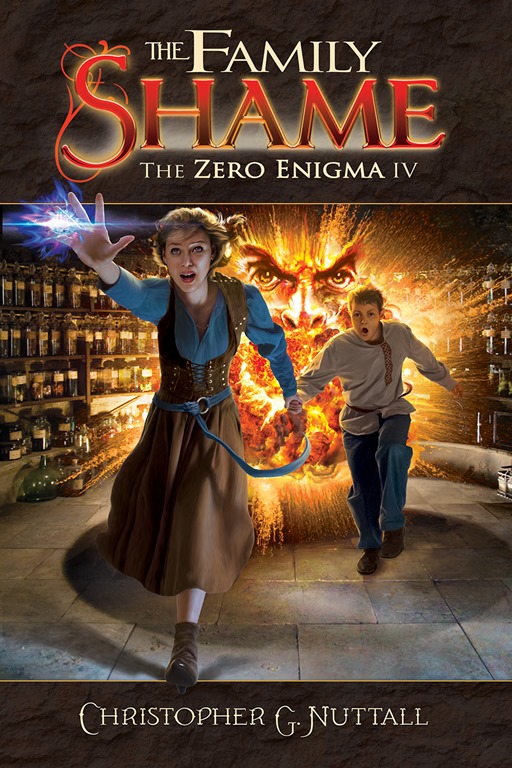
See, Isabella, in any other family, probably wouldn’t have done this. Every other family in the city of Shallot (where she’s from) picks their leader from everyone, male and female alike, based on a combination of magical and political ability. But her family, the Rubéns, don’t.
But she did it. She feels terrible about it, but she did it, and she can’t take that combination of deliberate non-action (in not telling her father or any of her teachers) plus actively aiding and abetting the treasonous older “friend” along the way.
And she is paying the price, as she has been exiled to Kirkhaven, an old, ramshackle estate about as far away from Shallot as you can get by horse. She’s also been told not to send letters to her father, mother, or brother, as she’s now “the family shame.”
So, not only has she lost everything — family, friends, wealth, schooling, political standing (which she did care about, even though she was only twelve as she was quite precocious in some ways) — she now has to deal with this ramshackle manor. Two adult magicians live there, Morag Rubén and Ira Rubén. (No, they’re not married to each other.) Morag is a cook, while Ira is a type of experimenter who admits he wants to find ways to make Dark-inflected spells work for good. And both of them, too, are exiles…
Did they want young Isabella around? The answer is a resounding “no.” But there she is, and now she has to figure out how to deal with them (not easy), how she’s going to continue her schooling independently (definitely not easy), and how she’s going to deal with the loneliness of this deserted, remote place (almost impossible). All while wrestling with the problems that brought her to this place, which she knows she created and cannot change.
When she manages to befriend a boy around her own age, Callam, her life starts to improve a little. But she has to keep the friendship secret, as she’s not supposed to leave the grounds, nor is he supposed to be on the grounds himself. (It’s a very innocent friendship, as is befitting for their respective ages.)
It’s getting to know Callam that helps to slowly but surely make Isabella realize just how badly she behaved before, and avow that she will find a way to do better.
I don’t want to give away the plot, so I’ll stop there with a plot summary. But I’ve given you this much because I wanted you to think about just how hard it’s going to be for Isabella to redeem herself in the eyes of society — and worse, how hard it’s going to be for Isabella, herself, to redeem herself in her own eyes.
Redemption, you see, is hard. People judge you by your past actions, and no matter what you do, no matter what you say, no matter how much you might apologize, and no matter how much you’ve actually changed, there are still going to be some people who will hate you, and not give the new version of you — the better version, the one tested in the fire — the time of day.
We see that in contemporary life every day.
One of the most current examples is that of figure skater Tonya Harding, who’s now nearly forty-eight years old. But when she was only twenty-four — in 1994 — she somehow failed to stop an attack on fellow figure skater Nancy Kerrigan, then not quite twenty-five. Kerrigan was hit on the knee by thugs sent by Harding’s then-husband, and one of those thugs was Harding’s bodyguard. Harding, herself, was sentenced to probation, given community service, and ended up being banned for life by the United States Figure Skating Association.
What Harding did back then was awful. That she had a rotten childhood (she truly did), that she came from abject poverty (she did), that her husband was mean and abusive to her as far as the public could discern, and that figure skating was her one gift (she was the first American woman to land a triple axel in competition, and was known for her athleticism, her jumps, and her footwork passages) may ameliorate things slightly, but the fact remains that she could’ve apparently done something to keep Kerrigan from being harmed. (I must say “apparently” because the facts are not completely in evidence. What we know is that Harding took a plea deal.)
But did she deserve to be ostracized the rest of her life for this?
Is the assumption going to be that Harding can’t learn, can’t find a way to be a good person, and that it’s supposedly OK for her to never use her one, true gift ever again, even to teach young kids how to skate?
See, that’s the quandary my friend Chris’s protagonist Isabella is in, too. Isabella is a gifted magician, but she misused her magic and hurt people. She knows it was wrong. She has apologized (as Harding, back in 1994, 1995, and 1996, apologized multiple times to the best of my recollection). But she was ostracized, cast out, exiled.
Isabella does find redemption, or at least finds a way toward redemption.
I would like to think that Harding also has found some sort of redemption, too. (Being on TV’s Dancing with the Stars surely has given her an athletic outlet, and may help pay for her son’s education down the line for all I know.)
But what’s sad about the quest for redemption, and what’s sad in both cases I’ve discussed here, is that some people will never forgive you no matter what good you might do. And no matter how much you might’ve changed. And no matter how much you might want them to forgive you…they just won’t, and you have to learn to live with it.
That Harding still has people, even to this day, leave feces (yes, actual feces) on her doorstep or rude messages on her phone or random people on the street swearing a blue streak at her, twenty-four years later, illustrates just how hard it is to seek redemption, even if you do it privately and out of the public eye.
You pay a heavy price, when you do something wrong, bad, or something that society judges immoral or flat-out evil.
But you still have to learn to live with yourself and your talents, and use them to the best of your ability. Which is what I think Harding is trying to do, as the older, presumably wiser version of herself…and it assuredly is what the young Isabella Rubén is trying to do in THE FAMILY SHAME.
I’m proud to have edited Chris’s new novel, and I hope you will find it a fun read, as well as an instructive one.
And personally? I think redemption is definitely possible. I just wish people would learn to see others for who they are today, not for how they hurt them yesterday, or how bad they behaved the day before that (or twenty-four years ago). Don’t forget it, no, as that’s revisionist history and unnecessary. But do forgive, if you can, at least as far as to say, “If I lived that person’s life, I can’t say for certain I wouldn’t have done the same things.”
That is the best way to be a decent human being, bar none.
Why Minimalism is the First Step Toward Non-materialism — a Collaboration with a Purpose Post
Since I was in my mid-teens, I’ve believed in non-materialism. People, I thought (and still think) are far more important than any possessions. And while you need some things in this life (for me, these are a car, musical instruments, a computer, some clothes, books, etc.), you don’t need to go hog wild and buy everything in sight.
This feeling is now being expressed as minimalism. People who’ve never once thought about non-materialism are trying to become aware of how many needless possessions they have, and get rid of the ones that truly aren’t necessary.
It’s because of that viewpoint that the Collaboration with a Purpose group decided to discuss minimalism and its related elements this time around.

Jane Love put this picture together, along with the later one in this post, to give you an idea of what we’re talking about.
See, what we need is a place to call our own. We don’t need a whole lot of stuff around us that gets in our way and stifles us. (I know, I’m a fine one to talk. My room is cluttered with all sorts of things, though I blame some of that on not having enough space to do everything I need at the moment. Though it certainly has made me figure out what I do need, and why, living in a smaller space than I’d prefer…but as always, I digress.)
The point of minimalism is to identify what you do need, and use that. Appreciate that, yes. But don’t go overboard, and don’t clutter your life up with unnecessary things that serve no purpose other than to make you feel better for a brief moment about buying the latest hot gadget or late model car.
But I started off talking about non-materialism, didn’t I? So how does this relate?
There are grades of non-materialism, you see. Minimalism, I see as one of those shades along the non-materialist spectrum. And the two operate in much the same way: The goal is to give the irreplaceable — the people, furry friends, and true passions — the space and respect in your life they deserve, while minimizing the effect of everything else.
Take a look at the picture below (the second of Jane Love’s wonderful efforts this month) if you don’t believe me:
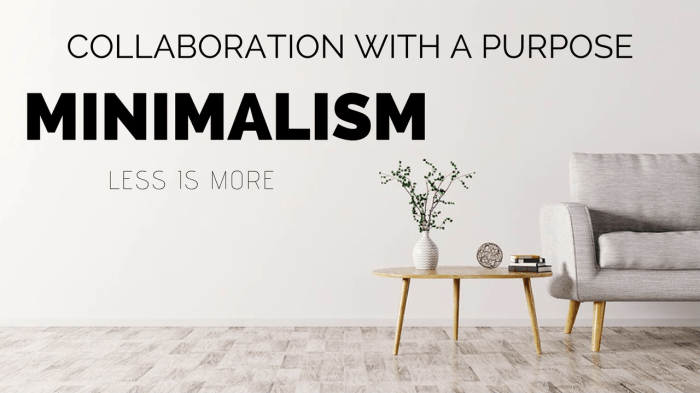
Here, you see a chair. A vase with some flowers. A bunch of books on a table. And one piece of art. And nothing else…because you don’t need anything else if you’re sitting down to read, providing you have enough light to read by in the first place.
See, anything else just distracts you from reading. And what is the point of that?
As for other possessions, I don’t really understand why folks feel like they need to “keep up with the Joneses” and the like. Because there’s truly no point in it.
See, a fancy car doesn’t advance your life goals much. Nor does having the latest high-tech gadget.
What will advance your life goals, then? And why does embracing minimalism or, its stronger cousin, non-materialism, do anything to give you the idea that you’re coming closer to them?
I can’t tell you what your own life goals are; only you can do that. But I can tell you that most of us want a few of the same things. To be loved for who we are. To be appreciated for who we are. And to be understood for who we are.
What you do for a living isn’t as important as those three things.
Now, we aren’t all alike, of course. But most of us do share those three things as among the highest aspirations we have. And none of them — none — have anything to do with materialism.
Minimalism forces you to realize what you need, and what you can live without.
And being a non-materialist forces you to realize that what truly matters are people, not things. Our minds, hearts, and spirits are far more important than anything else. And once you understand that, you can embrace the fact that possessions, for the most part, do not matter.
I believe strongly in this month’s topic, in short, and hope you will take the time to visit all of my fellow Collaboration with a Purpose authors (though you don’t have to do it all in the same day, of course!), as they all have different takes on the subject of minimalism. (Though I don’t know how many, if any at all, will discuss non-materialism, I’m sure their posts will be extremely valuable in their own right. They always are.) Links will be added as their posts go up, so do come back in a few days for the full and entire list of posts.
Nicolle K. (Intro post) – “Alert: A Collaboration for Minimalism”
Nicolle K. (regular post) – “Three Ways I’m Applying Minimalism as a Highly Sensitive Introvert”
Jane Love – “Mind Minimalism: Life Doesn’t Get Better With Worry”
Sadaf Siddiqi – “Value of Minimalism”
Ipuna Black – “Minimalism: What Gives You Meaning in Life?”
Gelyka Dumaraos – “Being More With Less: Embracing a Simple Life By Being Zero-Waste”
Mylene C. Orillo – “How Grief Taught Me to Keep My Life Simple”
Sonyo Estavillo – “Minimalism for Success: Why Little Wins Count”
Divyang Shah
Swati Kadam
Do check them out, OK?
Why Perfection is a Trap
Have you ever heard from some well-meaning busybody, “Go back, and make it perfect?”
I know I have. And hearing those words didn’t help, because perfection — and the pursuit of it, perfectionism — is a trap.
See, nothing we human beings can do is perfect. Nothing whatsoever. We can only do our best. And try to make our best even better over time, of course…but that is not perfection, and it can’t be.
So, if you’re like me, and you are unwilling to admit that you can make errors — sometimes bad ones — that makes life difficult. Because perfection, as I said, is a trap; it makes you believe that nothing you do will ever matter, because you can’t be perfect, and yet you still must try.
Now, being excellent, striving for excellence, is indeed doable. And I urge you to do that very thing.
But trying for perfection? Um, no…not a good idea, because of what I’ve already said, and also because if for some reason you do hit someone else’s standard of what “perfect” actually means, you’ll end up never being able to satisfy that person again as no one can be at that high of a level all the time.
In my life, I’ve known a number of people who were incredibly encouraging and giving in spirit. None of them believed that you should try to be perfect.
Yet, partially because of my early training as a musician, I fear to make mistakes. (Even though I know I can make huge ones, as I said before.) I try over and over again to fix things that maybe don’t even need to be fixed; I try over and over again to explain myself, because I don’t think my initial explanation cut the mustard, even though it was perfectly understandable — and listening does take some energy, if you do it right, so me trying so hard to make myself understood is also a trap…hm.
At any rate, try to avoid the trap of perfectionism, or the will to be perfect all the time. Instead, accept that you will go for excellence instead — and that will be more than good enough.
Timing, and Jason Cordova’s DARKLING
I read Jason Cordova’s hotly awaited new novel, DARKLING, over the course of three weeks. (Normally I would’ve devoured it in one sitting, but the fact that I had a crisis going on with a family member’s health made me put it to the side for a time.) It is absorbing, intelligent, fast-paced, dark, depressing, menacing, and in its way a damned good read — but the timing of my life and reading this book were not fully aligned.

I submitted a review to Amazon, as per usual, but because I am much more scattered/distracted than usual, I didn’t make a copy of it before I left their page. (Edited to add: After waiting for nearly a full day, I gave up and reviewed the book at Goodreads.) Because of that, I can’t quote the review I’ve already written; all I can do is tell you to go read DARKLING, as it’s very good dark military SF with some absorbing political machinations. (Yes, you should read WRAITHKIN, the first book of Jason’s “Kin Wars” series, first. But you’ll easily understand DARKLING whether you do or not, providing you’ve read any military SF or dark SF at all.)
The rest of this blog is going to talk about aspects of the book that were tough for me to handle, due to the timing. If you don’t want your reading spoiled (though I will try to avoid the worst of spoilers), go do something else and return for the next blog, will you? (I won’t be offended. Promise.)
We have three brothers in DARKLING: Gabriel Espinoza, a Darkling soldier and second-class citizen dealing with dehumanizing treatment due to all soldiers of this type being recruited from the Imperfect class (meaning they could develop cancer, or have some other “genetic defect” that’s been rooted out by the galactic civilization they live in); Andrew Espinoza, a spy (a damned good one) who’s acted in many regards as a chameleon mole; Kevin Espinoza, a politician and born diplomat. Gabriel is a brooding hot mess from an emotional standpoint (it’s understandable, though; the love of his life is dead, he had to give up his daughter due to his line of work and because he didn’t want her tainted by the knowledge of his “imperfect” father, and he’s cut off from his family due to various considerations, even though his family wanted nothing of the sort. I can’t explain this fully because of spoilers, and also because much of it is explained at the very end of WRAITHKIN as I have written before, so I hope you can take this as read.) Andrew, as a chameleon mole, has other issues with trying to maintain his inner self, and also has been cut off from his family due to completely other concerns (again, his family certainly doesn’t want this, but with his job, there’s no other way). And finally, Kevin is a good guy, the only brother attuned to his emotions and fighting hard for the Imperfects as he views his society as closed-minded and hypocritical (and rightfully so). But he’s mostly there as a foil, to explain what the other two brothers should’ve been if not for the circumstances that led them to fight a war in their disparate ways…and that’s a conscious author’s decision that I can’t fault Jason for, as he needed that foil desperately due to the darkness of everything else.
Now, as to the circumstances of my life, and how it applies to how I saw DARKLING.
First, I was reading along, and enjoying the book immensely despite its darkness. (I knew what I was getting in for, as I read and enjoyed WRAITHKIN, and I really wanted to see what would happen next to the Espinoza clan.) Then, my family member’s health crisis arose, and suddenly the world stopped meaning much. I had to put DARKLING down, and deal with immediate realities; my blogs dried up for a bit (which I’ve already explained); I went to “work, sleep, go to hospital/rehab center” mode, rinse and repeat.
Finally, I was able to get back to DARKLING and realized two things; one, I hadn’t forgotten anything in the intervening time since I’d last been able to read and concentrate on anything. (This is the sign of a good writing and an absorbing read, that you don’t forget anything even in the midst of a crisis like this.) And two, the fact that these brothers are put through the emotional and physical wringer was all of a sudden more visceral, more immediate, than before, due to the circumstances of what was going on all around me.
See, writers are observers by nature. We have to be, or we can’t explain or show any of the stories we tell with any verisimilitude at all.
So, I was observing everything that happened around me, as per usual, whether I was picking up on that observation consciously or not. And all of that — all — hit me as I restarted my read of DARKLING. The injuries these men suffered were almost overpowering in their intensity, in this context, and it was difficult for me to keep reading despite the quality of the writing. (Jason keeps getting better and better, and tells a damned absorbing story, as I have said before.)
To my mind, DEVASTATOR is more my cup of tea (as I wrote here). I like Tori so much as a character, and her relationship with Dylan (the shy, almost innocent love she has for him) helps to enliven even the darkest of moments.
But DARKLING is quite good. Quite, quite good, in fact.
I just had a hard time reading it due to what’s been going on. So I tried to say that, without getting into personal details, in the review at Amazon (that still isn’t up as I type this, though if it does go up anytime soon I’ll add a link to the review so you can read it directly).
I do think Jason’s created a new genre, or at least fused a few, in DARKLING. I call this “grim-dark military SF.” (If you read it, you’ll understand why.) There is a palpable sense of menace in even its quieter moments; everyone is on edge, everyone is waiting for the next shoe to drop (or axe to fall, depending), and Gabriel in particular seems like a bomb waiting for a place to go off.
The writing is stellar, though, and if you know going in — as you should, providing you’ve read WRAITHKIN — that it’s going to be grim, you should be able to handle DARKLING just fine.
Just don’t read it before going to sleep if you have a weak stomach or are prone to nightmares. As this book will give you more than a few, else.
We Must Do Better and Insist on Better Health Care (A Collaboration with a Purpose Post)
Sorry ’bout the lengthy title there, folks…on with the show, er, I mean blog.

I am especially cognizant this year of World Health Day due to the myriad of health problems my family has suffered over the past year. Because of all the times we’ve been to the doctor, or in the hospital, or in the rehab center, I am more aware than ever about how we need better quality health care in the United States. (I can’t speak for the rest of the world, though my fellow bloggers have done so brilliantly. Links will follow at the end of this post.)
What I’ve seen shocks me. (And I thought I was unshockable.) A woman who needs hearing aids was in one of the rehab centers my family member dealt with this year, and can’t get them because she can’t afford them. She is over sixty-five, is retired, has Medicare–meaning, she does have state-sponsored insurance that’s subsidized by the federal government–and she still can’t afford hearing aids.
This affects her quality of life.
This affects how she can interact with her family, her grandchildren, and those working with her to help her heal up so she can go home.
There’s something wrong with a country that doesn’t find a way to help someone who needs hearing aids find a way to get them. (She is willing to pay, mind. Her daughter told me that. But it’s a matter of making it affordable so she can, and still eat, pay her bills, and afford her medications.)
Or how about this? I, myself, have dealt with a problem trying to get any help with my vision. I have Obamacare. I am eligible to be seen and get glasses, which would be subsidized (but not free)…yet every time I try to set up an appointment, and I’ve been trying now for over two years, I am told there are none.
So, I continue to wear glasses that are over two years old. My backup pair is over ten years old. My vision hasn’t changed much in all that time, but that doesn’t mean I shouldn’t have a checkup or get another pair of glasses that is perhaps a little bit more up-to-date than my backup pair.
How many other people are out there who can’t afford to pay full price for glasses, thus wait to be seen, and then never get an appointment because it’s supposedly always full?
Then, there’s the problem of paying for medication. My family members have radically different insurance. One has no help at all to pay for her prescriptions. Another has some help. But when your medicines can cost over $300 per month — yes, one of the cardiac meds my mother takes is at least that expensive — the co-pay is still plenty high. And when you’re on a fixed income, in retirement, coming up with that high co-pay is damned difficult.
Why is this considered acceptable?
Then, there’s the problem of getting doctor’s appointments when you’re sick. (I know first-hand about that one, too.) Getting your doctor’s office to even call you back is a pain in the buttinsky. And then, if you do get to talk with a nurse, they just send you to urgent care anyway, so why did you waste your time?
In short, there are major problems with health care.
Right now, we have a proliferation of forms, a proliferation of HMOs, PPOs, and all sorts of other alphabet-type agencies, that basically boil down to, “No, we’re not going to help you.” And that is utterly unacceptable.
Mind, there are wonderful people in health care. I’ve met more great nurses and doctors (much less PAs and CNAs) than I can shake a stick at. These people genuinely want to help, but they are overwhelmed by paperwork and there aren’t enough slots to see everyone who needs to be seen. And nothing at all seems to get done whatsoever about fixing these systemic problems.
The World Health Organization has done this World Health Day since 1948, to call attention to the need for better health care for as many people as possible. (Preferably, it would be for every single last one of us, and that is indeed their goal.) And this year, their slogan is called #HealthForAll.
I think we badly need to be reminded that health must be cultivated. We have to have enough resources to help people get hearing aids when they are on fixed incomes. Or afford expensive cardiac medicines when they are on fixed incomes. Or have access to doctors, nurses, and appropriate care, while being treated as the human beings we are rather than an inconvenience or worse, someone to be brushed off and ignored.
So I’m pleased that the Collaboration with a Purpose group wanted to talk about World Health Day this year. It is something that is close to my heart. And it is something we desperately need — better health care, for as many people as possible, in as many ways as possible, so we all can live better and happier lives.
Because if you don’t have your health, you don’t have anything.
Period.
Now, please go check out my fellow Collaboration with a Purpose group members, as they all have interesting takes on the subject. (Links will be added as their posts go up.)
- Jothish Joseph — “Are You Healthy?”
- Mylene Orillo — “The Truth About Getting Sick in the Philippines“
- Ipuna Black — “Health is a State of Balance: Mind, Body, Spirit“
- Sonyo Estavillo — “#WorldHealthDay & Why #MentalHealthMatters“
- Tajwarr Fatma — “World Health Day” (about mental illness/mental health)
- Nicolle K. — Intro post about World Health Day
- Nicolle’s regular post is up! — “Health for All — Self-Care“
- Jane Love — “Three Vital Components of a Healthy and Balanced Life“
- Gelyka Ruth Dumaraos — “How My Father’s Health Condition Made Me Shift to a Healthier Lifestyle“
- Divyang Shah — “World Health Day!“
- Sadaf Siddiqi — “Health is Wealth“
In Praise of Video Games
Folks, I am tired of video games being blamed for everything. Supposedly, video games are bad for you; they create addictions; they may even lead, some say, to school shootings, especially if you play the more violent games on a regular basis.
Banana mush. (This is my very polite way to say “BS.”)
Why is it, hm, that no one ever talks about the pluses of video games? How they help you test your reflexes, or maybe how they help you figure out unusual solutions to problems, or even that they give you something to do when you’re worrying about a problem and have no other way to get out of your own head?
Seems to me that those three reasons, right there, are good reasons to praise video games. Because problem solving, improving reflexes, and giving yourself a mental “out” when you truly need one and have no others (providing you do this in moderation), are all good things.
I know that I play a number of games, and have for years. From Space Invaders to Pitfall (OK, I’m “old school,” all right?), to Ms. Pac-Man to Tetris, to Castle Age to Candy Crush, I’ve probably played just about everything. (Including “Operation Wolf,” back in the day. And no, I didn’t turn into a gun-toting criminal, thank you.)
Why do I do this, when my life is busy and stressful? I think it’s because of needing that out, along with a need to test my reflexes and improve my problem-solving skills.
It gives me some serenity, to be able to zone out for an hour, playing cards online (yes, I do that, too), or at Club Pogo (yep, I’m a member, and I’m especially partial to the planet-zapping Space Hunt game), or at any number of other places. And this little “mental vacation” allows me to finish up all the other things I need to do…even though I can’t do it every day, the fact that I can do this on some days helps enormously.
At any rate, I wish we’d see more people talk about the positives of playing video games, rather than the negatives. Because there truly are positives…we just need to look at ’em in a different way. (Sometimes I wonder if that’s the case with many things in this world. But I digress…)
What video games do you play, or have you played? Which ones would you say have helped you most, as a person, or given you the most relief over time? Tell me about it in the comments!
 Barb Caffrey's Blog