Archive for the ‘Writing’ Category
Book Recommendation: Leo Champion’s “Warlord of NYC”
Folks, I’ve been meaning to write this blog for several weeks. I knew about Leo Champion’s book WARLORD OF NEW YORK CITY for quite some time, mostly because I was one of his beta-readers and proofread the final version. But the time never seemed right to talk about Leo’s book.
Now, the time is right. The word is given. (Abandon all hope, ye who enter here? /snark)
 First, let me show you the book’s blurb:
In the twenty-second century, global civilization has moved into networks of arcology-skyscrapers that tower hundreds of stories above streets abandoned to anarchy. Inside the arkscrapers, a neo-Puritan cult of social justice rules absolutely; on the streets, feral gangs raid between feuding industrial tenements.
Diana Angela is a hereditary executive in the bureaucracy that runs the world, with a secret life as an assassin on the streets. A burned-out idealist, she’s long ago given up on trying to change the world – the best intentions of the past have only led to greater misery.
And she has no reason to think precinct boss Jeff Hammer’s intentions are even good. A former mercenary who may be a military genius, Hammer’s narrowly taken control of a small tenement. Now he’s facing vengeful exiles, aggressive neighbors, and uncertain internal politics.
Which might be the least of his problems now that he’s drawn the attention of one of the city’s most dangerous women…
And now, my comments.
Diana Angela, also known as DA, is a badass. There’s no question about it. She is tough, smart, strong, somewhat of a chameleon as her society requires it (she lives in the arkscrapers, and is a part of the Intendancy, an extremely corrupt yet also extremely politically correct society). She hates what she’s forced to do in her day job, and has worked all her life to do some good on the streets of New York City as an assassin.
(Yes, an assassin. And she’s damned good at it, too. But I’m digressing, and I shouldn’t.)
DA is a fully actualized woman. She cares about people and has compassion, but it comes out in very unusual ways. She also loves sex — why not? — and her society, with its beliefs that you have to do this (and “this” changes weekly, it seems) and you can’t do that (with “that” also changing weekly), makes it hard to enjoy it. (That you have to get permission for every sex act from the worst of the toadies she deals with — “Can I touch you here? Can I touch you here?” — drives her crazy. And it should.)
The fact that sex, itself, has become so far away from what it can be in taking you out of yourself for a moment and losing yourself in someone else is a huge symptom of what is wrong with the Intendancy.
Simply put, the Intendancy has got to go. But they have enormous power, and DA can only do so much topside in the arks.
She can do a great deal more on the streets, and she does. I do warn you, some of what she does is bloody and there’s a whole lot of violence. She kills people who “need killing,” and for the most part you’ll agree with her once you realize what these people have done — though in the moment, you may think, “Why be so happy about killing them?”
Diana is not a sociopath, though. She’s more of a frustrated idealist with a set of skills — judo, aikido, various other martial arts, swordsmanship, archery, guns — that allows her to live with the terrible things she has to put up with in the arks by balancing it with her vigilantism below.
But then, she realizes there’s a new player on the streets of NYC. A guy named Jeff Hammer (from Leo’s first book in the series, STREETS OF NEW YORK CITY) has overthrown the corrupt regime in his own tenement, and has started a new one. He’s an ex-flyboy (and flying, in his world, means using something akin to a bike with wings; I am not doing this concept any justice, and I apologize for that), he’s smart as a whip, and he knows things have been off for a very long time. And he’s going to do something about it…
DA goes to look in on Hammer, and can’t decide if he’s a criminal, a madman, or worse. That the last time someone like Hammer arose caused a bloodbath that DA, herself, was a part of, makes it even tougher for her.
So, will she decide to help Hammer? Or won’t she? And if she does, will NYC ever be the same?
Thus ends my plot summary, hoping I didn’t spoil it too much for you.
I still have one more comment, though: Leo’s book is damned good. Really, really good. It reminds me in some ways of Lois McMaster Bujold, even, though it’s far bloodier and DA’s overt sexuality is not something LMB would ever cotton to. I think the reason it does remind me of LMB, though, is because of the assuredness of the writing on the one hand and the capability of the female protagonist on the other. DA knows who she is, what she wants, and knows exactly how to get it…so don’t get in her way, as the only person she needs to fear is herself. (In that way, she reminds me a little of Cordelia Naismith Vorkosigan, or better yet of Elli Quinn or even Sergeant Taura. And if you don’t know who I’m talking about, go read every book LMB has ever put out, then come back, will you?)
In other words, you need to read this book, even if you’re normally squeamish regarding violence (as I am). It is funny. It skewers with manic glee many stereotypes regarding how “wonderful” a politically correct civilization would be if given its head. It has some interesting things to say about sex, power, and money. And the way DA is, herself, matters greatly…as does the way Jeff Hammer tries to change things for the better.
WARLORD OF NYC will make you think. And will make you root for DA, even when she’s at her most obnoxious…and wonder how on Earth she’s going to deal with Jeff Hammer when she can’t always see the forest for the trees.
It is, by far, the best thing Leo Champion has written yet. And he needs to be encouraged to write more in this vein. (Who knows what’ll happen next? I want to find out!)
Again, the Amazon link is here for WARLORD OF NEW YORK CITY. It is available on Kindle Unlimited. (Unfortunately, at this time, it’s not available at Barnes and Noble or anywhere else.) Or you can buy it outright for $3.99 (again, only at Amazon).
The Transformative Power of Writing
Writing is one of those activities that can transform you, if you let it.
How? Well, it’s simple. You have to throw enough of yourself into your writing to inform each character, at least enough so they’ll feel real. And in so doing, you can make more of your memories, or your abilities, or your hopes/dreams/fears, by working them out to their natural conclusions.
(Or, as I write a lot of fantasy and we all know it, their unnatural conclusions. But I digress.)
Giving yourself the permission to explore sides of yourself you’d rather not — such as when you write villains — helps you to harmlessly bleed off your worst impulses, and transforms that into something more. Something better.
Or at least something different.
Writing, as a transformative ability, is something writers almost take for granted. I can almost hear some of you going, “But Barb, really! Here we are, writing our stories, doing what we need to make our stories sing…why do we need to think about it as a transformative ability, anyway? What’s the point of that?”
Well, you don’t have to think of it as transformative, if you don’t like. But that doesn’t make it any less the case.
Every single thing we do as writers is intended to create something. Or transform something. Or inform something. Or maybe educate you, along with your enjoyment of same…no matter what book or story you might be reading (and no matter how awful it may be in the moment), there’s something you can take out of nearly every piece of writing. (Yes, even the dullest Puritanical “erotica” out there, that was Bowdlerized before Bowdler even came onto the scene.) Even if it’s just what you know you definitely don’t want to do, you learn something from everything you read — whether you realize it or not.
Some folks refuse to throw out anything they’ve ever read, no matter how boring or mundane or stupid or pointless. I’m not necessarily saying you need to go that far, because I think it’s more important you learn whatever it is from stuff you can’t stand as quickly as possible (thus keeping you from having to go back and read it ever again). But whether it’s mores, culture, language, description, dialogue, or all of the above, there’s something in just about everything to appreciate — even if you decidedly don’t like it.
ALTERNATIES, by Michael P. Kube-McDowell, is one such book. It’s well-drawn, the different alternate realities stark and compelling, and the characterization is professional. But the protagonists are, to a person, unlikable. There are some things done in this book, such as torturing of sex slaves, that turned my stomach so much that I would never read the book again even though it is very good.
What I took from reading this book at the time was, “Sex sells. And dysfunctional, sadistic sex sells even more.” But now, with the perspective of an author with three novels and any number of shorter works under my belt, I look at it a little differently. I think what Kube-McDowell was doing was masterful, in its way — but I don’t have to like it, and I don’t.
So, appreciate the craftsmanship, yes. Appreciate the time and effort and hard work, yes. (Respect the hustle, as Jason Cordova would say.) But don’t get lost in the depravity of it all, or the enervating sense of despair…because while that is in its way transformative, that isn’t at all what most people would like to be transformed into, if you get my drift.
And in your own work, look for ways to find hope, if you can. Even the worst situation may have one hint of hope; for example, all those French resistance folks trying hard during the occupation of France (Vichy France) in World War II had to deal with many stark and terrible realities. But they had hope nevertheless; they could believe their hard work would make a difference, no matter what it looked like, and no matter how long it took.
Ultimately, they were right.
So when you write a book with a lot of stuff that’s depressing or enervating or hopeless, try to find at least a few moments of comedy or light to balance it out. When you’re able to do that, that’s when a book really sings.
And if you’re writing something lighter (as I tend to do), finding moments of darkness to set off the light also works. (It’s all in the contrast, ultimately.)
So, how do you feel about the transformative power of writing? Tell me about it in the comments!
Narrative Framing, the Milwaukee Bucks, and You
Folks, over the past week or so as I’ve battled an illness, I’ve been thinking about how we shape our own narratives. (Again, as this is one of my besetting sins as a novelist.) And that led me to ponder the Milwaukee Bucks, which have had one of the best years in their team’s history and have made it all the way to the Eastern Conference Finals…which you’d think would be good enough for anyone.
But as the Bucks were expected throughout to go to the NBA Finals, people have been up in arms (including yours truly) when they lost game 5 to the Toronto Raptors at home to put them down three games to two. They now face elimination in game 6.
The thing is, if you think about it, just getting to the Eastern Conference Finals is wonderful. The Bucks were “one and done” last year. And, I believe, the year before that.
But this year, they swept their initial playoff series, against the Detroit Pistons. And then they won easily over the Boston Celtics in the second round.
This, mainly, along with a stellar regular season, is why Bucks fans have taken a doom-and-gloom attitude.
And that led me to consider how else we tend to frame our own narrative in our lives. Do we think of the bright side? (Should we is another question, but that’s for another day.) Or do we think of what’s not working rather than what is, and concentrate on our failings rather than our successes?
I don’t know about you, but I tend to think about the failures, myself. I think about how I could’ve done this, that, or the other better. Sometimes, in the moment, it’s almost like I see myself from above and wonder, “Why can’t I do better than this? Why is it that I can barely explain myself? Why is it that I can’t make better decisions? Why do I run out of time?” and so on.
I wonder if that’s where the Bucks are at, right now. But I strongly suspect, as their season is not over, that they aren’t.
Are they happy to be down 3-2 and facing elimination? Of course not. (Who would be?)
But they have things they can still do. And I believe they’re most likely concentrating on them, and how they need to just do a few more things to get a win (in sports parlance, a W)…they may even be focusing on past success against the Raptors, and be looking at what they’ve done differently (and worse) in this series that hasn’t been working.
Forward, they are probably looking. Not back.
Now, does this make any difference in what happens in Game 6? You better believe it does. They can go in there and do their level best, knowing their season will be over if they don’t give it everything they possibly have.
And of course they could still lose. But if they do, they’ll know — providing they gave it their all, and tried their best, and focused their minds and bodies properly — it wasn’t their time to shine after all.
That can be a bitter lesson, sometimes. Because we try our best, and we want to shine all the time.
But no one — not Michael Jordan, not LeBron James, not Wilt Chamberlain, not George Mikan, nor any other basketball superstar over the years — has ever shined all the time. Because it’s not humanly possible.
So, let’s take a step back, and frame this differently, OK?
The fact is, the Bucks’ Giannis Antetokounmpo is a great player. He may well win the NBA Most Valuable Player award this year, and if so, it’ll be richly deserved. And he’s led the Bucks to an excellent season.
These pluses are not negated, nor should they be, if the Raptors do succeed in beating the Bucks.**
How does that relate to your own, personal situation, though?
In essence, you need to learn how to frame your own narrative. Stop beating yourself up because you can’t seem to get ahead no matter how hard you try. Think about your successes once in a while, rather than always and only your failures. And do what you can to remember that you are a vital person with a role to play whether it seems like it or not.
That’s how you can learn from the doom and gloom over the Milwaukee Bucks and their current situation.
What do you think about this blog? Tell me about it in the comments!
———-
**As a fan, I will admit that if the Bucks can’t win game 6 and force a game 7, for a few days I will go around with a bad taste in my mouth. (That comes with the territory.)
The Transformative Power of Music
Folks, this is the first in a three-part series. All will start with “The Transformative Power of…”, so you have been warned if this isn’t your thing. (Though why it wouldn’t be, I haven’t any idea whatsoever.)
Music can transform your life, if you let it.
What do I mean by this? (I can practically hear a few of you thinking, “Barb, you have gone off your rocker with this one. What gives?”) It’s simple: music can actually heal you. Or at least improve your mood while giving shape to your feelings, which is nearly as good.
Who hasn’t felt better after singing in the shower? Who hasn’t felt better after singing along to their favorite songs in the car?
For me, playing music takes that feeling and amps it up to eleven. (H/t if you got the Spinal Tap reference, there.) And being able to play music in a group, whether it’s a concert band, a jazz band, a small group, or just by myself, is one of the best feelings there is when it’s going right.
But as this post is titled “the transformative power of music,” I suppose I should get down to brass tacks.
After my husband Michael died in 2004, I didn’t want to do anything. My grief was so profound, it took me at least five years to process, and another few after that to realize I still had a life to live — and what was I going to do about it? All that time, my health worsened, my hands especially, and when I decided I wanted to play my instruments again (sax, clarinet, and oboe), I was barely able to do it due to my hands aching so much.
And it wasn’t just trying to play my instruments that made me frustrated. I was to the point with my hands that driving in the car was painful. I could only use one hand a few minutes at a time, and then switch off to the other. It was just that bad.
Fortunately, I went through a few rounds of occupational therapy, which helped a great deal. The pain lessened, I gained range of motion again, and I learned how to properly stretch the areas. And ever since, when my hands have started approaching that state again, I’ve asked for — and received — another date with the occupational therapist, and gone through more therapy as required.
Mind, I’d have never gone through with any of that if I hadn’t wanted to play my instruments again. But I did. And that allowed me to make a positive decision in the depths of my grief to do something positive, meaningful, and healthy.
Anyway, in September of 2011, I asked to play in the UW-Parkside Community Band again. (I’d been a member before I left the area for graduate school, back in the day.) One of my professors from Parkside, Mark Eichner, was still conducting it, and he told me when rehearsals were for the December concert. So I rejoined it in late October, played the next concert, and voila! I was a performing musician again.
(For the record, my first concert back was on alto sax, and I played a lengthy solo on a piece called “Roma.”)
Soon after, I rejoined the Racine Concert Band in 2012, again on alto sax. (I’d been a member of this in high school and again in college, and only stopped when I moved away to attend graduate school in Nebraska.) Ever since, I’ve played many concerts with them. Most have been on alto, but a few have been on clarinet.
And last week, on Saturday, I played clarinet — first chair, de facto concert master/mistress — with the UW-Parkside 50th anniversary alumni band. That was an exceptionally challenging concert, as we had only one rehearsal beforehand and the parts were very tough. But I was there early, practiced my parts, and was as prepared as I could be.
It paid off. The concert went well. And I had a few folks come up to me afterward, praising what I did (nice, when you can get it), along with asking why I wear a neckstrap to play the clarinet as few clarinetists do. (It helps keep the weight off my hands, and allows me to play for a longer period of time with a whole lot less pain.)
Why am I going into all this detail? Mostly to explain what playing music has done for me. It has given me my confidence back. It has reminded me I can still do something, something positive, something very few other people can do. It has rewarded my perseverance and search for excellence…it has allowed me to give the gift of music to others in performance, also.
All in all, music has transformed my life.
You don’t have to be a musician to allow music to transform yours, though. Just listen to whatever you want. If you are hurting, let the pain out. If you are healing, allow yourself to feel safe and comforted. And if you just want to hear music for the sake of music, good for you: that’s the best listening experience of all.
What do you think of this blog? Tell me about it in the comments!
Computer Woes: Stuff I Learned While The Computer Was Down
As the title says…here we go.
- I am very impatient. Waiting to get my computer fixed seemed like forever, rather than nearly eight days.
- I was more stuck in ruts than I’d previously thought.
- Trying to type on a phone — even on a smartphone — is much harder than I’d thought, and it’s not just because of my quasi-carpal tunnel syndrome.
- Following from #3, I figured out I owed a friend an apology from a while back. He and I got into it because I was being very chatty, and on a good day — and with a good computer, complete with a proper keyboard and my hands cooperating, I can type nearly 80 words per minute. He could not follow me on his phone, and said so. (He later admitted he wasn’t particularly nice about it and did apologize.) At the time, I didn’t understand this…but boy, do I ever, now.
- Following from #4…yes, I did apologize. Because it’s better to apologize late than never. And it’s a lot better to know, in and of yourself, that you tried to do the right thing, albeit late, and albeit when the other person may not even care anymore…because it was important once, and I muffed it. It’s a statement that I won’t do it wrong–at least not intentionally, anyway–again. (Of course, that leaves all the other stuff that I haven’t run across yet as potential things to do wrong. But I could do ’em right, too…moving on.)
- Tablets are damned hard to use.
- I don’t enjoy texting. Not on a flip phone, not on a smart phone, not at all. (“I do not like this, Sam I am.” — Dr. Seuss.)
- That said, texting my best friends when the computer is down beats staying out of contact all to Hell.
- And using a tablet is better than using a phone of any sort to stay in contact.
- Sometimes, life doesn’t go as planned, at all. And while I’ve known that for a damned long time, it bears repeating. (Like a clue-by-four upside the head.)
- I have a hard time reframing a bad situation, something I truly can’t stand, into anything remotely resembling a good one. I did try. I told myself over and over that I had more time to read. (I read all sorts of stuff, too. Found a couple of good new authors — new to me, anyway. One of ’em is Kate Stradling. Really am enjoying her work.) I told myself, over and over again, that I was still thinking about my stories — which I was — and that there have been times I’ve not been able to write for seven or eight days before, and I didn’t panic, so what’s the big deal?
Enter panic. (Ding, ding, ding!)- Getting my computer back was useful. I’m still not back up to speed. But I have friends to help. And I’m grateful for that.
- I have to believe, despite it all, that there are better days ahead. We all have trials and tribulations. That this affected my livelihood for a week-plus in addition to my communication and my mode of living wasn’t good. (To put it mildly, but I digress.) But several of my friends made a point of calling or texting daily. They were concerned. And they made absolutely sure I knew they were concerned. (Bless them forever for this.)
- My family was also very good through this crisis. (It wasn’t just this I was dealing with. This is just what I’m willing to talk about. Further writer sayeth not.)
- “Sufficient unto the day are the needs thereof.” (Intentional Biblical misquote by my husband, Michael.) I have to meditate more on this one, I guess.
- Buddhists point out that you don’t have to enjoy your circumstances. You just have to accept them.
- But yes, when you get an ounce of joy, wring it out to the fullest! (I intend to do so, just as soon as I get some sleep. I’m going to write, and edit, and write some more…)
What do you think of this stream-of-consciousness blog? And what have you, yourself, learned when you have not been able to be online for a significant amount of time due to a computer failure, power outage, or any other reason? Tell me about it in the comments!
It’s All Grist for the Mill…
As a storyteller, no matter how halting I find the process to be sometimes, I’ve learned one thing and one thing only in this life:
It’s all grist for the mill.
What do I mean by this? Well, everything that happens, good and bad — but most especially the bad — can be used in a positive way toward illuminating your stories.
Why?
Well, think about it. When someone tells you off, how do you feel in that moment? What would you do differently, if you could? What would you do better? Or what, if the devil on your shoulder was in charge for a moment — for story purposes only, of course! — would you do worse, to get a bit of your own back?
See, we’ve all been there.
We’ve all had someone tell us off. We’ve all had someone treat us terribly, for no reason, without warning.
And we’ve all been unable to do what we wanted in those moments, for good or ill…and the virtue of storytelling is, you get to figure out what you might’ve done, and how it might’ve been, without hurting yourself or anyone else. (While making it fun to read, too, if you do it right. Otherwise, why bother?)
Mind, the good things are also grist for the mill.
We’ve all had wonderful, amazing, spine-tingling things happen. Maybe they’re split-second things, like seeing a double-rainbow (or better yet, the Northern Lights — I hope to see that someday). Or they’re the most astonishing things ever known to man, like climbing Mount Everest…or, closer to home, finding someone who loves you, warts and all, and cares only about you and nothing but you — not your bank account, not your health or lack thereof, not your putative beauty or lack thereof either, but YOU.
These things all illuminate your stories. They make them deeper. Richer. More intense. More believable. More relatable. And more interesting by far.
So, the next time you have a bad day, try to remember this: it’s all grist for the mill. It may help. And even if it doesn’t, you can tell yourself in your best Evil Writer (TM) voice, “Hey, I’m going to remember this person, and– (insert worst possible thing you’d do to him/her here)” and that may get you to laugh.
What’s grist for your mill? Tell me about it in the comments!
Appearance Vs. Reality
In daily life, I am struck often by the difference of appearance versus reality. And as a novelist, this strikes me with at least triple force, because I see how it could be otherwise, with just a bit of tweaking…and yet the pathos remains because the person (or people) in question just can’t make that tweak…
But I’m getting ahead of myself.
You may be asking, “So, Barb, what brought this on, hm?”
I’ve been thinking about the difference between appearance and reality for months, if not years. Not just because of the differences between reality starlets’ shows and their real lives (real lives are far more messy, are unscripted, and definitely have fewer camera operators and makeup personnel), but because of the difference in how people I know well — or at least people I once knew well — show off their lives in public but are all different in private.
This, of course, is not new to the 21st Century. We may have different ways of showing ourselves to be different and better and “all that” in public than in private than previous centuries, but it’s still the same old song.
Very few people, in short, feel confident in letting people know they’re real, with warts and all. They don’t want to admit they’re anything less than perfect, because they’re afraid the jackals may be circling…and sometimes, they’re probably right.
But most of the time, showing ourselves in our best light all the time is, to my mind anyway, self-defeating. It’s like a good friend of mine put it: “You see everyone else’s glamour shots, and your own blooper reel.” And you measure your blooper reel — that is, your real life with warts and all — against these highlight-reel things, and come up short.
Which, by the way, anyone would.
Back to why I’m talking about this today, though.
The whole “appearance vs. reality” thing has always been a particular interest of mine. This is only partly because I, myself, decided early on for whatever reason that I would not “fake it ’til I make it.” (That is, put on a front and pretend things were better than they actually were.) And I’m not sure what the rest of it was, excepting that I’ve always been someone who observed others keenly–and in so doing, figured out that all was not as it seemed.
I believe in leading as close to an authentic life as possible. That doesn’t mean burdening people with all my troubles, though sometimes it does seem that way. And it doesn’t mean, either, that I won’t share my triumphs, when I get them…it’s just that I won’t put on that false front, because I see it as wasting time and energy.
(And I don’t have enough of either, so let’s get on.)
That said, are there still things I keep private? Hell, yes. I don’t need to tell all and sundry everything about me just to lead that authentic life. And yes, it’s a balancing act, for certain.
In essence, what I want you to think about today is this: Is your life what you want it to be? What’s the difference between how it appears, and how it actually is? And what can you do about it to make it any better?
These questions will also work well when you’re writing, mind, as every character ever written struggles with this (as well as more common motivations). And if you use it just right, it’ll deepen and broaden your writing to a degree that’s startlingly real…and may just help others in the process. (Not that you have to, in art, but it’s a good side benefit if you can.)
Concert Aftermath, Etc.
Well, as promised, here’s a report on my latest concert with the Racine Concert Band, which was held at Horlick High School in Racine, Wisconsin, on February 26, 2019. I’m going to give you my general impressions of each piece, in the hopes you’ll appreciate the music even without hearing any of it.
The band played four pieces, which started with Richard Rodney Bennett’s Farnham Festival Overture. Overtures, along with marches, are traditional to start a band concert with; they have a known structure and pacing that audiences are accustomed to. The main difference between Bennett’s version and other overtures I’ve played had to do with how well Bennett understood how to write for symphonic band, and exactly what instrument could do which thing the best. A part written for euphonium was meant for exactly that instrument, rather than being a part that could’ve been given to a tenor saxophonist in a pinch; a part written for the tuba was idiomatic for the tuba, and worked perfectly with the rest of the orchestration.
In other words, it was a cute little piece that did exactly what it ought: it started the concert out well.
The second piece was an arrangement of Joseph Haydn’s St. Anthony Divertimento, which is known predominantly for its second movement (a chorale). This piece has four short movements, and is a staple of classical music because of its form and feeling. There is some dispute as to whether Haydn wrote this himself or whether one of his students, Pleyel, wrote it instead; what there isn’t a dispute about is how pretty the music is, how measured, and how much it embodies the feeling of stately grace.
The band seemed to enjoy this one. It’s another sweet piece that audiences enjoy, and it helped the concert move along nicely.
The third piece was an unusual work by Ottorino Resphigi called The Huntingtower Ballad for Band. Written in 1932, it was commissioned by the American Bandmaster’s Association to be played at a memorial concert after the death of John Philip Sousa (composer and bandmaster legend). Respighi is known for big orchestral works like The Pines of Rome, and he brought that sensibility with him into this piece. According to my conductor, Mark Eichner, who looked into the writing of this piece at a deeper level, Respighi had only six weeks to write this piece before the concert, and that made it perhaps shorter than it needed to be.
But what was even more interesting was the story behind why Respighi wrote it in the first place. It was meant to be programmatic, as it was about a historical love story (and nearly everyone can get behind those!), and there were three definite sections: the first being a lead-in to the main section, which is about the two young lovers trying to figure out a solution to their seemingly doomed love affair, and the third, quiet section where it’s obvious the lovers got away and have started a new life free from anyone getting in their way.
I’ll be honest, here; this particular work was challenging to put together. Not because any part was all that difficult, mind; it’s that the harmonies were not what you usually hear and the phrase lengths were either shorter or longer than most. (I know this isn’t very concise of a description, but describing music in words is quite difficult. Please bear with me.) The horns and low brass stood out in the Respighi, and they made this piece shine.
And the fourth and final piece of the band’s solo part of the program was the Malcolm Arnold English Dances. This is another four-movement work, but it’s a difficult one because it’s both lively and technically challenging. This was the one piece I had a solo part on, and I hope I did it justice.
The Arnold, for me, was by far my favorite piece of the night, and not just because I managed to snag a solo part. There were melodies, counter-melodies, and outstanding orchestration (Arnold was known for his orchestrational abilities). They were immediately accessible to the listener.
In short, you don’t have to love classical music to have enjoyed our program on Tuesday night. You just have to keep an open mind and listen, and hear…”those who have ears, let them hear,” as the Bible said. (I may be misquoting this.)
Our coda, concert-wise, was the Moorside March by Gustav Holst. We played that alongside members of the Horlick High School band. It’s a very short, English march (short in Holstian terms, anyway, as Holst is known for pieces like The Planets, First Suite for Band, and Second Suite for Band.) The Horlick members did a fine job on this work, and the audience seemed to enjoy it.
My reminiscences here wouldn’t be complete without saying a few more things.
First, I played this concert through a very bad back strain. Afterwards, I was down for about a day and a half. (Right now, with the physical limitations I struggle with, anything I do, I’m going to pay for in pain. It’s just the way it is.) Because of this, I wasn’t in that great of a mood either on the night of our dress rehearsal or on the concert itself.**
Second, I have to admit that it was difficult, again, to go to a concert, play the concert, and have no one there to listen to me play it. Sometimes, I’m fortunate and my Mom is well enough to go; that wasn’t the case this time. Other times, my sister can go, which also wasn’t the case. Still other times, my good friend who lives in town can come hear me play…but again, that wasn’t possible this time.
It’s at times like these, when my back is out, I must play the concert anyway, and I have no help whatsoever to get in (though I did have help on the night of the dress rehearsal, as one of the horn players helped me in and out of rehearsal when she realized I was in distress — bless her forever for doing this!), that I start feeling extremely frustrated.
Don’t get me wrong. I’m glad to play music. I hope the audience enjoyed what we did. And I was happy to get a solo, and as I said before, I hope I did it justice.
Because of my physical limitations, I am now among the first to get to rehearsal (to make it easier for me to get settled and put my horn together) and the last to leave. This was definitely the case on Tuesday with my back being as painful as it was; my conductor, Mark Eichner, and his wife Esther, were waiting patiently for me to finish getting my winter boots back on (as I brought dress shoes along for the concert, of course), get bundled up, and get out. They couldn’t leave until I did, as the room had to be locked behind me…sigh.
That said, the only way I got through that concert was to pretend my husband, along with my best friend Jeff, were in the audience. They both loved music. They would’ve enjoyed seeing me play. And I can’t imagine, had they lived to see this day, that they wouldn’t have been there. So it made me feel a little better to picture them there, and made me feel far less alone in the bargain.
And yes, in case you’re keeping score, I also pictured them waiting for me as I was the last to leave. And tried to think about what they’d say, while I drove home, in great pain.
I was fortunate when I got back, because my father helped me get inside with my saxophone (he carried it, and my purse, too, as he knew I was in agony). He didn’t ask much about the concert, though, as the Badger basketball game was on, and he really wanted to know how that game would end.
So, that’s my wrap-up. I hope you enjoyed it, even with my additional conversational fillips regarding my bad back and the difficulties I had playing this concert. If I did my job correctly on that stage, the audience never knew thing one about it…and that’s as it should be. Because music, like any form of art, should speak for itself.
————
**And in case the person at Horlick High School who was in charge of moving the chairs, etc., for the band to sit on sees this, I want to apologize to him. I was curt there, when I realized a whole row of chairs was missing. (We needed eight more chairs for the saxes and the French horns.) Normally, I wouldn’t be as short (I hope I wasn’t rude, and I didn’t use any foul language, but still), because I do understand how difficult it can be for one person to try to set up and strike a stage after a concert.
A Little CHANGING FACES for #MFRWhooks and #MFRWauthor RT Day!
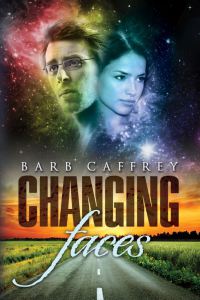
Folks, it’s Wednesday, February 13, 2019. We’re one day away from Valentine’s Day, and as it’s also Marketing for Romance Writers ReTweet Day, I’ve decided this week to take part in another MFRW promotion, that being Book Hooks…the two together should help to get the word out about CHANGING FACES, my most unusual LGBT-friendly romance…
 First, a bit about the Marketing for Romance Writers organization. It is made up of a bunch of writers who work together, for free, to help learn about effective ways of book promotion. In that vein, MFRW sponsors both Book Hooks (short snippets of books to whet your interest, and as it’s a blog-hop, you should find something you like from one of the writers if you just keep hopping about the ‘net) and a once-a-month #MFRWauthor ReTweet Day. As I’ve been a member of MFRW for umpty-ump years, I’m happy to take part in this whenever I can…and what better day than the day before Valentine’s Day to talk about the enduring power of romance?
So, without further ado, here’s a bit from my own CHANGING FACES:
 When we got back to our building, instead of going up to our apartment, we went down into the underground parking garage. We got into my old, reliable Ford Escort, and I put the key into the ignition; traitorously, the engine turned over on the first try.
As we sat in the frigid air waiting for the car to warm up, I turned to Elaine. “I am glad you told me what upset you so much, even though I don’t understand it. I’ve known something was wrong for months.”
“I tried to say something, but I didn’t know how,” she said in a very small voice. “I just feel all wrong, inside.I don’t know how to explain it.”
“There’s nothing wrong with you at all, love,” I told her. “You’re a good person; the best. You didn’t deserve what happened to you in Florida. And not all men are like those jerkwads.”
“You know, you can say asses, if you need it.” Elaine puffed a laugh. “I’m not that much of a prude.”
“Asses isn’t strong enough for them. And I’m trying to be polite,” I said through clenched teeth. Then I tried again. “Look, love. You are the same person regardless of what you look like, whether you present as male or female. I will always love you. I’m not about to abandon you. I just don’t understand why, if Ruby Rose can stay in her body as a gender-fluid person, you can’t stay in yours.”
Elaine’s gloved hand reached out, but before we actually touched, she drew back. “I wish I could explain it, Allen. It’s like a compulsion; now that I’ve told the truth about myself, I need to find out where that truth leads. And I’m not sure where that path is going to go.” Her deep brown eyes filled with tears. “I don’t want to deceive you. I love you too much for that.”
“Honesty is important,” I agreed. “Even so, how do you know that it’s not just your depression talking?”
“I am depressed,” Elaine admitted. “But it’s mostly because I don’t feel right in this body. I have never felt right in this body, and the longer I go on in this body, the more wrong I feel!”
The car had warmed up enough now, so I couldn’t delay this any longer. “Just-don’t leave me, Elaine. Let’s try to talk this out.” I turned onto the dimly-lit street, and started to drive.
Elaine sat, silently, next to me, for blocks. Then, she said, “If you can’t accept me as myself, in whatever body I might have down the road, how can we stay together?”
“All I’ve said is that I don’t know if I can accept you in a male body. I would find it hard to make love to another man.” I swallowed hard, adding, “I’ve tried to put myself in your place, and I can’t do it. I don’t know how it feels to be transgender. I do know how it feels to be in love with you. I don’t want to lose you. I’ll do whatever it takes. But I want you to go to counseling-isn’t there a very long period of counseling you have to go through, before you change sexes outwardly?” I seemed to remember that from Chaz Bono’s story; that had been discussed often, a few years back. “And you don’t like going to counseling as it is!”
“I’ve not run into good ones, thus far.” Elaine turned her head to look out the window.
I glanced that way, and saw ice hanging from the trees just off the street. Was that a rainbow prism at the edge of my vision? I told myself I was just seeing things, and kept driving.
“Mind, Jolene asked me the very same thing, earlier.” Elaine said, sounding very far away. “I told her I’ll start counseling after Christmas.” Then, she smiled wryly, a brief twist of her lips. “She told me to marry you and stop putting you off, too.”
“I knew I liked Jolene.”
We shared a laugh. Then I blurted out what I’d been thinking all the while.
“Elaine, please-I need you in my life. I love you so much. I don’t care what you look like; I care that you’re you. Please don’t leave me.”
###
If you enjoyed that–and I sincerely hope you did–here’s a bit more for you about CHANGING FACES plus a few links to help you buy an e-book copy (which, BTW, is only ninety-nine cents in the US, ninety-nine pence in the UK):
Allen and Elaine are graduate students in Nebraska, and love each other very much. Their life should be idyllic, but Elaine’s past includes rape, neglect, and abuse from those who should’ve loved her—but didn’t, because from childhood, Elaine identified as transgender.
When Elaine tells Allen right before Christmas, he doesn’t know what to do. He loves Elaine, loves her soul, has heard about transgender people before, but didn’t think Elaine was one of them—she looks and acts like anyone else. Now, she wants to become a man and is going to leave.
He prays for divine intervention, and says he’ll do anything, just please don’t separate him from Elaine…and gets it.
Now, he’s in Elaine’s body. And she’s in his. They’ll get a second chance at love.
Why? Because once you find your soulmate, the universe will do almost anything to keep you together—even change your faces.
Amazon US: https://www.amazon.com/Changing-Faces-Barb-Caffrey-ebook/dp/B01N3CQKWJ
Amazon UK: https://www.amazon.co.uk/Changing-Faces-Barb-Caffrey-ebook/dp/B01N3CQKWJ
Barnes and Noble: https://www.barnesandnoble.com/w/changing-faces-barb-caffrey/1125707044
Now, please take a look at these other authors, also a part of #MFRWorg, and see if anything there interests you, too!
Powered by Linky Tools
Click here to enter your link and view this Linky Tools list…
 Barb Caffrey's Blog