My Musical Journey (A Collaboration with a Purpose Post)
Folks, World Music Day is later this month, June 21st to be exact. And the folks at Collaboration with a Purpose decided to write about what music is, why it matters, and why we care about it in our own words.
I’m a musician. If you’ve read my blog for any length of time, you likely know this. I play the clarinet, the saxophone, and the oboe. I also compose music, though mostly for myself, and tend to think first in music, and only later in words.
I’ve played instruments since I was ten or eleven years old. Music always called to me. I loved the sound of a saxophone in particular, and remember telling my Mom that I would play that someday. (When my teacher in graduate school, Dr. Fought, said to me that the saxophone sounded the most like a human voice, I agreed with him. Perhaps that’s why I insisted I’d play it.) Whether it was someone like Clarence Clemons wailing away with Bruce Springsteen’s E Street Band or later, jazz musician Art Pepper’s clear and beautiful sound with advanced and interesting harmonic and rhythmic melodies (yes, you can have it all!), I was hooked.
So why did I end up on the oboe first, then?
I think they needed oboists, as it’s difficult to play well. (One of the common sayings, at least among musicians, about the oboe is that “it’s an ill wind that nobody blows good.”) And no one was going to tell me I couldn’t play a difficult instrument…that’s where psychology came into play, I suppose. (But I was only eleven, at most. You can see why this might appeal?)
I learned all sorts of things about the oboe. It has a beautiful sound if played well, a distinctive one, and for whatever reason, the sound I could get was a bit lower than most, tonally — this is very hard to explain in words, so bear with me — and a bit closer to the sound of an English horn, according to a few of my music teachers.
Personally, though, I think the reason my sound on the oboe was a little different was because I wanted to play the saxophone. And I wanted my oboe playing to be different, interesting, and memorable; I learned how to play jazz on the oboe, even, as there was one musical group — Oregon — that had a jazz oboist.
“But get to picking up the sax, Barb! That’s what we want to hear about…”
Yeah. Well, I wanted to play in jazz band. But they didn’t have arrangements for a jazz oboe player. And my band director, Mr. Stilley, believed that I could pick up the sax in a month or so. The school had an awful alto saxophone available to play; it was held together by string and tape. But I didn’t let this stop me, and I did indeed learn how to play the sax in a month as some of the skills I already had were transferable.
Then, I took up private lessons with two different instructors: one for the oboe, one for the sax. I found out quickly that the alto sax was the instrument most classical musicians play. Most of the good repertoire, including the Jacques Ibert Concertino da Camera and Paul Creston’s Sonata for Alto Saxophone and Piano, was written for alto rather than tenor, baritone, or soprano saxophones. And of course I learned these pieces, along with one that later became one of my favorites, Alexander Glazunov’s Concerto for Saxophone and Orchestra.
I found that while I loved jazz, I loved classical even more. There were so many different ways to say things in classical music. From Robert Schumann’s Unfinished Symphony to Paul Hindemith’s Symphony for Band in B-flat, from Cesar Franck’s Symphony in D Minor to Beethoven’s Ninth Symphony (and it’s famous “Ode to Joy”), there were so many, many different ways music could be expressed.
And then, there was Debussy, Haydn, Mozart, Bach, Bernstein, Brahms, and the one composer I sometimes loved, sometimes hated: Gustav Mahler. (Mahler’s music can be beautiful. It can make me laugh. And it can make me scratch my head and go, “What the Hell?”)
I listened to jazz, too. And pop music, as I found along the way that I rather liked the diverse influences Alice in Chains, Soundgarden, and even Linkin Park brought to the table. (Linkin Park in particular was a very big surprise, as they combined some aleatoric elements along with rock-rap and solid music theory, with not one but two singers: the late Chester Bennington with his soulful voice that could turn to a scream in an instant and Mike Shinoda, who could rap or sing, depending on what was needed from him.) And Creed, too…something about them hit me, emotionally, and I understood why they became popular on the one hand quickly, and didn’t last on the other.
The best of music evokes emotion, no matter what genre you play or sing or hear. Whether it’s Alice in Chains’ “Rotten Apple” or Soundgarden’s “Fell On Black Days” or Linkin Park’s “In the End” (or, much later, “One More Light”), or the second movement of Franck’s Symphony in D Minor, or Elvis (my mother’s personal favorite, and for all his fame, a truly underrated emotional stylist), or Art Pepper’s flights of fancy while playing “Over the Rainbow,” it is all about emotion.
See, words can only take you so far. Music, with all its complexity, all its chords, all its harmony, all its rhythm, can take you much farther.
It’s because of that, and my own, personal journey, that I decided my hero and heroine in CHANGING FACES were both clarinetists and both would use music as a way to survive incredible pain. Because music can describe things words cannot, music is able to heal a great deal more than words.
And that, I think, is why World Music Day is so important.
So do let music heal you, or inspire you, or at least give you the soundtrack to whatever you’re doing/writing/learning at the time. And let me know what music you move to, in the comments!
Also, please go take a look at my fellow collaborators, who’ve also written interesting takes on the subject (links will be posted as they go up, as per usual):
Nicolle K. — Intro Post
Nicolle K. (coming soon)
Sadaf Siddiqi — “A Musical Tribute”
Mylene Orillo
Sonyo Estavillo
N.N. Light Review of CHANGING FACES Live at New Blog
Folks, the husband-wife writer team of N.N. Light have a new blog. It’s called NNLight’sBookHeaven, and as such, they decided to post (or re-post) books they’ve enjoyed reading that have any connection at all to the LGBTQIA community.
Enter my book, CHANGING FACES.
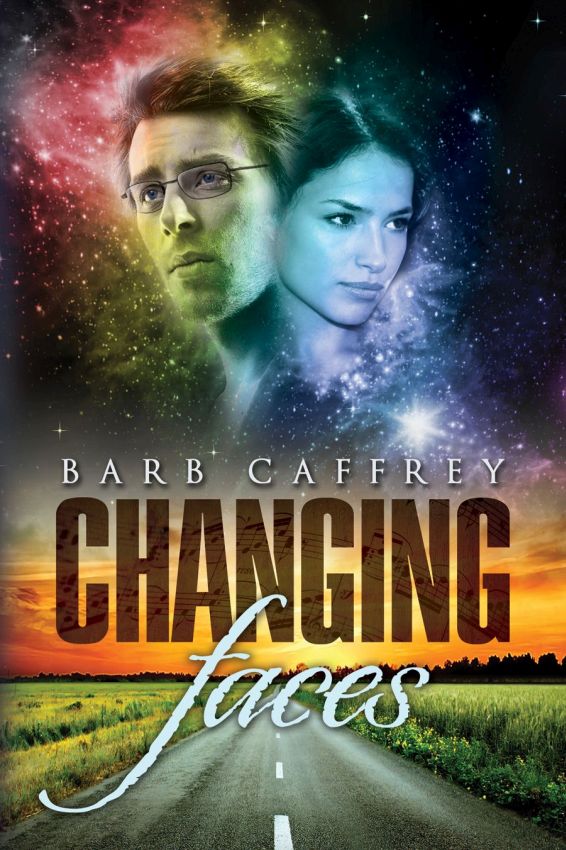
CF didn’t make much of a dent last year in the marketplace, but I’m still proud of it. And Mrs. N. (female half of the team) enjoyed CF quite a bit, as this review shows. Here’s a bit from that:
In this ground-breaking novel, Caffrey explores gender fluidity, love and coming to grips with self-identity. I was emotionally attached to both characters from the beginning and watching their love for each other grow through the most trying circumstances changed me. The plot moved at a good pace, although there were places where it lagged. The idea of gender fluidity portrayed accurately in this novel with honesty and heart stayed with me love after I finished reading. Being a romantic at heart, I highly recommend this book to everyone.
Thanks for enjoying CF, Mrs. N!
One of the reasons I was so happy to write and finish CF was because both my late husband Michael and my late best friend Jeff believed strongly in this premise. Love matters, you see. What your outer shell looks like doesn’t matter, so long as your soul is strong. And if two people are drawn to each other, why should they have to be anything but themselves?
I was fortunate enough to be a female person, born into a female body. And I realized early that I carried my differences internally, rather than externally…but coming to grips with that still took me quite some doing.
I don’t know how I’d have dealt with Elaine’s conundrum, mind. I do think I’d have been like Allen, and first panicked — but then said, “Hey, it doesn’t matter. I love you and I don’t want to be separated.” (That Elaine can’t accept it very well…? It’s the life she led. But I digress.)
Anyway, I want you to read what I wrote. (At least a little of it.) So you can get a feel for what I’m talking about.
And as I’ve never done this before, not at my blog anyway, I would like to share the first chapter of CF with you…in the hopes that you’ll like it so much (even if you’ve never read a novel quite like CF before), you’ll run over to Amazon and get an e-book copy, stat. (Hey. It’s only ninety-nine cents. Live a little, right?)
So, here we go! (Excerpt follows.)
#
Chapter 1
It was the middle of July in Nebraska. Sweat started dripping down my back even before I’d stepped foot outside my apartment. My hair was already sticking to my neck, and I didn’t know how I was going to play my clarinet. And I had to do that, because my best friend Jolene Harris was marrying her long-time partner Paula Adelson today.
You see, this was a very special wedding. Paula and Jolene had waited for years to get married, and until recently, they couldn’t. But the Supreme Court of the United States made up their mind a short time ago that same-sex couples are like anyone else-if they want to marry, legally, they should be able to do so. Of course I agreed with this. Anyone who ever saw Jolene with Paula and their son, Adam, for longer than two minutes would agree, if they had any sense at all.
Fortunately for me, my boyfriend, Allen, completely understood. He was coming with me-and playing his clarinet, too. (He was going to play Ave Maria at Jolene’s request.) Allen, unlike me, identified as straight, but he’s no bluenose-he’s even walked with me in Lincoln’s Gay Pride parade.
Yes, I knew I needed to tell him.everything. And soon.
But not today, as that might spoil Jolene and Paula’s wedding.
The sun was shining. The birds were chirping. We’d even seen a rare double rainbow last night, after a brief but intense thundershower. Most people probably would’ve thought that today was absolutely perfect for a wedding, if they didn’t mind having to stand outside in 90-plus degree weather.
Allen and I made it to the car, we stored away our clarinets and music stands, and started driving. Considerate as always, he turned the air conditioning on and let me bask in it a few minutes before he spoke.
“I wish it were our wedding,” he said wistfully.
Oh, no, not that again, I couldn’t help but think. I loved Allen-truly, I did-and I wanted no one but him. But.
“I’d rather get married in the winter than the summer,” I told him, trying to keep it light. “It’s way too warm right now for my liking.”
“Are you sure you’re from Florida?” he half-joked back.
“Hey, it’s humid there, but it rarely hits the triple digits.” At his cocked eyebrow, I added, “That’s my story, and I’m sticking to it.”
He laughed, as I’d intended, and the subject was defused. For now.
Somehow, I had to tell him what I really was. But I didn’t have the words just yet.
* * *
Allen:
I snuck a peek at Elaine as we set up our music stands. She looked gorgeous, as usual, though by her standards she was a bit dressed-down for such festivities in a burnt orange blouse, dark slacks and low heels, with an orange flower in her hair for the sake of whimsy. Chestnut brown hair cut short for the summer, bright brown eyes with flecks of gold only I could see, when she was particularly happy, high cheekbones.a beautiful woman, inside and out.
Who cared that she, like me, had been known to look at women from time to time before we met? Not I. (And no, I’ve never had that whole threesome fetish thing going on, thank you. I’ve always refused to share.)
Because it was hot, I’d worn dark slacks, a long-sleeved white dress shirt, and a tie with musical notes on it. (Jolene had told Elaine it was to be a less formal wedding, so what I wore would be more than good enough.) My glasses were starting to slide down my nose-occupational hazard, on a day as hot as this-but I knew the music well. Even if my glasses fell off, I’d be able to play and no one but Elaine should notice.
The caterers were still fussing with the food, and neither Jolene nor Paula was anywhere to be seen. It was an hour and a half until the ceremony, so this wasn’t entirely a surprise. Elaine and I liked to be early, to get ourselves acclimated, whenever we played a gig-not that we’d played a ton of weddings, but we’d certainly played at enough other places that this should not be much of a stretch.
We started with the Telemann Canonic Sonatas, easy enough pieces to play as they hadn’t been designed for the clarinet’s three-octave range. They were fun, though, and suited the day well.after a while, I noticed Adam, Jolene’s son and a burgeoning clarinetist, watching us avidly. His two-toned blond head bobbed to the music, and he seemed to be enjoying himself immensely. But he wasn’t dressed for a wedding; instead, he wore a t-shirt and ratty old jeans with shoes that looked two sizes two big.
When we took a break, I nodded toward him and asked Elaine, “He seems happy, don’t you think?” Of course, I wanted to say, What on Earth is he wearing? But I was far too polite.
“He’s probably glad I didn’t assign him to play these pieces,” she said with an arched eyebrow.
I stifled a laugh. “He’s still a beginner, so he doesn’t need to worry about that yet.”
“Ah, but does he know that?”
After we put our clarinets down, Adam came over and handed us each an ice-cold bottle of water. “You two sound great!”
“Thanks, kiddo.” I resisted the urge to ruffle his hair, taking a sip of water instead. “Are you wearing that to your mothers’ wedding?”
Adam shrugged. “They’re worried about what they’re wearing. I didn’t think they’d care what I wore.”
“Try again,” I said kindly. “I’m sure they’ll have someone taking pictures, as they’ve waited a long time to get married.”
“I don’t see what the big deal is. They’ve been together since I was a baby. Do they really need a piece of paper after all that?”
Before I could say anything, Elaine jumped in. “Yes, having the relationship matters more than the piece of paper. But they want that piece of paper. They’ve dreamed about having that piece of paper. And you, Adam, are going to go in the house and find yourself something to wear that shows you made an effort, or I’ll give you five extra scales next week.”
“And if you don’t find something better than that,” I added, “I’ll have to come in and help you.”
Adam shuddered dramatically. “Okay, okay already.” He went into the house.
The minister had arrived, a cheerful, fortyish woman. The food had all been brought out. The guests were starting to assemble, so Elaine and I played some more duets. The music flowed out of me, and I became so caught up in that that I didn’t care how hot it was. It was just me, Elaine, and the music.
Life was good.
By the time I looked up again, it was fifteen minutes until the ceremony. Jolene, tall and resplendent in a bright blue satiny long dress, was chatting with the minister, but Paula was nowhere to be seen. Then Jolene came over to us, murmuring, “Paula’s nervous. Says she can’t find anything to wear. And we went over this yesterday-I can’t believe this is happening.” She bit her lip, adding, “Maybe she wants to back out.”
“I’m sure it’s not that,” I put in, trying to settle her down. “She loves you to distraction.” My words were absolutely true. I’d never seen a more devoted couple.
Elaine sighed. “Let me guess. She won’t let you see her, because of that old superstition about brides-even though I’m sure you don’t care-”
“Got it in one,” Jolene said, nodding.
“And I can’t go to her,” I put in.
Both women looked at me like I’d grown a second head. “Of course you can’t,” Elaine snapped. Then, her eyes silently apologized.she must’ve realized I’d been joking. “I’ll go.”
“Would you?” The look Jolene gave her would’ve melted an iceberg-that is, if it hadn’t already melted due to the heat.
Elaine touched my hand, and was gone.
I turned back to my clarinet, and started playing the Miklos Rosza Sonatina, ideal for today as it required no accompaniment. Before I immersed myself fully in the music, I prayed that Elaine’s errand would not take too much time.
I didn’t get nearly enough time with Elaine as it was.
* * *
Elaine:
I went down the hall to Paula and Jolene’s bedroom, and knocked.
Paula let me in without saying a word. She wore a bra and a half-slip, but nothing else. The last time I’d been here, the bedroom had been painfully neat but a bit cluttered; now, though, it was as if a tornado had hit the place. Black pants were draped over the wooden headboard along with a shiny silver bolero; a red dress was covered by a bright yellow swath of something in the middle of the carpet-had I ever seen either Jolene or Paula wear yellow? I didn’t think so-while I saw green, brown, white, and checkered blazers, pants and skirts all over the place.
And a lonely light blue dress sat in the middle of the bed, crumpled as if Paula had thrown it.
Before I could say anything, Paula beat me to it. “Feeling femme today, Elaine?”
I blushed. “You two are marrying. It doesn’t matter what I feel like.”
“Then why the flower in your hair?”
Paula was the only person who’d guessed that I wasn’t simply bisexual, though I was certain Jolene knew something was off, too. Paula knew what I was in its entirety-I’m a gender-fluid person, and some days I feel female, others male. But I’ve never felt fully comfortable giving in to my impulses, not the way I was raised.
I realized I was woolgathering. “Who cares why? I’m here to help you. Jolene’s a mess. I think she’s afraid you’re going to call off the wedding.”
“No, never,” Paula said with a faraway smile. “But I have to have something to wear. And the blue dress that I was going to wear must’ve shrunk at the cleaners.”
“Are you sure this isn’t just bridal jitters?”
“Jitter me this,” Paula snarled, and put on the blue dress. Despite Paula’s tiny frame, the dress didn’t fit over her slender hips, much less meet in the middle of her back. “Could anyone wear this?”
“Maybe a dwarf could, but certainly not you.” I shook my head, and sighed. “You didn’t want to try it on yesterday, why again?”
“It’s a tradition in my family that we don’t wear our wedding dresses between the time we try them on and actually are about to get married. My parents are out there, and I figured they’d know-” She looked like she was about ready to cry.
“I understand that you want to be as traditional as possible,” I said gently. “But isn’t it more important that you wear something that you might actually feel good in on a day like today?”
“Point.” Paula smiled ruefully. “I certainly can’t wear this. And everything else, except for one outfit, I’ve already worn.and that isn’t very festive.”
“Show me the outfit,” I told her.
Paula pulled a charcoal grey sleeveless top with a bit of shininess to it out from under the pile of clothes on the floor, and grabbed a grey pair of pants. “I’d intended to wear this to dance with Jolene later. But it’s not good enough to wear now!”
“Put it on, and let’s see.”
After shrugging off her slip, Paula got into the outfit. The top fit well, but wasn’t too snug; considering it was at least ninety-five degrees in the shade, I didn’t see a problem with it. And the grey pair of pants looked comfortable and easy to move around in.
“To my mind,” I said, “this is the right outfit. Wear your best black shoes, and maybe add a black or white scarf? Or do you have a statement necklace, something that will visually draw the eye?”
“Who knew you knew this much about fashion?” Paula teased, as she got out her shoes and a white, fringy scarf. Once the scarf was draped, she added a chunky pearl-and-onyx brooch that went perfectly with the outfit, almost as if it had been designed for the thing.
“Don’t tell anyone,” I advised her. “It might ruin my reputation.”
As we laughed, I took her arm, and escorted her outside to her waiting father.
“Dad, this is Elaine,” Paula told him.
“I saw you playing the clarinet before, didn’t I?” But before I could answer, he added, “Thanks for your help.” He took my place at Paula’s side, and walked her down the flower-strewn path toward Jolene and the minister.
Allen started to play Ave Maria. Before he got four measures in, I saw people dabbing at their eyes.
Of course, Jolene and Paula both looked beautiful, Jolene tall and buxom in blue, Paula petite and dainty in grey and white. So that might’ve been it.but I still think Allen’s playing had a great deal to do with it, too.
I went to Allen, unnoticed in the crowd, and squeezed his shoulder. He put his clarinet down, and grabbed my hand; as I had been about to hold his hand, I had no problem with that at all.
We could barely see Paula’s blonde head back here, due to the crowd, but it didn’t matter. We were ready to play again long before Paula and Jolene shared their first kiss as a married couple, and before the audience had finished applauding, we were playing recessional music-Mendelssohn, I thought-that Allen had arranged for two clarinets.
After a while, everyone had gone toward the refreshment table but us. But before we could go get something, Jolene came up to us and insisted that we get our pictures taken. I hate having my picture taken, as my outer self doesn’t always match my inner self.and even on a day like today, where I felt more feminine than not, I still hated having the flower in my hair memorialized for all time.
Still, Allen’s kiss on the cheek was nice, and my smile at him was genuine. He was truly a good man, the best person I’ve ever known.someday soon, I’d have to tell him the truth about me.
And if he still wanted to marry me then, I’d let him.
* * *
Allen:
Later on, after we’d stored our clarinets away and the food had been cleared out, I took Elaine back out to the yard again. Toward the back, there was a patch of green grass near the fence that I didn’t think anyone had stood on today; an untrammeled bit of grass, if you will. The sky was breathtaking, all bronzy red and pinkish orange, fading into the deep twilight blue I’d only ever seen in a Nebraska summer sky. It was a sky Maxfield Parrish might’ve painted, had he the chance.
“Such beauty,” Elaine breathed.
“What better omen for a wedding,” I added.
For once, Elaine didn’t give me a reproving look. Instead, she looked soft, touchable, feminine in a way I rarely saw.I knew I couldn’t waste this moment.
As Jolene and Paula were saying goodbye to their guests, we were quite alone. Our temporary solitude suited me well.
I went down to one knee on the grass, and said, “Elaine Foster, will you marry me?”
Elaine bit her lip, which wasn’t the response I wanted.
So before she spoke, I tried again. “Look, Elaine. We are meant for one another. I love you to distraction. I want you to become everything you have always wanted-a great writer, a great educator. You’re already a great person, and the only woman I want to be with. Will you please put me out of my misery and say yes?”
At that, Elaine laughed, pulled me up, and kissed me. When I broke away again, I looked down at her shining eyes and said, “So, is that a yes?”
“It’s a yes,” she murmured. “But.”
Before she could say anything more, Adam came barreling out into the yard. “My mothers told me to come and find you.”
As we went inside, I thought, This is the happiest day of my life.
* * *
Elaine:
I loved Allen. So I said yes, when he asked me this time-hoping I’d be able to explain just who and what I really was, after. And it made Allen so happy, for a time, I basked in his reflected happiness, and felt transformed.
If only we could’ve stayed in that moment forever.
# End Excerpt #
Want more?
You’ve got two choices.
If you’re still not sold, but you at least want to continue without any worries about payment, go here to the Twilight Times sample chapter page for CF, and keep going.
Or if you are sold, please go to Amazon, get yourself a copy, and keep going! (Then, do let me know what you think. This is not a stereotypical LGBT romance at all…nor is it “SJW fluff” as one non-fan called it, once. Not if I did it right.)
Wedding Month, Thinking Month
Folks, as I was married in June, and as June has been known as a very popular month for weddings in the United States for a long time, I’m sure you can figure out why I put “wedding month” in the title.
But “thinking month?” What’s that all about, huh?
It’s simple. When I get close to my anniversary, I start thinking. I try to count my blessings; I was able to find the right person for me (after a few failed attempts), we married, we were very happy…and that’s all true.
But what’s also true is that I miss my husband very much. That feeling isn’t likely to go away. Even if, someday, I find someone else to spend time with, I’m never going to forget my husband Michael. Especially as he was by far the most encouraging person I’ve ever been around, and believed in me no matter what.
I think a lot about Michael.
My biggest advocate. My best friend. My editor — yes, he was that, too. My co-writer, from time to time.
And the most romantic person I’ve ever known, too…something that would’ve surprised most people who knew him before he met me, no doubt.
But then, Michael surprised me, too. With his generosity, his optimism, his faith…and, of course, his immense creativity.
As I said, I’m trying to see the positive side of things. (It’s easier by far for me to see the negative, because I miss him so much.) And as such, I know that me being here, doing the best I can — even though it doesn’t seem like anywhere close to enough — is all he’d want me to do.
Along with doing whatever I could to find meaning, beauty, and maybe a modicum of peace, too…still working on all of those, of course.
Anyway, that’s what I’m pondering right now. The run-up to my anniversary, later this month — the sixteenth, for those of you keeping track, and the fourteenth I’ve spent alone.
So I might blog a bit less, this month. Or maybe I’ll surprise myself, and blog all the more…it’s hard to say.
I just know that right now, I’m thinking hard, and hoping like fire that in the end, everything I’ve done will matter.
Little Things Matter (in Relationships, Too)
In a way, this is part two of my last post about how little things matter. But it also stands on its own…enjoy!
Recently, I read something about what makes interpersonal relationships work, whether they’re friendships or something of a romantic nature. I’d expected something profound — yes, even me, someone who’s experienced a successful and happy marriage — but that’s not what the writer talked about.
Nope.
What this writer — whose name escapes me — said was that the way to predict whether a friendship or romantic relationship was going to work well was whether or not you shared the little, mundane, ordinary things with your friend or partner.
And my jaw dropped. (Seriously. It did.)
Maybe this idea, that all the little things — the petty annoyances, the grievances, the frustrations, not to mention the small victories (like remembering to pick up the milk when you’re dead tired, so your partner can have it for her cereal in the morning) — add up to something major may not strike you as earth-shattering.
But here’s the reason it struck me as exactly that.
We’re told all the time that little things like that don’t matter. That we’re supposed to talk about profound things instead. And that if we can’t or won’t talk about deeper issues, there’s no point to being there.
There’s a certain amount of truth to that last part, mind, insofar as you have to be able to talk over deep and difficult things, too. That shows you trust the other person, and without trust, you cannot have intimacy, whether it’s emotional, physical, or any other way there is.
But the reason the little things matter just as much, if not more, than the big revelations that we trust our friends and partners with, is because they show our vulnerability.
See, when we’re willing to talk about how much our feet hurt, or how the traffic on the road was, or any other thing that seems piddly on its face, it all adds up to something much more profound.
Talking about things like that, when taken in their totality, say, “I trust you” to the other person. And as I said before, trust is absolutely essential to any form of intimate, interpersonal contact.
So, when you share your vulnerabilities, you promote deeper connection between yourself and someone else you care about. And you do that not just by the ‘big reveals” of the stuff you don’t trot out on the first date (or even the fiftieth); you do that by showing every day who you are, why you care, and what on Earth you’re doing spending any of your time with your loved one (or friend).
That’s why the little things do matter, in relationships, just as they do in anything else.
What little things do you do to show your friends (and/or loved ones) that you care? And what little things did you never, ever, in a million years think would be important, but maybe actually are? Tell me about them in the comments!
With Creativity, Little Things Count
Most of the time, it seems that when we don’t make major progress in one area or another, that we aren’t doing enough.
And yet, little things count. Little things add up. Little things, when they accumulate in big enough numbers, turn into medium-sized things, then big things…but it takes time.
It’s easier sometimes to pretend that these little things don’t count, mind. Because making a bunch of little things accumulate into something bigger takes time, effort, commitment, persistence, and a lot of faith.
With all that’s been going on lately in the news, and all the frustrations, headaches, and worries (not to mention utterly despairing things like the U.S. immigration system “misplacing” over 1400 children, some as young as two years old), it’s hard to believe in time, effort, commitment, persistence, and most especially the last item on the list: faith.
And yet, without those five things, what do you have?
What’s interesting about a bunch of little things is that while they don’t seem like much, it’s those fundamental things that are the building blocks of creativity.
But it all comes down to those five things. In short:
- Will you put in the time, even when it doesn’t seem like it’s doing any good?
- Will you make the effort, even though sometimes it doesn’t seem at all like anyone will ever care? (Just so long as you do, though, that’s enough.)
- Will you prioritize your creativity, at least to yourself, and make a few minutes in every day (or more, if possible) to work on it?
- Will you keep grinding away, day after day, month after month, year after year?
- And, will you do your best to hold onto your faith in yourself (and, hopefully, the Higher Power that gave you these talents in the first place; if you don’t believe in the Higher Power, then the random chance that gave you these talents, I suppose), even when it doesn’t seem warranted?
If you can do all of these things, your little things can and indeed will turn into bigger things.
What do you do to keep going, even when you don’t feel a lot of hope? Let me know in the comments!
Redemption, Tonya Harding, and Chris Nuttall’s newest novel, THE FAMILY SHAME
Redemption. It’s one of the strongest words in the English language, or at least it should be. It means to be saved from sin, evil, or error. Or to save yourself from the past consequences of bad or immoral actions…or, perhaps, it means this:
Living. Learning. And improving yourself, because you can’t live with the person you used to be.
My friend Chris Nuttall wrote a book recently based around this theme called THE FAMILY SHAME, set in his Zero Enigma universe. (I was one of his editors, so I got to see the book early and often.) In it, young Isabella Rubén has lost everything she once had, all because she trusted the wrong person. She’s only twelve, but the person she trusted plotted treason against the powers-that-be, and Isabella knew about it — and didn’t say anything to her father, or anyone else. Worse yet, she actively collaborated with this person to commit treason, mostly because she saw it as her only reasonable way to obtain political power due to what amounts to her family’s benign neglect of her talents (she’s a female magician and her particular family can only be led by male magicians).
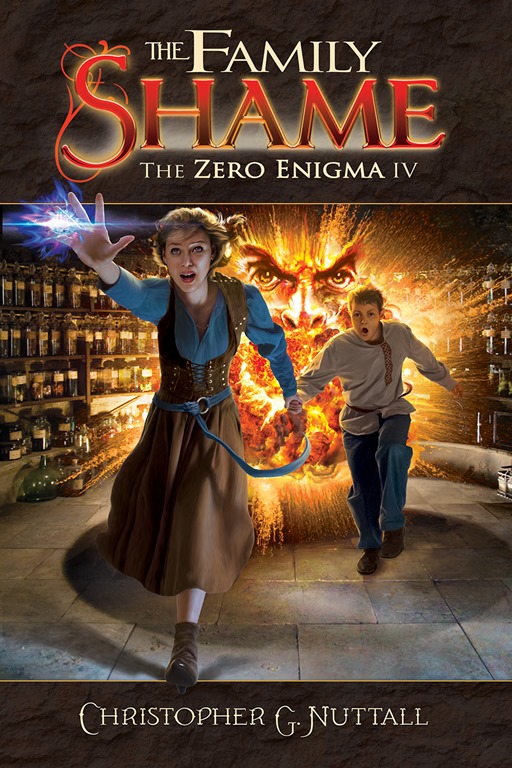
See, Isabella, in any other family, probably wouldn’t have done this. Every other family in the city of Shallot (where she’s from) picks their leader from everyone, male and female alike, based on a combination of magical and political ability. But her family, the Rubéns, don’t.
But she did it. She feels terrible about it, but she did it, and she can’t take that combination of deliberate non-action (in not telling her father or any of her teachers) plus actively aiding and abetting the treasonous older “friend” along the way.
And she is paying the price, as she has been exiled to Kirkhaven, an old, ramshackle estate about as far away from Shallot as you can get by horse. She’s also been told not to send letters to her father, mother, or brother, as she’s now “the family shame.”
So, not only has she lost everything — family, friends, wealth, schooling, political standing (which she did care about, even though she was only twelve as she was quite precocious in some ways) — she now has to deal with this ramshackle manor. Two adult magicians live there, Morag Rubén and Ira Rubén. (No, they’re not married to each other.) Morag is a cook, while Ira is a type of experimenter who admits he wants to find ways to make Dark-inflected spells work for good. And both of them, too, are exiles…
Did they want young Isabella around? The answer is a resounding “no.” But there she is, and now she has to figure out how to deal with them (not easy), how she’s going to continue her schooling independently (definitely not easy), and how she’s going to deal with the loneliness of this deserted, remote place (almost impossible). All while wrestling with the problems that brought her to this place, which she knows she created and cannot change.
When she manages to befriend a boy around her own age, Callam, her life starts to improve a little. But she has to keep the friendship secret, as she’s not supposed to leave the grounds, nor is he supposed to be on the grounds himself. (It’s a very innocent friendship, as is befitting for their respective ages.)
It’s getting to know Callam that helps to slowly but surely make Isabella realize just how badly she behaved before, and avow that she will find a way to do better.
I don’t want to give away the plot, so I’ll stop there with a plot summary. But I’ve given you this much because I wanted you to think about just how hard it’s going to be for Isabella to redeem herself in the eyes of society — and worse, how hard it’s going to be for Isabella, herself, to redeem herself in her own eyes.
Redemption, you see, is hard. People judge you by your past actions, and no matter what you do, no matter what you say, no matter how much you might apologize, and no matter how much you’ve actually changed, there are still going to be some people who will hate you, and not give the new version of you — the better version, the one tested in the fire — the time of day.
We see that in contemporary life every day.
One of the most current examples is that of figure skater Tonya Harding, who’s now nearly forty-eight years old. But when she was only twenty-four — in 1994 — she somehow failed to stop an attack on fellow figure skater Nancy Kerrigan, then not quite twenty-five. Kerrigan was hit on the knee by thugs sent by Harding’s then-husband, and one of those thugs was Harding’s bodyguard. Harding, herself, was sentenced to probation, given community service, and ended up being banned for life by the United States Figure Skating Association.
What Harding did back then was awful. That she had a rotten childhood (she truly did), that she came from abject poverty (she did), that her husband was mean and abusive to her as far as the public could discern, and that figure skating was her one gift (she was the first American woman to land a triple axel in competition, and was known for her athleticism, her jumps, and her footwork passages) may ameliorate things slightly, but the fact remains that she could’ve apparently done something to keep Kerrigan from being harmed. (I must say “apparently” because the facts are not completely in evidence. What we know is that Harding took a plea deal.)
But did she deserve to be ostracized the rest of her life for this?
Is the assumption going to be that Harding can’t learn, can’t find a way to be a good person, and that it’s supposedly OK for her to never use her one, true gift ever again, even to teach young kids how to skate?
See, that’s the quandary my friend Chris’s protagonist Isabella is in, too. Isabella is a gifted magician, but she misused her magic and hurt people. She knows it was wrong. She has apologized (as Harding, back in 1994, 1995, and 1996, apologized multiple times to the best of my recollection). But she was ostracized, cast out, exiled.
Isabella does find redemption, or at least finds a way toward redemption.
I would like to think that Harding also has found some sort of redemption, too. (Being on TV’s Dancing with the Stars surely has given her an athletic outlet, and may help pay for her son’s education down the line for all I know.)
But what’s sad about the quest for redemption, and what’s sad in both cases I’ve discussed here, is that some people will never forgive you no matter what good you might do. And no matter how much you might’ve changed. And no matter how much you might want them to forgive you…they just won’t, and you have to learn to live with it.
That Harding still has people, even to this day, leave feces (yes, actual feces) on her doorstep or rude messages on her phone or random people on the street swearing a blue streak at her, twenty-four years later, illustrates just how hard it is to seek redemption, even if you do it privately and out of the public eye.
You pay a heavy price, when you do something wrong, bad, or something that society judges immoral or flat-out evil.
But you still have to learn to live with yourself and your talents, and use them to the best of your ability. Which is what I think Harding is trying to do, as the older, presumably wiser version of herself…and it assuredly is what the young Isabella Rubén is trying to do in THE FAMILY SHAME.
I’m proud to have edited Chris’s new novel, and I hope you will find it a fun read, as well as an instructive one.
And personally? I think redemption is definitely possible. I just wish people would learn to see others for who they are today, not for how they hurt them yesterday, or how bad they behaved the day before that (or twenty-four years ago). Don’t forget it, no, as that’s revisionist history and unnecessary. But do forgive, if you can, at least as far as to say, “If I lived that person’s life, I can’t say for certain I wouldn’t have done the same things.”
That is the best way to be a decent human being, bar none.
It’s Mother’s Day (in the US)
Folks, last week I asked a friend of mine who lives in Scotland if he was going to do anything for Mother’s Day, and he drew a blank.
Then we both figured out that Mother’s Day isn’t celebrated on the same day in the United Kingdom. This year, Mothering Sunday (what they call Mother’s Day) fell on March eleventh.
So, for those of you in the United States, you probably know that Mother’s Day is today. Sunday, May thirteenth, 2018. And beyond all the hype you see online or on television regarding “you must get Mom this special something NOW,” there’s a quieter, more reflective holiday underneath it all that deserves your time and attention.
I realize that not everyone has a mother who’s still alive. (I am very fortunate that I can celebrate this day with my Mom, and am glad to do it.)
I also realize that some people don’t have mothers at all. (One of my best male friends is raising a daughter, alone. I’ve told him before that he should celebrate both Mother’s Day and Father’s Day, as he’s doing all the work.) And days like this are hard for them.
Personally, I think you should celebrate as much as you can, as often as you can, with the people who matter the most to you. If those people have nothing to do with your biological (or adopted) families, well, then they just don’t.
But you should let people know when you care about them, as often as you possibly can.
Why? Well, this world can be a cold and lonely place from time to time. The people we care about the most help bridge those times, and remind us that we do have family, friends, and loved ones to give us strength when we have little ourselves. And remind us of our past successes when we’re instead dwelling on our current failures, because they’ve seen it all and know we can rise, as phoenixes, from the ashes of futility yet again, given time.
Nurturing is hard work. And the people who do it don’t get anywhere near the credit they deserve.
So on this particular day, I hope to celebrate my mother. And my sister. And my friends who are mothers. And my friend the single father (who really should get to celebrate today, too). And everyone else who needs to be remembered for nurturing the next generation, so they can in turn nurture the next when their time comes.
What are you going to do for Mother’s Day? (Or what did you do, if you’re in a place that’s already celebrated it?) Tell me about it in the comments!
A Meditation on Hope
This post may seem elliptical, even for me, but I hope it’ll make sense at the end. (You have been warned.)
Sometimes, I wonder about the feeling of hope. We need that, in our lives; we need to feel that whatever we’re doing will eventually succeed, or at least that whatever we’re doing will lead to ultimate success in whatever it is we’re trying to do.
And without hope, how could we get there? Especially as many things we try to do, such as write a book (or lengthy piece of music), require the devotion of many hours of hard and taxing work?
In the midst of such labors, maybe you’re like me and wonder if the feeling of hope makes any sense.
Is hope logical, in other words?
I don’t know if is. But I do know we couldn’t live without it.
Hoping for better tomorrows is one of the reasons the Founding Fathers of the United States drafted the Articles of Confederation, then the Constitution of the U.S. They thought long and hard about what they wanted — and didn’t want — in such documents, and realized that whatever they did (or didn’t) do, it wouldn’t be enough. Yet they had hope, and they persevered, and they eventually came up with those important, bedrock documents.
And in the Bible, many people lived in hope that God would show them the way, even if they didn’t necessarily always understand what that way was. (Many, many people did not recognize Jesus when he showed up, for example.)
Hope was the one thing in Pandora’s Box, too…the one, unstoppable thing that might make all the difference in the world.
When we’re at our lowest ebb, it’s hope that allows us to try again another day.
And it’s when all hope is gone that we slowly, surely, lose our place in this world, and wonder why we’re even here. And what good we’re even doing. And why we should bother to keep doing it.
But is hope ever truly gone? Isn’t there always something to hope for? Some reason to get up in the morning, and face the day, and smile?
I don’t have the answers to that question.
What I do have is the hope that I will find the answers to that question someday. (I know, I know; there’s that word again, in all its slipperiness.)
And sometimes, that has to be enough.
What do you think about the meaning of hope? Or about how elliptical my thought processes can sometimes be? Let me know in the comments!
 Barb Caffrey's Blog