Out Now–The Zero Curse
This is Chris’s newest novel. I edited this book and know it’s an outstanding YA adventure, second in a series (the first is the excellent THE ZERO BLESSING). Go read his blog, check out the free sample, and grab the book!

Changing Perspectives
Folks, sometimes you just have to change your perspective.
Whether it’s your book, your life, or something specific, changing how you look at it can make a huge difference.
I realized this earlier this week. A wise person told me, in reference to my “sadiversary” (the anniversary of my late husband Michael’s death, coming next week), that I need to look at it differently. And what he said was so interesting, I thought I’d pass it along, to see if it might help you, too.
My wise friend said, “You’re a storyteller. Is the period at the end of the sentence the important thing? Or is it everything else?”
Of course I said it was everything else.
“And at the very end of a novel, is the last period the most important thing? Or is the overall story, the journey of it all, the most important thing instead?”
Again, I said that the story/journey was what was most important.
“So, Barb, why are you so worried about that final period at the end of Michael’s story?” (Michael, of course, being my late husband.) “That’s just the smallest part of it all. He, himself, would not want you to be obsessing over that period, would he?”
No, he wouldn’t. And I admitted that.
Ever since that important conversation, I’ve been thinking about how important changing my perspective in this way actually is. And it makes sense.
So, if you’re having trouble looking at a problem, maybe you can try looking at it a new way. And seeing it a different way may give you a path forward, or at least something else to think about.
If you take away only one thought from today’s blog, please remember this: Your story is a journey. (In other words, a work in progress.) And if you get hung up on one, small part of that, it’s going to mess you up.
When something like that happens, do yourself a favor and try to look at it a different way. (Maybe you’ll need help to do this. If so, I sympathize. I certainly had never seen this before my wise friend said something, but it does make sense.) It may give you perspective…
But more important even than that? It may give you peace, too.
Self-Belief and Writing
Folks, with the recent posts about self-acceptance, I figured I’d follow it up with how self-belief and writing mix — or don’t.
In my own experience, when I am more confident in myself, and I know that what I’m saying makes sense, I am more likely to make sense in writing than when I am more insecure.
And yet, insecurity is part of what drives a creative person. I can’t deny that. (No creative person can, really, not if he or she is smart.)
The trick is to balance the two. Be just insecure enough to want to write, to need to write (or play music, or compose music, or, I suppose, paint, draw, act, or any other creative pursuit), but be confident enough in what you can do — your belief in yourself, as it were — that you can actually sit down and do it. Without fear. Or at least without the fear stopping you cold.
I’m not sure how that all works, mind. In my head, right now, I’m picturing a space station for a YA milSF story I’m working on. And as I tend to think two-dimensionally, this is a real problem. My main character, a young girl and a military prodigy, would not be thinking in 2D.
How do I get to where I need to be, so I can describe the space station I hazily see, and make the readers believe in it?
Or, here’s another conundrum I’m working on right now.
I’m writing a novel in a friend’s universe. (No, I won’t tell you which one. I won’t unless/until I pull it off. I do have permission from my friend to give it a try and an interested publisher if I can pull it off.) I know I don’t write like my friend. But I’m going to talk about characters that interested me, that my friend could not work on, as his main character needs to be doing something else.
If I think too much about how I don’t write like my friend, or that his readers won’t like what I’m doing because I’m not my friend, well, that will stop me cold.
But just a little insecurity, in that I want to find out what’s going on, and can refer back to what my friend’s written so I can use that as best I can to ground my writing…d’you see? (Or am I thinking too two-dimensionally again?)
Finally, I have a story going in my Elfyverse that’s taking a long time to gestate. I have two new characters who will be interacting with my known characters Bruno, Sarah, Lady Keisha, and more…and I like these characters. But it’s hard sometimes to figure out how to get those new characters into the mix without making them seem lesser than the two titanic mains, Bruno and Sarah, especially as this new story isn’t about Bruno and Sarah. (Instead, it’s about new love, unlooked for, with more mature folks.)
So, should I think about how people won’t like the story, because it’s not about Bruno and Sarah, and they’re at best peripheral characters? Or should I think about how there’s room for more characters at the Elfyverse inn?
And just a little insecurity may be useful. But a whole lot of it just stops me cold, and makes me trot out the “Fear is the mindkiller” speech from DUNE.
As I said, you have to have enough belief in yourself (self-belief, natch) to keep going, even when you don’t see an end-point. (Yet.) But you also have to work with your insecurity, and keep it at bay enough while using it at the same time to inform your work and make it thrive the way it was supposed to do all along.
(If this is still clear as mud, my apologies.)
What do the rest of you do, when you’re trying to create something? How do you strike that balance? (Tell me about it in the comments!)
The Quest for Self-Acceptance, Part 2…
Folks, I wrote about how damned hard I find the quest for self-acceptance to be a few days ago. But yesterday, I had a very odd experience that I’d like to share with you…and then, I’m going to give you the links to all the other wonderful bloggers who were part of the Collaboration for a Purpose — Self-Love/Acceptance blogging circle. (Yeah, I should’ve done this earlier, but I hope you’ll see why it took me a bit of doing this time.)
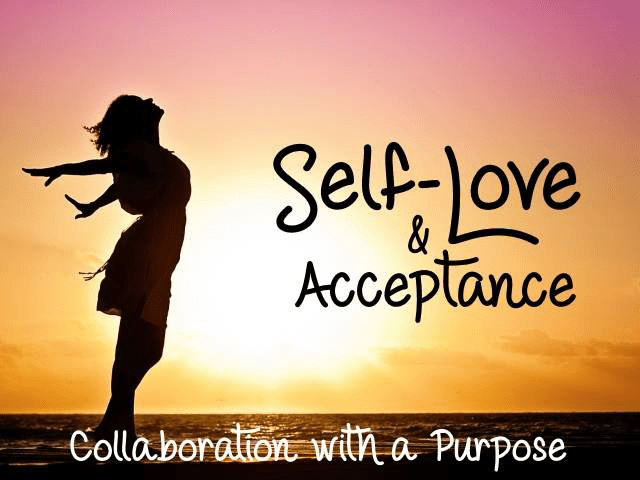
I’d like to set the scene a little bit, if I may.
I was in my car, and it was quite early (for me, at least). I hadn’t had anything to eat yet, and I’d just dropped a family member off for an important appointment. She’d asked me if I could go shopping for her while she was at this appointment, and of course I said yes.
Anyway, I pulled into a parking spot. (No biggie, right? We do this all the time, we with cars.) And another car parked very, very close next to me, so close that I knew if I got out, my door would almost certainly bump the other car a little no matter how hard I tried. (This is partly because I walk with a cane, and I don’t know about you, but I can’t get out of the car easily with that cane nine times out of ten.) And this is exactly what happened, but my car door did not leave a mark of any sort as far as I could tell.
Most people, of course, are forgiving. But I happened to run into the one person in all of Southeastern Wisconsin who just wasn’t…and she was very belligerent and rude.
This woman (a passenger sitting in the car; the driver had already gone into the store) would not let me walk away, would not leave me be, and I just had it…and I ended up having a panic attack, right there in the parking lot.
I am not proud of this.
Yeah, this other woman was horrid. There’s no question about it. But I could not love this person, and I could not love myself either as I couldn’t figure out how to de-escalate the situation other than walking away, which I eventually did. (The woman continued her verbal abuse all the way into the store, mind.)
What I can tell you is that this story has a happy ending of sorts. I found the driver of the car, and she told me it was fine. She even gave me a hug, and she told the passenger (from what I could tell, as I stayed inside the store to keep away from that older woman) to get back in the car and stop it. (Bless her for that, too.)
I know we all have days like this, where Murphy’s Law rules the day and nothing at all seems to go right. But all we can do is try to get past it, and in my case, the way I did this was to talk to a couple of my best friends. They helped me put this into perspective. And they gave me hope that my horrible, no good, very bad day didn’t mean I was a horrible person.
It does make me wonder, though, about context. And about some of the stuff I’ve seen over the years that weren’t good things to do, but perhaps actually would’ve been comprehensible in context…such as parents yelling at their kids in public (something no parent ever wants to do, but sometimes does anyway). It makes me wonder what happened before that point that made it all escalate to the point of yelling.
And if any of these other people actually were having panic episodes, rather than just being downright rude…
Anyway, that’s today’s follow-up regarding the quest for self-acceptance. I will keep working on it, and remind myself that (as a good friend put it), “Your blooper reel is not a fair comparison to someone else’s glamour shot.”
Now, please go see these other lovely people’s blogs, as they’re all worthwhile and interesting in their own right:
Camilla Motte at Moms on the Go
Nicolle K. (Nicolle also created the picture for this round’s Collaboration with a Purpose that you see above, and I think she did a fantabulous job)
Tajwar Fatma (she who started this whole shebang)
Joel A. Scott (he’s new this time around, so make sure to give him a warm welcome!)
Why Is Self-Acceptance So Damned Hard?
Folks, this blog is part of Collaboration with a Purpose. This time around, we have fourteen bloggers talking about the difficulties with self-love and acceptance. And as I have a really difficult time talking about that l-word when it comes to the self, I’m going to use the term “self-acceptance” for all of it.
Why is accepting yourself as you are so damned hard?
Think about it. If someone you know is having a hard time, don’t you reach out and say, “Hey. I care. I am here for you. It doesn’t matter how you screwed up. It doesn’t matter at all. I care, I’m here, and I want to help.”
But you don’t do that for yourself. (At least, most of us don’t.) Instead, we beat ourselves up for our mistakes. Because we’re supposed to be perfect, even though it’s OK if everyone else isn’t.
So why is it that we have such a hard time with self-acceptance, anyway? Why can’t we be as kind to ourselves as we are to others in similar situations?
I don’t know. I’ve pondered this for a long time, actually, but despite that, I still have no answers.
Maybe we’re supposed to struggle with this. Maybe we’re supposed to learn, no matter how slowly, how to see ourselves as others do. Or at least how to learn to forgive ourselves for things we’d forgive anyone else…to appreciate our own humanity, even though that means we will make mistakes, and plenty of them.
And sometimes repeat them, even though we’re working on not doing so, because that’s part of being human, too.
It’s hard to unlearn old habits. And it’s really hard to pick up new ones even after you’ve unlearned the old.
Maybe being upset with ourselves is like that. (Hear me out, OK?) It’s like an old, bad habit. We do something that we get upset with, and we chastise ourselves, all because we’ve criticized ourselves this way since we were small. And we don’t know any better way; maybe we don’t even realize there might be a better way.
But accepting yourself, warts and all, is not easy. It sometimes seems easier to accept your worst enemy than your own self, because you believe you should always be at your best, no excuses, no quarter. Even though anyone else — including your worst enemy — you’d agree with the caveat that everyone has their down times, and that we have to accept them. (That is, if you’re feeling like being kind. And I do hope you are, at least for the purposes of this exercise.)
It’s not easy to say, “All right. I’m still a valuable human being, no matter how many mistakes I’ve made, and no matter how often I’ve made them. I deserve to treat myself with kindness and respect, just like I’d treat anyone else,” because we’re not taught how to do that. We’re taught instead that if we think too much about ourselves, we run the risk of being narcissistic.
Or at least self-absorbed. And no one wants that.
All you can do, every day, is tell yourself that it’s all right to forgive yourself, the same way you’d forgive anyone else for the same thing.
And if it’s too hard to tell yourself, “I care, I’m not going to stop caring, and I am not going to hate you forever for screwing up big-time,” well, at least tell yourself that tomorrow is another day. And you can and will make it better, so stop beating yourself up already.
Self-acceptance is damned hard to achieve, no lie. But it is possible. And you should keep working on it, and figure out a strategy that works for you, so you can put your energy to its best use creating things of wonder and beauty — or at least not waste it beating yourself up.
Communication — Not Just for Breakfast Anymore…
Folks, I keep thinking about communication. What does it mean, and how can we improve it?
Communication, to me at least, means that someone is saying to me, “I am listening. I am paying attention to what you’re saying. What you are talking about matters even if I don’t understand it, but I do want to understand.”
We see a real dearth of communication these days, and not just in our personal lives. (The lack of communication in Washington, DC, these days is startling. Even by non-communicative DC standards.) And yet, no one seems to know how to improve it, to make things any better…and the bad communication (or worse, complete lack of communication whatsoever) just keeps going on and on, dragging down everything it touches.
If you are having communication problems with someone else, try to listen. If you can’t do that because you are swamped with work, at least tell that person you will listen as soon as you can and that you do care. (Yeah, is this a personal message to someone? Maybe. But maybe not. There are a lot of people in my life I’d tell this to, if I could get them to sit down and listen.) And then, make some time and listen. Don’t judge — listen.
Communication isn’t just for breakfast anymore. (Who knew?)
Anyway, the only way to fix bad communication is to actually try. Refuse to be afraid of confrontation; just make sure that you are as respectful and calm as you can be, or if you can’t be either, apologize for your lack of same and then get on with trying to understand each other.
This is harder to do with some than others, granted. But if you are friends, or family, or have common interests, or work together, you have to try to do this even when you don’t want to, or the problems that will result from same will just keep snowballing…
And there is no point to that. At all.
***Note: I am fortunate that nearly everyone I know can and does communicate. But my goodness. I am tired of the non-communication in this world…beyond tired. Thus, this post.
Why Must We Be So Negative?
Folks, the other day I read an interesting post by my friend Tajwar Fatma, she of the blog Life As We Have Never Known it. She’d just passed ten thousand hits on her blog — a truly impressive feat, if you think about it — and she decided to talk about how much negativity she’s had to overcome during her newfound blogging career. (It’s called “Overcoming Negativity,” and can be found here.)
This got me thinking.
Why must we all be so negative all the time?
Granted, there are plenty of negative things in this world. Politics often makes no sense. The weather is too hot, too cold, or maybe just too boring. Prices are rising. Everything we seem to like gives us cancer; everything we don’t like is touted as curing everything down to the common cold, but is ultimately just good, solid food that we continue to dislike.
So, we can eat healthy and hate it. Or we can eat what we like and clog our arteries (at best).
It seems like no matter what we do, we can’t win.
I have no answer for why others are negative. But I do have an answer for how to overcome your own negativity, at least in part.
First, as Tajwar put it in her blog, “Don’t let negativity get to your mind and heart. You have to lose in order to win. And if you can’t handle criticism and negativity, you sure can’t handle praise and victory!”
Second, you need to realize that some of this negativity, regardless of how personal it feels at the time, is not being directed at you in specific. It’s because people are frustrated, upset, angry, or sometimes even jealous of the fact that you’re still trying, but they’ve given up.
Third, it’s important to keep going because you know in your heart that what you’re doing matters to you. (For example, I continue to write, despite the struggles and life-worries and frustrations, because writing matters very much to me. And my stories matter, too.)
Don’t let anyone tell you that what you’re doing doesn’t matter. Or that no one will ever care, either.
As a barely-succeeding author (someone most people don’t even know about), I’m here to tell you that so long as you care, that’s all that matters.
So keep doing what you are. Work hard on yourself, and spread joy and light and life wherever you can. Try to overcome the negativity in this world as best you can (mind, constructive criticism is not negativity, but that’s a separate issue and I’m not going to get into it now).
And most importantly of all: Whenever you get a negative thought about what you’re doing right now, do your best to throw it out. (Or better yet, laugh at it, as Tajwar suggested in her blog.) Don’t let that negative thought stop you from doing whatever it is that you need or want to do…because that’s the only way that you truly lose.
And I see no purpose in that. (I hope you don’t, either.)
Work/Life Balance: Is it Achievable?
Folks, lately I’ve been wondering about the above title — is work/life balance achievable? And if so, how do you go about it?
See, over the past week or so, I’ve been dealing with family health issues. I’ve also been working on my writing, editing, and staying in contact with a few friends here and there in order to remind myself there are good things in the world.
In short, I’ve been feeling overwhelmed.
There are so many things in this world I can’t do much about. And when I’m confronted with those things, I sometimes forget about the things I can do something about — that is, take care of myself; get adequate rest; remember to eat properly; get a little exercise here and there; enjoy the scenery; work for positive changes wherever possible, but try not to completely exhaust myself in the process.
And I can’t believe I’m the only one to ever feel this way.
It’s sometimes easier to focus on what we can’t do, because we’re often taught that it’s wrong to focus on ourselves. Even in a good, positive, healthy sense, where we’re trying to create something or help others or do the best work we can, it’s hard to stay focused on that when everything else seems to be falling apart.
So, is work/life balance achievable?
I think it is, but it’s a tough go sometimes. It’s like running into a headwind; you have to remind yourself that you’re doing your level best, and it has to be good enough. Just keep trying, refuse to let the despair win, refuse to let the exhaustion win, and keep going long enough so it becomes an ingrained habit…then, maybe, it will give you peace of mind to know that you’ve done everything you can on your own behalf.
It’s important to do what you can for yourself.
But how do I put that into practice, under the circumstances? Mostly, I try to remind myself often that it’s perfectly OK for me to put myself first and get the rest, food, and time I need to do what I have to do in order to feel like a fulfilled person even as these other things aren’t working out no matter how hard I try and no matter how much effort I put into it.
Just remember that while you do need to work on controlling what you can control, it’s really hard to do. We’re taught to be rugged individualists, mostly, and having to leave so much up to the Higher Power is difficult. (It really is.)
But don’t stop trying. Definitely don’t stop believing that better things are possible.
Because they are. Even when you can’t see them.
So yes, I do think work/life balance is achievable. And I’ll keep working on it. (How about you? Tell me in the comments!)
 Barb Caffrey's Blog