Barb Caffrey's Blog

Writing the Elfyverse . . . and beyond

Posts Tagged ‘News

50501 Protests: Racine Protests Elon Musk, Trump

with 8 comments

I am proud of my fellow Wisconsinites today.

Why? Well, there were 50501 protests (50501 means fifty states, fifty protests, one message, I think), also called “Hands Off” protests, all over the nation yesterday protesting Donald Trump, his cabinet, Elon Musk and Musk’s overinvolvement with said cabinet and the entirety of the federal workforce via his entity DOGE, and I approve of peaceful protest.

Right now, Americans are suffering. The prices of everything are already too high. We’re told to stock up during sales of whatever nonperishables we can get, because the chaos in Washington, plus the Trump tariffs, have made everything worse.

In case you’re not aware of this, tariffs are taxes. They’re not taxes on the other country so much as on your own people, to make it harder for them to buy whatever it is. So, the current and very strange tariffs on our longtime ally, Canada, mean that maple syrup is priced too high for most people to buy it. That means it hurts the seller of the syrup in Canada, but it mostly hurts the consumer to have fewer choices at much higher prices.

There’s a reason why countries try for both free and fair trade. The current Trump tariffs are neither, in my opinion.

Anyway, I was very glad to see the protests in Racine. There were around six hundred people in downtown Racine with signs such as “No One Elected Elon” to “Hands Off Our Social Security” and people with rainbow flags, asserting solidarity with the LGBTQIA+ community.

In addition, there were protests in Kenosha, Union Grove, Burlington, and apparently there also were a few people out in Waterford (a very small community) with signs. Good for them.

Throughout the nation yesterday, there were hundreds of protests in every state in the union because people are really concerned. The Stock Market fell off a cliff this past week, and no one understands why this is happening with our government. The Republicans in Congress mostly are doing whatever the President wants, which is in direct conflict with their office as Constitutional officers (there is still such a thing as checks and balances, and the Congress was designed as one of the checks and balances for the Executive branch), and they don’t appear to be listening to their constituents. Worse yet, some of them seemingly believed that the previous protests were only by paid protesters.

That was obviously a lie, which yesterday’s protests clearly called out.

I don’t know about you, but Butte, Montana, which had a good-sized protest, is not a Democratic stronghold. Neither is Couer d’Alene, Idaho. Neither is Ames, Iowa. Nor is Lincoln, Nebraska…but I could go on and on, and I think you get the point.

In Wisconsin, Union Grove, Burlington, and Waterford are all smallish towns (Burlington being the biggest of the three) out in Racine County. The City of Racine mostly votes heavily Democratic. The county of Racine mostly votes heavily Republican. We are possibly the most purple county, and most contested county, in the entirety of the state of Wisconsin.

So, if you see people protesting out in the county, you know they’re not paid protestors. (I mean, really.) They are folks worried about their Social Security. They’re worried about paying more for things that were already expensive due to the Trump tariffs. They’re worried about the Republicans in Congress doing almost nothing to push back against anything the executive branch does. They’re worried about Signalgate. They’re worried about our troops overseas, considering the recent contretemps where four men in a training accident in Lithuania came home in pine boxes only to be snubbed by the current President, who was out golfing instead.

I am not in good health. I am, if not old, no longer young. But my attitude toward all of this is summed up by a sign I saw online (which I wish I could find again): “Must Our Decline and Fall Be So Very Stupid?”

I don’t want to see the United States of America become an authoritarian country run by a dictator. I also don’t like seeing unnecessary chaos for the sake of chaos alone, and furthermore, I don’t like it when people my Mom’s age and up are worried that they won’t get their retirement — which pretty much consists only of Social Security and nothing else.

I’ve thought long and hard about this, ever since I saw the Turkish doctoral student rounded up off the street by masked ICE agents. She wasn’t doing anything wrong. She was a teaching assistant. She’d protested quietly, and apparently that was too much for the current President’s staff. Her visa was revoked, she was not told, then she was grabbed off the street by six ICE agents, all masked. Now, she sits in a Louisiana deportation facility.

This is not someone who took up arms against the US. This is not someone who did anything wrong whatsoever under our laws. She was granted no due process and she was grabbed off the street as if she were a piece of refuse.

Worse yet, another man, in Maryland, was accidentally deported to Ecuador to a notorious prison there. The US has said they can’t get him back. That makes no sense. A judge, a federal district judge at that, has said they’d better get him back. He’s here legally. His rights of due process were not followed. Plus, they didn’t even mean to deport him!

But they can’t get him back?

These things have to be fought, you know? No matter what political persuasion you are, these things must be discussed and known. We still have the right of free speech and also of free assembly in this country and we must raise our voices now, whether online or off, whether in protests online or off…we must, must, do these things.

As I said, my health is bad. I worry that if our country gets worse that I’d be a sitting duck. I am obviously disabled, I can’t run from anyone, and in a situation like that poor Turkish doctoral student, I’d be less able to react than she was (and she couldn’t do anything at all). My main value, if you call it such, is that I care about others, I am creative, I help others, and I do whatever I can to make the world a better place.

The current Powers that Be in Washington, DC, mostly do not care about such things. But I do.

That’s why I’m finally, finally raising my voice in protest despite the obvious risks. I hope you all will do the same.

P.S. For those who blame Joe Biden’s creeping overuse of Executive powers to have led to the current POTUS’s overuse of same, you may have a point. But Biden’s people did not threaten Social Security, they did not create so much chaos for what appears to be no reason other than fear, and they did not take inoffensive female Turkish grad students off the streets.

Remembering the Lives of the Skaters, Parents, and Coaches Who Died in Recent DC Airport Crash

leave a comment »

Folks, while I’m not Scott Hamilton, not Brian Boitano, not Nancy Kerrigan, or anyone most of the figure skating community would recognize as I never skated, my heart aches for these people.

As a young musician, I traveled a lot within my state to various competitions. If there had been competitions like the ones in figure skating for young adults, I could’ve been in the same position these skaters, parents, and coaches were in.

Most of the names of the people who passed away have been released now, so I can discuss them a little bit more easily than before. I want to start with Franco Aparicio. He was thirteen, a citizen of Argentina, who was a member of the Washington Figure Skating Club. Gifted skaters often come to the United States because there’s more available ice time here (some countries might have one rink, or worse, no rinks at all), there are far more coaches available here, and it’s possible to make friends with like-minded people here. In his home country, Franco might’ve been considered odd for his love of figure skating and wanting to become an Olympic champion. In the United States, he found companionship, friendship, and appreciation for his abilities.

Franco’s father Luis was also aboard the flight that collided, somehow, with a helicopter. He was a skating parent, and did his best to help his child learn and grow as a skater and as a person. He was a dedicated man, driven, and did what was best for his child in bringing him to the United States where Franco could train and learn and find friends.

Franco’s coach, Inna Volyanskaya, was also aboard. She was fifty-nine, and was known for her grace, her resilience, and for winning six international medals as an ice dancer while skating for the former Soviet Union. She was very proud of Franco, very proud of all of her students, and was known for caring about them…possibly like a mama bear caring for her cubs. She was the type of person, I’ve gathered from various Internet sources, who loved figure skating, loved its grace and ability to transcend nationality and evoke beauty. She’d lived and worked in the United States for several years before her passing.

Brielle Beyer was twelve. She’d had a rare cancer as an infant, and grew up loving what so many young girls love: Walt Disney World. Taylor Swift. And skating. She was gifted. She loved her mother, Justyna, also aboard the fateful flight that took their lives. Her father called Brielle a shining beacon of light, so talented, with so much more to give.

Justyna Beyer, like Luis Aparicio, was a skating parent. She did everything in her power to get Brielle the training she needed. Being sent to the developmental camp was important for Brielle, so Justyna went while her husband stayed home and held the fort. She was very much looking forward to going home, but had enjoyed being among other skating parents like her in Wichita as they all watched their children, gifted skaters all, learn from the best.

Alydia Livingston was just eleven years old. She and her sister Everly, fourteen, had a following on Instagram as the “Ice Skating Sisters.” Alydia was an ice dancer, and was the youngest of all the skaters aboard. Ice dance is a different discipline than either pairs skating or women/men’s singles skating as it requires a partner, lots of time to get to know your partner and his quirks on the ice, and be able to develop a unison with said partner while gliding and dancing around the ice. Ice dancers don’t, technically, do any jumps, but they can do lifts and their discipline is very challenging due to the need for unison and unusual dance-type lifts. She had only recently found a new ice dance partner and was very enthusiastic about him and figure skating.

Everly was a singles skater. This, to non-figure skating cognoscenti, means she did jumps, spins, footwork across the ice, and so much more, fitting all that against music, wearing costumes reflecting that music, and almost certainly studying some form of ballet or dance as that helps skaters of all disciplines. (Alydia probably did some of that, too, and would’ve done more as she grew.) Everly was more reserved than her sister, but the ice made her sparkle; she loved skating. With her sister on that Instagram account, they promoted skating as a sport and as an art form.

Alydia and Everly’s parents, Donna and Peter Livingston, were known for their devotion to their daughters and being willing to go anywhere their daughters needed to be in order to further their skating. While they both held jobs — she worked for Comcast, and he worked as a real-estate agent — their true passion was for their daughters. Everyone knew it, from what I can tell by the various accounts all over the Internet. That’s why both of them were on the flight, why both of them had managed to get time off for a week at the same time — imagine how difficult that is for non-skating parents, OK? That’s hard. For something like this? That has to be magnified a thousand percent or more…yet they found a way and they were there with their daughters, until their end.

Skater Cory Haynos was sixteen. He’d recently landed a triple Axel jump, one of the most difficult three-revolution jumps. (Technically, it’s three and a half revolutions, which is what makes it an Axel in the first place. Plus the takeoff is different.) He was very proud of this, as he should be; this was part of what he needed, going forward, to become the rising star he hoped to be. He already was a gifted skater with limitless potential. He also was a Christian, and had a Biblical verse listed on his Instagram account. Cory had power and speed, and these two attributes were especially important to continue to climb the ladder as a skater. His family, including his cousins, believed Cory would represent the United States in the Olympics someday.

Cory’s parents, Roger and Stephanie, were skating parents who’d do anything for their son. She was on the board of the Figure Skating Club of Virginia, Cory’s home away from home…they, like the Livingstons, somehow found a way to go as a family to the important developmental camp held in Wichita at the conclusion of the United States National Figure Skating Championships. (I added “national” there because many skaters call the US championships the “nationals.”) They died alongside their son.

Note that all of these skating parents were in midlife. They had much time left to them, had this not happened. It’s not just the kids and their skating that’s so important to remember here, but the parents who did everything in their power — absolutely everything — to help get their kids the ice time, the coaches, the friends, the support…all of that was absolutely essential to their children’s development, they knew it, and they did it all.

Skater Edward Zhou was sixteen. He was known for being a bright light, someone who encouraged everyone. He loved skating, to the point he’d fall and get up with a smile on his face. One of his schoolteachers, Julie Barker Little, posted on Facebook as a tribute to him that he was “everything you could hope for in a student, in a young man, in a fellow human being. He was magic!”

Edward was also humble, his teacher Barker Little said. He only spoke of skating when asked. Other athletes were in his class that made big fusses over whatever sport they were in, and they had no idea that Edward was so gifted. Edward was actually part of the national development team for four consecutive years. Barker Little said Edward loved to learn, had taken Spanish classes and was given an award for learning the language so well, and was the epitome of grace and class. (That’s how I’m phrasing it from other things she’s said online.) Edward had also learned the important triple Axel jump, just like Cory Haynos.

His parents, Joe and Kaiyan Zhou, went everywhere they could with their son. They were devoted skating parents. He was their only child, and they did everything they could to help him become the young man he was destined to be. The Skating Lesson, a skating social media page, said that the Zhous were known for always being at the rink.

Skater Olivia Eve Ter was just twelve. The Skating Lesson reported that Ter’s coach, Sergei Baranov, called her “cheerful, positive, talented, goal-oriented girl.” She loved ballet in addition to figure skating (this does not surprise me; often, figure skaters take ballet or another dance discipline as it helps skaters learn how to move in different ways), and she’d improved in leaps and bounds over the past year. One of the other coaches at her rink, Maria Elena Pinto, called Olivia “effervescent” and that she loved to listen to Taylor Swift and watch her coach, Sergei, dance. Olivia also liked to play practical jokes on her coaches, and apparently kept other skaters in stitches, loosening up the atmosphere at the rink whenever she was around.

Her mother, Olesya Ter, was a devoted mother with a kind heart. She had been a pediatrician in Russia, but came to the United States to support her girls. Surviving them are Olivia’s father (and Olesya’s husband) Andrew and Olivia’s sister, Anna Valery.

Alexsandr Kirsanov was forty-six. A former ice dancer who competed for the U.S., Russia, and Azerbaijan, he was known for his kindness, his light-heartedness, and for being genuine. Former U.S. ice dancers Dennis Petukhov and his wife and skating partner, Melissa Gregory, said on MSNBC that Sasha was the type of guy who’d do anything for you he possibly could. He was down-to-earth in the best way. He truly cared about people. And he was kind…while like any coach, he could be critical (you almost have to be, in order to show your students what they need to do to improve), he delivered his critiques with a smile. Kirsanov was married to Natalya Guden, and they both coached for the University of Delaware Figure Skating Club.

Kirsanov was the coach of Angela Yang and Sean Kay, both just eleven years old. They’d been undefeated in the juvenile ice dance category all year. That’s hard to do. Sasha was very proud of them, and Yang and Kay had big dreams for the future. Angela’s mother, Lily, and Sean’s mother, Yulia, accompanied them on the flight. Angela is survived by her father and two siblings. Sean is survived by his father and three siblings. Kirsanov is survived by his wife, Natalya, and their children, both skaters.

I discussed Jinna Han and Spencer Lane in the earlier blog, but keep in mind their parents, Jin Han and Christine Conrad Lane, were also like the Livingstons. Like the Haynoses. Like Luis Aparicio. Like Mrs. Ter. Like the Zhous. Caring people who wanted the best for their children. People in midlife, with much time remaining for them to continue to encourage their children, giving good examples to others, and following their own passions, their own jobs, their own lives alongside their children. These were infinities, as science fiction author Lois McMaster Bujold called it.

These people were all infinities.

It’s been a few days, now, since all of these wonderful people died. Like former Olympic Champion Scott Hamilton, I can’t wrap my head around it. All of that potential, gone. All of those vital people in midlife, gone.

I really hope the National Transportation and Safety Board finds out what happened here, and that it never, but never, happens ever again.

Figure Skater, Commentator, Innovator: Dick Button Dies at 95

leave a comment »

As a long-time figure skating fan, I remember hearing the voice of Dick Button during many important competitions over the years. He loved figure skating, partly because he’d been so good at it himself.

Button won gold medals in 1948 and 1952, when skating rinks were still outside. He was the first to do a double Axel jump, and the first to do a triple jump of any sort whatsoever.

For me, though, I remember Button as a commentator. (USA Today columnist Christine Brennan said Button preferred the term “narrator.”) Button could explain figure skating so well, people who never skated like me were able to understand it. He knew it was both a sport and an art form, and he described it on both levels.

Button lived a good, long life full of love, happiness, and the sport he chose as his own, figure skating. That he died so soon after the terrible helicopter/plane crash in Washington DC (where at least four figure skaters were lost, two of their parents, and at least three coaches) seems both oddly appropriate and heartbreakingly sad.

The memories I have of Button’s narration that are the most precious to me are these:

US figure skater Christopher Bowman, in 1992, wasn’t thought to have a prayer of being in the top five at the Olympic Games. Bowman was known for showmanship and for skating a completely different program nearly every time he was out on the ice. Bowman’s program started off with a jump combo that Button was expecting, but nearly everything else was different. I could hear both the frustration and the pride that Button had regarding Bowman, as Bowman was thought by some to have wasted his potential. 1992 Bowman was possibly his finest hour as a figure skater, and Button knew it.

US figure skater Tonya Harding, long before the attack by her soon-to-be-ex husband on rival Nancy Kerrigan, skated brilliantly to finish third at the 1992 US Figure Skating Championships. Button wasn’t sure Harding would land on the podium, but he was happy she did. He considered her a complete skater, not just an athlete, which was high praise from him.

Finally, Button was a big fan of one of my favorite figure skaters ever, Johnny Weir. He once called Weir’s skating “liquid gold” as it was so smooth and attractive.

I’m glad Dick Button had such a long and memorable life. I’m also glad he was there for so long as a broadcaster, educating many (including me) about the joy and pain to be had in figure skating.

To say Button will be missed is an understatement.

Young Figure Skaters and Their Coaches Aboard Plane in Recent DC Airport Crash (Updated)

with one comment

The Washington Post reported today, January 31, 2025, that there may be as many as twenty young skaters, parents, and their coaches who were on American Eagle flight 5342. This page will be updated as more information comes in. These skaters and their parents, along with their coaches, deserve to be remembered.

While no official word has come yet, the Boston Figure Skating Club has released the names of several skaters and coaches who were on board a flight to Washington, DC, from Wichita, Kansas last night. That flight collided with a helicopter; no one knows yet how it happened, but it’s believed no one survived.

There were sixty-four crew and passengers on that flight. Among them were two young skaters, Jinna Han and Spencer Lane; their parents, Jin Han and Christine Lane; their coaches, Evgenia Shishkova and Vadim Naumov. Han was only fifteen years old, and Lane was just sixteen years old.

Edited to add: Two young figure skaters from the Washington Figure Skating Club also have passed away, those being Everly and Alydia Livingston. They were fourteen and eleven, respectively. Their parents Donna and Peter Livingston also perished.

Edited to add: Figure skater Cory Haynos, sixteen, and his parents, Stephanie and Roger Haynos, also were among the victims. He’d just landed a triple Axel jump for the first time at the developmental camp. That is a huge accomplishment for a young skater, and his potential, like the other skaters who passed away, was limitless.

Edited to add: Skaters Brielle Beyer and Edward Zhou, both of the Figure Skating Club of Northern Virginia, have also passed away. Beyer’s mother, Justyna, and Zhou’s parents, Kaiyan Mou and Joe Zhou, were also victims.

Also edited to add: Delaware Figure Skating Club lost coach Alexandr Kirsanov and young skaters Angela Yang and Sean Kay.

The United States Figure Skating Championships were held this year in Wichita. That’s why the young skaters and their coaches were there. After the championships, there’s usually a developmental camp for skaters with potential to climb higher. (Everyone in figure skating goes to these championships if they have the financial wherewithal to do so, unless they’re ill. It’s a very small community in a number of ways.)

I don’t know anything about Jinna Han or Spencer Lane, except that they were good skaters. They had excellent coaches (who, as noted above, have also died). They had boundless optimism, as future Olympic hopefuls must. They were hard-working, as figure skating is a demanding discipline. They wanted the best in life, the best in their sport, and the best from themselves, which is why they had stayed longer to attend that important developmental camp.

I do remember seeing their coaches, Shishkova and Naumov, skate back in 1994, when they won the world figure skating championship. They were brilliant, both technically and artistically. It’s not a surprise to me at all that they became coaches, nor is it a surprise to me that they were excellent coaches. (Not every figure skater becomes a coach, but those who do tend to be outstanding as they understand everything about it from the beginning of their careers until the end of their performing days.)

I mourn them all.

Edited to add: Coach and retired figure skater Inna Volyanskaya, a citizen of Russia, also perished in this crash.

The human cost is incalculable.

As one of the skaters said online at a social media site (I can’t remember which, as I heard this reported by local radio in Wisconsin rather than saw it), “Hug your loved ones. Hug them every day. Hug them hard.”

None of us knows the future. None of us knows what day will be our end, or how it will come. We can only make the best of the time we’re given.

One thing I do know about those figure skaters and their coaches is, they definitely did that. They lived in service to their art and to their sport. Their parents did everything they could to give their children a chance to excel in one of the most exciting, yet expensive, sports that has ever existed. The costumes, the choreography, the coaching, the ice time…sometimes it seems like the bills go on and on, all for a few brief moments in the sun.

Yet those brief moments in the sun — their short programs, their long programs, their experiences as they go to various events, etc. — are worth everything.

I wish this hadn’t happened. I don’t understand it.

But the unknown skater who said “Hug your loved ones” is right. That’s all we can do, as we continue to celebrate our own few, brief moments in the sun.

The LA Fires: Hell on Earth

with 2 comments

Folks, I only lived in Northern California for a few years, but while I was there I noticed the weather patterns. (My late husband Michael had lived there for decades, so we talked about this from time to time.) In the summer, Los Angeles (LA) has a Mediterranean climate. In the fall, usually there are big rainstorms where sometimes homes not only can get flooded, but mudslides can take homes completely off their foundations. In the winter, the winds kick up, and if there’s been sufficient rain over the past nine months or so, there’s a lesser chance to have fires.

That’s not the situation right now.

California has been experiencing slightly different but much worse weather patterns in the fall and winter, partly because there hasn’t been enough rain during the previous months to do any good. So, with drought conditions, fires can start very quickly, and get very, very bad almost as the drop of a hat.

What caused the awful fires that have been going on now for about a week is a combination of factors, but the fact the region was in a drought is the main problem here. I call it “Hell on Earth” because whole blocks of residences are just plain, flat gone.

And the fires aren’t done yet.

There’s so much ash in the atmosphere in LA that some folks have said it looks kind of like snow. (Too bad it’s not. There is some moisture in snow.) The winds are unpredictable, awful, and the fires seem to be going every which way.

I’ve seen some politicians complain that the Democratic Governor of California, Gavin Newsom, might’ve done better here. I think that’s unfair criticism. The Mayor of LA, Karen Bass, also has been heavily criticized, with rumors going around that she’s fired the fire chief (untrue) and other such nonsensical things.

Look. Even if any of the criticism is remotely true, it is irrelevant. These people could have done everything right, and this still would’ve happened.

Why? It comes down to climate, weather patterns, and a worse than usual drought system. It’s a perfect storm of badness. Add those high winds, and you get chaos.

You get Hell on Earth.

Some in this world don’t seem to understand just how expensive it is to own real estate in any part of California, much less a usually extremely desirable location like LA. A $5.5M dollar home might be a $400,000 home somewhere else. (Under the current, inflated prices most people have to deal with.) A modest lot with a home on it is insanely expensive in California, especially in LA or San Francisco or San Diego.

People have lost everything they’d ever worked for. Some were retirees. Some were still in the workforce and were middle class or perhaps even lower middle class (if they’d inherited their home or a whole family had bought it together). By no means were all of the people affected movie stars, wealthy people who can buy everything they need at any time…no, most of the people were regular sorts.

Some of those who’ve died…one man was trying to get his son, who was severely disabled, out of the house and couldn’t do it. Another man was trying to save his house and refused to leave when the firefighters told him he had to go, and was found with a hose in his hand. Others died because the winds shifted so quickly, they could not get out.

The death toll right now, I think, stands at something like twenty-four people. That number’s only going to go up, and it could go way, way up depending on whether they can get any of the three major fires going on well contained. So far, they haven’t been able to do that, though there has been progress.

Still. The fire and police departments out there are working as much as they can — 12 hours on, 12 hours off — to help people. All sorts of people have come out of the woodwork to help, including the man I recommended to you all, actor Steve Gutenberg, helping others in whatever ways they can. (Jimmy Kimmel, on his nightly program on ABC, called Gutenberg “a national treasure” tonight. Rightfully so.)

These people will need enormous amounts of money and time and help. I hope they get it all. No one wants this. Even the politicians blaming other politicians, which I wish would not be happening during this crisis (save the kvetching until the fires are completely out, please!), do not want this. Devastation like this usually is only seen in wars.

Again, I hope these folks who’ve lost everything are able to rebuild and recover and restore their lives. I also hope those who have been injured fighting the fires will fully recover, and that the poor souls who couldn’t get out in time will be mourned.

It is our duty as human beings to help others that are hurting whenever we can. Those of us far from the action, who can’t go and feed people, and who can’t donate clothes (not in time to get there), but want to do something need to look at places like legitimate animal rescues (as many pets have been separated from their owners and need to be housed and fed and cared for) along with whatever the Los Angeles Fire Department recommends.

It may be — is — Hell on Earth out there. But we have to try to make it better if we possibly can, because as the saying goes, “There but for the grace of God go I.”

The Appalachian Crisis, Courtesy of Hurricane Helene

with 2 comments

Right now, people in Appalachia are suffering due to the aftermath of Hurricane Helene. (Any US newspaper will have details.) Being up in the mountains wasn’t as beneficial as it usually is due to the heavy rainfall. Some homes washed away completely. So did streets, major highways, all sorts of thoroughfares…the people who managed to get out with their families (including their pets) have said they know how lucky they were to do it.

You may be wondering why this blog is focused only on Appalachia. Of course Florida got hit, too. Most of the people in Florida, though, knew what to do to either shelter in place or leave before the storm ever showed up. That wasn’t the case in Appalachia for the most part, especially in rural North Carolina and rural Virginia. North Carolina got hit especially hard, and the first responders are having a very difficult time getting help to those who need it. (Basically, until proven otherwise, everyone’s going to be presumed to need help.)

I am aware of the devastation a flash flood can bring, even a much smaller one that was not caused by a hurricane. That’s because years ago, in Colorado Springs, I was in the midst of one. I had a very small car back then, a hatchback that seated two people (there was a quasi-backseat, but that was only if you folded it down.) I managed to get through an intersection just as it was starting to flood out. I saw later that people had not made it through the intersection behind me, in bigger cars than mine, and had to be rescued from the tops of their cars by helicopters or even by canoes. This flood was bad, was sudden, and there was property damage…but fortunately, no one lost their lives. And within a few days, you’d have never known the area had flooded out.

My experience happened before the widespread use of cellular phones. (And yes, that’s what they were called back then. No shortening to “cell” just yet.) But people were told to stay off the phone lines for the duration of the emergency, and if they were able to go home safely, they should. (I saw all the coverage of the storm, with people getting picked up from the tops of their cars, etc., because of the evening news.) The other things people were told to do were commonsensical: Stay out of the way of the first responders, go home and stay home, and wait to hear if and when you could return to work in that area (or at least drive through it safely).

Right now, such commonsensical things aren’t able to be applied, for the most part, because Appalachia (the mountains and surrounding region) goes through fourteen states on the East Coast. It’s mostly rural. People up there are self-sufficient to a fault. They didn’t get the word early enough that this was going to be an especially bad storm and it would affect them high in the mountains…but even if they had, they might not have been able to get out. Many communities in North Carolina in particular have been described as having few ways to get in and out, and some of the ways people could get up to those rural places was on major highways (some now washed out) with bridges (down or washed completely away) and other such things needed to get them out.

I can’t tell how much road rebuilding will be necessary, except “a lot” from this distance. I am worried, though, because with cell towers down, no electricity, many cars and trucks washed away, houses destroyed, there’s no way to find out except by going door to door — and by using bicycles, of all things — who’s alive, who’s not, and who needs help. (See what I said before, though. Until proven otherwise…everyone needs help.)

If you have family or friends in that area and they’ve not checked in, the authorities are telling people to text. Not call. Text, because it’s more likely to get through. Text also doesn’t clog the emergency lines as much.

Food, water, medical supplies, and other things will be needed in the upcoming days. It may take months or even years to bring back all that was lost — at least, the buildings, the infrastructure, and the roads. People in Swannanoa, NC, which mostly got obliterated, are already vowing to rebuild. Their families came from there, generations back, and they do not want to move. Other communities either have said or will say much the same thing.

At any rate, while I worry about my friends in Florida, I know they have a good idea of what emergency services there are, they knew how to plan for a week or more without power, and the state government usually seems to do a good job at getting things up and running again.

None of that — absolutely none — can be said for these poor rural communities in Appalachia. Most had no idea how bad Hurricane Helene was going to be. There were no plans to get people extra food or water beforehand (or lay in some at the nearest church or community center). No procedures in place for any of this, as it’s not happened before that far up in the mountains.

The cities in North Carolina were much more prepared than the small towns and hamlets. The coastal areas were much more prepared, too. The former, because they had procedures in place; the latter, because they’ve seen some of this before.

At the moment, all I can do is pray for those folks up there who haven’t been found, but are alive — hungry, thirsty, perhaps needing medicine desperately, but alive. I hope they will be found quickly, they will get the medication they need, they will be fed, clothed, sheltered, and given as much water as they’re able to drink.

This is so new to the folks up there that there’s no widespread call as of yet for help. The ability to ask for help isn’t there in some places. In others, maybe they can ask, but they’re worried they won’t get it…I’m pretty sure the National Guard will be mobilized, and the Reservists may get called up as well, as people are going to be needed in a big way to help others and rebuild roads and bridges.

So, the TL;DR of it all is: If you have family up there, text them. Don’t call. Leave the lines open as much as possible for the emergency responders. Look for ways to help the people suffering in Appalachia, as that’s the only thing we can do as presumably civilized people — helping others is what we need to do, to prove that we are human, we care, and that if at all possible we’ll get them on their feet again. And pray. Pray. Pray.

Linkin Park Hires a New Co-Lead Singer, and I Have Thoughts…

with 15 comments

In case you haven’t heard yet, Linkin Park has a new lead singer, or probably better explained as co-lead singer along with singer/rapper Mike Shinoda. They needed someone because their iconic lead singer Chester Bennington died seven years ago by his own hand, and most of Linkin Park wanted to play together again. (The exception was their original drummer, Rob Bourdon.) So they’ve hired a woman, Emily Armstrong, who fronted a group known as Dead Sara, to sing the parts that Chester would’ve sung had he still been alive.

Note that I did not say “to replace Chester,” as there’s no way to replace Chester Bennington. But Linkin Park wanted/needed someone to sing those parts, and Emily Armstrong can sing melodies and then scream in a heartfelt way. My guess is that Emily A. sings in a similar range to Chester, or at least is close enough that with some minor arrangements (perhaps changing the key signature and/or mode — as lots of groups use modes like Mixolydian, Lydian, Dorian, etc., in addition in order to better reflect a mood or feeling), Linkin Park’s songs can be rendered well enough for fans to appreciate them.

This is a big controversy because of two things. One, you can’t replace Chester; he had a unique set of skills, including an emotional awareness that was almost uncanny, that could never be reproduced by anyone else. Two, one of Chester’s sons, Jamie, is very unhappy about this. Jamie pointed out that September is International Suicide Awareness month, which seems disrespectful to him as his father Chester died by suicide.

That raises a good point: as Linkin Park had been working with Emily A., quietly, for months, why didn’t Linkin Park wait another month to drop this news? Or why not move it up into August? Why court this sort of drama when you don’t have to?

See, there was someone else, a musician — I can’t remember the guy’s name right now — who had reported about four, maybe five months ago that he’d heard that Linkin Park had hired a new female singer. Mike Shinoda and other Linkin Park members pooh-poohed this and said if there was any news to report, they’d report it themselves, thank you.

But the guy who reported this was a fellow musician. I knew at the time, being a musician myself, that something was undoubtedly going on even though the guy who’d said he’d heard Linkin Park had a new lead female singer backtracked pretty quickly once Mike Shinoda, et. al., basically said the man should mind his own business. Still, from that report, I figured Linkin Park was probably rehearsing, trying to lay tracks in the music studio, and figure out if a combo with some woman — who we know now to be Emily A. — was commercially viable.

That’s exactly what was going on, as we now know.

My thoughts on this are a bit mixed. First, it is hard for me to conceive of anyone singing the parts Chester sang so well and so distinctively. Chester Bennington was an integral part of Linkin Park, and as I said before, I do not believe he can ever be replaced. But second, as a musician, I know that the members of Linkin Park wanted to play again. It’s been seven years since they last played a concert in public, and most of them (Rob Bourdon, original drummer, aside) were itching to get out there and to perform.

I can’t blame any musician for wanting to perform, OK? That’s kind of what we do, providing we’re healthy enough to do it. Every performance, even of a well-known song like Linkin Park’s “In the End,” is a little different, because the energy of the crowd may be different. Or maybe one or more of the group members is feeling especially emotive. Or there’s some extra tenderness in a quiet musical interlude. Or the bombastic, up-tempo stuff seems to have extra fire one day, while the next, while still fun to listen to and hopefully fun for the group members to play, doesn’t quite meet that level of intensity.

This is true of any human music group anywhere in the history of time. Live music has variables to it, and can be extremely good one night, good the next, a bit off the third (though probably the audience won’t recognize it, the members of the group assuredly will know and feel like they let themselves down), and back to good the fourth night. It is just the nature of the beast.

As I’ve said before at my blog, there are such things as post-concert highs and post-concert lows. For example, I believe famous singer Chris Cornell may well have been dealing with a post-concert low before he called his wife and sounded so odd just a few hours before he took his own life. Audience members, from what I can recall at the time as he passed a couple of months before Chester did, said that Chris seemed frustrated, maybe a little unhappy, and his performance was not necessarily up to par. Again, some of this is the nature of the beast, and every musician worth his/her/their salt knows it. But it can be hard to remember, in the moment, that as wonderful as music is, and as wonderful as it is that some people get to live their dreams and make a living from music, that being a musical performer is not the sum total of everything we are.

I’ve had both post-concert highs and post-concert lows. They can be disconcerting, but the lows are worse by far than the highs. On those nights, I wonder why I even bothered to take up an instrument. (I don’t sing in public and am glad I don’t.) My hands felt a little off, maybe, or it was very hot outside and playing an outdoor concert was uncomfortable and unpleasant. Either way, it affected my performance for the worse. Because of that, I felt like I’d let down the audience, let down the group I was playing in, let down myself too, and just wished the ground would swallow me up, whole.

At any rate, getting back to Linkin Park and their new singer Emily A. — I think we should give the new-look and new-sound Linkin Park a bit of time to see how things go. I also think that as open-hearted as Chester B. often was, he’d not want to keep his bandmates from making music with someone else (even if it doesn’t feel easy for fans).

Finally, Shinedown’s lead singer Brent Smith posted on social media that he believes Linkin Park is doing what’s right for them. It sounded to me like Smith also believes fans should give the new version of Linkin Park time, and at least be open to listening to Emily A.’s vocals. (He spoke in a quite complimentary manner of Emily A., too.)

I think that’s a good position to take, and it’s one I can live with.

So, while I still wish that Chester was alive, singing his heart out, and playing/singing music to his heart’s content, I’m at least willing to listen to the new version. I make no promises yet as to what I think…but I will at least listen, and hope all goes well for them.

Looking for Optimism in 2024

with 7 comments

Folks, 2023 was a difficult, frustrating, and disempowering year for me. A whole lot I wanted to get done didn’t happen. A whole lot that I never wanted to occur did.

So, how can I look for optimism in 2024?

It seems like every time I turn on the news, something else awful has happened. There’s a tornado in Alabama. There’s a documentary about a young woman, Gypsy Rose Blanchard (now happily married, married name Anderson), who was mistreated horribly by her mother and who served several years in prison for conspiring to kill her mother. (If you saw what her mother did to Gypsy Rose Blanchard, you might be like me and say, “Small loss.” Especially after Ms. Blanchard tried hard to get away from her mother, and how no one understood the horrific stuff her mother had put her through.) Blanchard’s story sent ice straight down my spine, as her late and (to my mind) unlamented mother kept her looking ill and much frailer than she ever should’ve been due to Blanchard’s mother’s significant mental illness. (The diagnosis for Blanchard’s mother, who I’m not naming as I feel she was among the world’s worst villains of the last thirty years, was Munchausen’s Syndrome by proxy, meaning Blanchard’s mother put Gypsy Rose through all sorts of crap by making her appear sick — as a cancer patient, as needing various surgeries Gypsy Rose never required, etc.)

Then, of course, there are the usual problems. Snow. Ice. Wind. Man against nature.

So, it’s a dark and rather depressing opening to 2024 for me. It’s cold, there’s not a lot of light at the end of the tunnel, and I’m frustrated overall because I’ve tried very hard for the last nineteen years-plus since my late husband Michael died (yes, I know to the hour, but I won’t be that anal-retentive today) to live the best life I can. Maybe I’ve done that, but my creativity has not been where I wish it to be; I didn’t achieve my goals in 2023 of getting some new stories out under my own name due to my father’s passing in October (partly, anyway; I was already behind that expectation due to the earlier cellulitis of the face I suffered in February and March before he died); work lagged, and I was having to play catch-up even before I caught Covid-19 in early December.

When looked at all as a piece, it seems much worse than what it was when I lived through it. And it’s of course not a patch on what Gypsy Rose Blanchard lived through for years until her mother was killed by Gypsy Rose’s then-boyfriend. (Don’t judge that young woman until you’ve seen what her mother put her through.) But pain is pain, and Michael always told me that it’s invalidating to try to compare your pain to others’ pain.

I think that’s good advice.

In my case, stuff builds up inside. I have no way to express it safely, or at least it seems like there isn’t one. This feeds depression, this feeds illness, this feeds lack of creativity and this also feeds despair, hopelessness, and as my friend Karl Ernst put it in his book Rocking Change, stuckness.

That doesn’t mean I’d not have been ill with Covid-19 if my problems magically went away. (Plus, life seems to be all about how to navigate problems. We always have some, somewhere.) That doesn’t mean everything would be lightness, creativity, brightness, and happiness, either.

What it does mean is that the real issues I’ve got: grief, again, this time due to the loss of my father; iffy health (that I continue to work on to get at least slightly better); loneliness; frustration; anger; hopelessness; well, they all get stuffed together in a maelstrom of despair.

That said, I think there are some reasons for optimism here.

First, I am aware of these problems. They aren’t just sitting there, unremarked and misunderstood.

Second, I have managed to write over 36K words in the last year into a new story I can’t tell you much about yet (it’s in a friend of mine’s universe and will eventually go out co-branded with his name), which is the highest word count I’ve managed in the last three years. This means the prospective novel is about one-third completed. (Yay!)

Third, I have good friends I trust, along with family, that have known me for many years. That has to help.

Fourth, while 2024 is already shaping up to be a year of change for me in many senses, I believe there is room for me to take a new role upon the stage somehow. (As life is but a stage, and we are merely players according to both Shakespeare and the rock group Rush, this needed to be said.)

Or as my father used to put it, “There’s always another season.” He was talking about sports, but I think that’s applicable to life as well.

So, what I’m going to do is this. Write. Edit. Compose music. Talk to other people as best I can. Continue on my path, as I know exactly what it is, and do whatever I can and whatever it takes to make my life happier, more stable, and far more satisfying.

See, I can’t control the future. I can’t control what other people think about me. I can’t control all the vicissitudes of life.

But I can control how I react to it.

That’s my overarching reason for optimism in 2024. (What’s yours? Tell me in the comments!)

Come See the New Video for CHANGING FACES!

with 2 comments

Folks, there is now a video for CHANGING FACES!
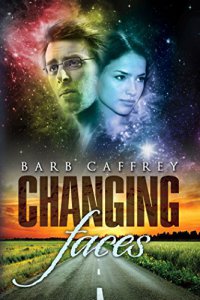
51pgonihralIf you’ve read my blog for a while, you know what CHANGING FACES is; it’s my LGBTQ-friendly fantasy novel about two graduate students and clarinetists, Elaine and Allen. Elaine is bisexual and gender-fluid; Allen is a typical, heterosexual male. They love each other very much, but Elaine has kept from Allen her gender-fluid/transgender nature. (He does know she’s bisexual and doesn’t care.)

Now, why did she do that? It wasn’t a conscious choice, exactly…she’d been raped years ago, a gang-rape, while a foster child, and the system failed her. That she could find a way to love truly after all that was remarkable, and Allen knew that part of her. (Before you ask, Elaine uses “she/her” pronouns, that being her preference.) But she was terrified that Allen would not understand, and so kept this from him, until one night it all bubbled up.

And he was floored.

Anyway, this isn’t explaining the video, is it? (Or is it?) Because you could instead be watching it, right now, thanks to my friend and fellow author Kayelle Allen. She put a link to it on her blog, and that link is to her YouTube Channel…but really, I need to show you what she did, shouldn’t I? 😉


Isn’t that great?

And in case you missed it, a few years ago I wrote a blog for Kayelle called, “Writing a Bisexual Character.” It talks more about why Elaine is the way she is, and how I did my best to be authentic to her experiences throughout.

Anyway, want some links? (Sure you do. Why not? The e-book’s only ninety-nine cents, after all!)

Publisher Twilight Times Books

Amazon US https://www.amazon.com/dp/B01N3CQKWJ
Amazon UK https://www.amazon.co.uk/dp/B01N3CQKWJ
Barnes and Noble http://www.barnesandnoble.com/w/changing-faces-barb-caffrey/1125707044
Link to except: http://www.twilighttimesbooks.com/ChangingFaces_ch1.html

Have at! (Then come back and let me know, OK? Sometimes writing seems like shouting into the void.)

Written by Barb Caffrey

July 21, 2020 at 1:19 pm

Posted in Changing Faces, Informational Stuff, LGBT

Tagged with ,

Six Things for Saturday

with 37 comments

Folks, I know I didn’t write a blog all week, and I’m sorry. So without further ado, here are six takes on six different things. (Why six? It’s Saturday. I like alliteration. It makes sense in my head, anyway…)

  • I’m very happy that my favorite baseball team, the Milwaukee Brewers, are in the playoffs. They haven’t had a team this good since 1982, and that year, the Brewers (in the American League back then) made it to the World Series. I don’t know if this year’s team can do that or not; much remains unclear at this time. But they have had a great year, and their bullpen is the main reason, along with the play of MVP-candidate Christian Yelich.
  • I’ve thought a lot about editing this past week. Some books that I’ve otherwise loved end up with odd errors in them. One such error is “fairing” instead of the proper word, faring, as in, “How are you faring?” (Meaning, how are you doing.) I don’t know why this keeps showing up in books, except that I’m guessing the authors either didn’t have good editors or they relied too much on spellcheck and/or grammar check. (No spellcheck or grammar check in the world is as good as a real, live editor.)
  • I am far from indifferent to the political situation we have going on in the US right now. I am frustrated with the descent into tribalism. We cannot get any traction if those of us in the middle are either vilified or ignored. And yet, if you try to take a middle stance on anything, that’s exactly what happens. As I’ve said before, change usually is incremental. (Mind, it may show up, all of a sudden, as a huge one, such as when same-sex marriage was legalized in all 50 states in 2015. But it took decades of progress to get to that point.) And to get that incremental change, you need people who are willing to look at the problems — take a good, hard, rational, fact-based look — and then compromise to get the best solution possible.

Now, is this hard to do? Damn straight it is. Most people do not have the wherewithal to truly serve the public rather than themselves, or worse, special interests/big moneyed interests. Maybe they want to serve the public, but can’t figure out a way; maybe they get to state capitals (or even more challenging, Washington, DC) and get blinded by the “bright lights, big city” phenomenon.

But this is what must happen to have good, positive public service. And right now, because no one trusts anyone else politically and there’s very little bipartisanship to be had at any level, those of us who just want to fix the potholes and make sensible public policy get pushed to the side. And that’s wrong.

  • Someone asked me if I believed Doctor Christine Blasey Ford’s testimony. The answer is that I did. Something definitely happened to her, and she was definitely sexually assaulted. Her behavior afterward is characteristic of that, as is the fact it took her years to put herself back together. So yes, I believed her. And yes, I believe we need to listen to sexual assault survivors, and make better public policy overall if we can in that regard, too.

(Before someone says, “But Barb! That doesn’t say Judge Kavanaugh did anything! You have no proof! She has no proof either beyond her bare word,” I will point out that I am answering only the one question. I wait for facts.)

I am very pleased Doctor Ford put herself back together, mind, and used her experiences to better inform her life, make better and more positive choices in the long run, and get her doctorate (which is a very big deal). That’s hard to do. She did it. She deserves credit for it.

And the people who are angry with her for telling her story need to show some compassion. Even if they think she’s flat wrong, they should be praying for her; they shouldn’t be doxxing her or sending death threats. (That should go without saying, but somehow, it no longer does.)

  • Weather is the last bastion of bipartisanship in the United States.

Weather is a great equalizer, you know. We all face it. We all have to deal with it. We all have to learn to live with it. And we all have to figure out ways to cope with it.

In my area in Southeastern Wisconsin, we’ve had lots of rain lately, with some of it overflowing the banks of the various rivers. That is never good. (We also are getting more rain and the ground is super-saturated already. Also not good.)

So, weather is still bipartisan, and is still a safe subject. (Hallelujah?)

  • Sixth and last, if I’ve learned anything from this life, it’s that I can’t change anyone else. I can only change me. (And that happens very, very slowly.)

Why am I talking about this? Recent events in my personal life, mostly. I have had to face the fact that no matter what I want, certain folks just aren’t going to change. I have to deal with the problem as it is (or as a golfer would say, “Play the ball as it lies”); I can’t prettify it up or hope for better.

Now, this can be depressing, if you take it one way. But it also can be liberating.

See, if you’ve done everything in your power, and nothing has affected the outcome, that just shows you’re in the wrong place. Or maybe with the wrong people.

So, going forward, I will keep working on myself, and my craft, and my art. And if I can find like-minded souls willing to walk with me on the journey, good.

If not? Well, I’m going to have to stop bending myself into pretzel-shapes, and save steps.

Any comments from the peanut gallery? (Preferably not about politics?) Let me know in the comments!