Archive for the ‘Informational Stuff’ Category
Dealing with Disappointment, part the Nth
What are you supposed to do when your efforts are not rewarded?
This is something that every single human being has to deal with at some point in his or her life. You’ve done everything you possibly can, and yet, your efforts are not appreciated. And sometimes, you wonder just how to appreciate yourself when you think no one else on the face of the Earth does.
It can be very hard to deal with this sort of disappointment. Even though we know, realistically, that other people will sometimes disappoint us, the lack of appreciation for our efforts tends to come at the worst possible time, often adding insult to injury.
In addition, I know that I tend to look at myself through a very harsh lens. So when I do something to the utmost of my ability and it doesn’t seem to have made a dent — think of what I said earlier this week about the efforts to get politicians to do anything about mass shootings, for example — I just wonder what the Hell I’m doing here.
Then everything starts to spiral down, out of control…at least, until I get some perspective, and tell myself the following things:
- You can’t control what other people think, say, or do.
- But you can control your own reactions. So if someone takes your hard work, grunts, and turns away, rather than saying, “Great! Thanks for putting in the hard work to get this done,” you have to tell yourself that’s their issue and not yours. (Maybe something is going on in their lives that’s making them be less responsive and less empathetic than they should be.)
- Sometimes, you just have to celebrate your own efforts yourself.
- It’s OK to be upset if someone is rude. That’s natural, normal, and human.
- Don’t beat yourself up due to other people’s failings.
If you can tell yourself those five things, it may help you feel a little better.
And even if it doesn’t, there’s still one more way to deal with your frustration, anger, and hurt over whatever’s disappointing you.
My late husband, Michael, told me you should not push your anger, frustration, or disappointment away. Instead, you should fully feel whatever it is, and put a time limit on it. (Say, five or ten minutes.) Then, after that time, you tell yourself, “OK, self, I’ve heard you. Now, let’s go back to what we were doing before.”
This may not sound like something that works, but it does.
Why? Because you’re acknowledging your feelings. You’re not pushing them away. You’re telling yourself it’s OK to have these feelings, even if they’re ugly and make you feel less than your best self; you’re reminding yourself that you’re a human being, and we all have bad days.
And when you can accept your feelings, even if you still dislike them, it’s much easier to get back to what you were doing.
In a few days or weeks, whatever was upsetting you probably won’t be as bad. (Excepting this whole mass shooting mess. That just seems to go on and on. But I’m putting that aside for now…hm de hum de hum.) But even if it is, you may have figured out how to deal with it better, and how not to beat yourself up for being human.
So, that’s how I deal with disappointment. What do you do? Tell me about it in the comments!
Dog Days of Summer…
Why do they call it the “dog days of summer,” anyway?
I mean, not everyone has dogs. And those who do mostly worry about how well their dogs will do in the heat.
But perhaps that’s why…the heat is notoriously bad for most dogs, and it’s also notoriously bad for humans with asthma (raise your hands in solidarity, people), or heart issues, or those with any long-term illnesses whatsoever.
Dogs, mind you, are very cute, heat or no heat. They always let you know they love you. They want to be petted and coddled. And they certainly love their food, as unlike most humans in the heat, dogs do not care when it comes to their dinner. (Wink.)
Anyway, if you live in much of the United States this week, you know the heat is dreadful, and the humidity is worse. But if you live in Southeastern Wisconsin, you may be pardoned if you think this weather is closer to the tropical rain forests of Brazil, or maybe Malaysia, than Wisconsin.
Why? Well, our heat index is very high at the moment. That’s because the humidity is exceptionally high for this area, and it adds to the misery of high temperatures something fierce. (They may as well call it “heat misery index,” as that would be truth in advertising. But I digress.)
All we can do is wait this bad weather out. Pay attention to it, of course. Pay attention to your animals, too, and make sure they always have cool water.
And if you’re asthmatic, make sure you know where your rescue inhaler is at all times.
But for all of you dealing with the high heat/humidity mix right now, just remember this: be good to yourselves. Don’t expect miracles, as the heat scatters thought and makes it harder to follow through, physically, on any number of things.
That said, you can still do things, even in this horrible heat, if you are careful and plan well and take breaks. So do be careful, do plan well, and do take many breaks…and stay as cool as possible, OK?
How do you stay cool in the high heat? Tell me about it in the comments!
Summer Concert Season, Again
Folks, I wanted to drop in a little bloglet, and let you know that the Racine Concert Band’s season of free summer concerts has started.
As of last night (June 30, 2019, to be exact), the RCB will have seven free concerts at the Racine Zoo. And if you live in Southeastern Wisconsin or Northern Illinois, and want to hear some fun band music, you should stop out and see us. (Did I mention it’s free?)
Now, as to why I didn’t say anything before the first concert? Well, last year, we had a rainout the night I talked about the band, and I knew inclement weather was forecast. So call me superstitious, if you will — and you probably will — but I didn’t think I should say something until at least one concert was in the “good books.”
Plus, I will admit that my health the past week wasn’t the world’s best. (Even by my admittedly low standards, unfortunately.) I was diagnosed with an acute sinus infection, asthma exacerbation/bronchitis, fluid in both ears, allergic conjunctivitis in both eyes…basically, I was a hot mess.
Fortunately, after a breathing treatment at the doctor’s office, and six prescription medications later, I’m starting to feel better. I even wrote a little fiction, for the first time in three weeks…and, of course, I’m writing this little bit right now, to keep y’all informed.
So, I did get the first concert in. I didn’t feel that great. I don’t think I played up to my standards. (I think I played maybe 3/4 or a bit more of my usual standards.) But the crowd was appreciative, no band members gave me any dirty looks (which can happen when you’re playing very badly, as it’s the only way we have to blow off steam silently), and I didn’t collapse.
Which, of course, is the very definition of a win. And while that’s not precisely the win I wanted, I am glad I was able to do it…and as I am responding to the antibiotics and prednisone well (two of the six Rxes), I expect that in coming days I’ll be able to do more and more of what I normally would.
Book Recommendation: Leo Champion’s “Warlord of NYC”
Folks, I’ve been meaning to write this blog for several weeks. I knew about Leo Champion’s book WARLORD OF NEW YORK CITY for quite some time, mostly because I was one of his beta-readers and proofread the final version. But the time never seemed right to talk about Leo’s book.
Now, the time is right. The word is given. (Abandon all hope, ye who enter here? /snark)
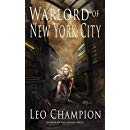 First, let me show you the book’s blurb:
In the twenty-second century, global civilization has moved into networks of arcology-skyscrapers that tower hundreds of stories above streets abandoned to anarchy. Inside the arkscrapers, a neo-Puritan cult of social justice rules absolutely; on the streets, feral gangs raid between feuding industrial tenements.
Diana Angela is a hereditary executive in the bureaucracy that runs the world, with a secret life as an assassin on the streets. A burned-out idealist, she’s long ago given up on trying to change the world – the best intentions of the past have only led to greater misery.
And she has no reason to think precinct boss Jeff Hammer’s intentions are even good. A former mercenary who may be a military genius, Hammer’s narrowly taken control of a small tenement. Now he’s facing vengeful exiles, aggressive neighbors, and uncertain internal politics.
Which might be the least of his problems now that he’s drawn the attention of one of the city’s most dangerous women…
And now, my comments.
Diana Angela, also known as DA, is a badass. There’s no question about it. She is tough, smart, strong, somewhat of a chameleon as her society requires it (she lives in the arkscrapers, and is a part of the Intendancy, an extremely corrupt yet also extremely politically correct society). She hates what she’s forced to do in her day job, and has worked all her life to do some good on the streets of New York City as an assassin.
(Yes, an assassin. And she’s damned good at it, too. But I’m digressing, and I shouldn’t.)
DA is a fully actualized woman. She cares about people and has compassion, but it comes out in very unusual ways. She also loves sex — why not? — and her society, with its beliefs that you have to do this (and “this” changes weekly, it seems) and you can’t do that (with “that” also changing weekly), makes it hard to enjoy it. (That you have to get permission for every sex act from the worst of the toadies she deals with — “Can I touch you here? Can I touch you here?” — drives her crazy. And it should.)
The fact that sex, itself, has become so far away from what it can be in taking you out of yourself for a moment and losing yourself in someone else is a huge symptom of what is wrong with the Intendancy.
Simply put, the Intendancy has got to go. But they have enormous power, and DA can only do so much topside in the arks.
She can do a great deal more on the streets, and she does. I do warn you, some of what she does is bloody and there’s a whole lot of violence. She kills people who “need killing,” and for the most part you’ll agree with her once you realize what these people have done — though in the moment, you may think, “Why be so happy about killing them?”
Diana is not a sociopath, though. She’s more of a frustrated idealist with a set of skills — judo, aikido, various other martial arts, swordsmanship, archery, guns — that allows her to live with the terrible things she has to put up with in the arks by balancing it with her vigilantism below.
But then, she realizes there’s a new player on the streets of NYC. A guy named Jeff Hammer (from Leo’s first book in the series, STREETS OF NEW YORK CITY) has overthrown the corrupt regime in his own tenement, and has started a new one. He’s an ex-flyboy (and flying, in his world, means using something akin to a bike with wings; I am not doing this concept any justice, and I apologize for that), he’s smart as a whip, and he knows things have been off for a very long time. And he’s going to do something about it…
DA goes to look in on Hammer, and can’t decide if he’s a criminal, a madman, or worse. That the last time someone like Hammer arose caused a bloodbath that DA, herself, was a part of, makes it even tougher for her.
So, will she decide to help Hammer? Or won’t she? And if she does, will NYC ever be the same?
Thus ends my plot summary, hoping I didn’t spoil it too much for you.
I still have one more comment, though: Leo’s book is damned good. Really, really good. It reminds me in some ways of Lois McMaster Bujold, even, though it’s far bloodier and DA’s overt sexuality is not something LMB would ever cotton to. I think the reason it does remind me of LMB, though, is because of the assuredness of the writing on the one hand and the capability of the female protagonist on the other. DA knows who she is, what she wants, and knows exactly how to get it…so don’t get in her way, as the only person she needs to fear is herself. (In that way, she reminds me a little of Cordelia Naismith Vorkosigan, or better yet of Elli Quinn or even Sergeant Taura. And if you don’t know who I’m talking about, go read every book LMB has ever put out, then come back, will you?)
In other words, you need to read this book, even if you’re normally squeamish regarding violence (as I am). It is funny. It skewers with manic glee many stereotypes regarding how “wonderful” a politically correct civilization would be if given its head. It has some interesting things to say about sex, power, and money. And the way DA is, herself, matters greatly…as does the way Jeff Hammer tries to change things for the better.
WARLORD OF NYC will make you think. And will make you root for DA, even when she’s at her most obnoxious…and wonder how on Earth she’s going to deal with Jeff Hammer when she can’t always see the forest for the trees.
It is, by far, the best thing Leo Champion has written yet. And he needs to be encouraged to write more in this vein. (Who knows what’ll happen next? I want to find out!)
Again, the Amazon link is here for WARLORD OF NEW YORK CITY. It is available on Kindle Unlimited. (Unfortunately, at this time, it’s not available at Barnes and Noble or anywhere else.) Or you can buy it outright for $3.99 (again, only at Amazon).
The Transformative Power of Writing
Writing is one of those activities that can transform you, if you let it.
How? Well, it’s simple. You have to throw enough of yourself into your writing to inform each character, at least enough so they’ll feel real. And in so doing, you can make more of your memories, or your abilities, or your hopes/dreams/fears, by working them out to their natural conclusions.
(Or, as I write a lot of fantasy and we all know it, their unnatural conclusions. But I digress.)
Giving yourself the permission to explore sides of yourself you’d rather not — such as when you write villains — helps you to harmlessly bleed off your worst impulses, and transforms that into something more. Something better.
Or at least something different.
Writing, as a transformative ability, is something writers almost take for granted. I can almost hear some of you going, “But Barb, really! Here we are, writing our stories, doing what we need to make our stories sing…why do we need to think about it as a transformative ability, anyway? What’s the point of that?”
Well, you don’t have to think of it as transformative, if you don’t like. But that doesn’t make it any less the case.
Every single thing we do as writers is intended to create something. Or transform something. Or inform something. Or maybe educate you, along with your enjoyment of same…no matter what book or story you might be reading (and no matter how awful it may be in the moment), there’s something you can take out of nearly every piece of writing. (Yes, even the dullest Puritanical “erotica” out there, that was Bowdlerized before Bowdler even came onto the scene.) Even if it’s just what you know you definitely don’t want to do, you learn something from everything you read — whether you realize it or not.
Some folks refuse to throw out anything they’ve ever read, no matter how boring or mundane or stupid or pointless. I’m not necessarily saying you need to go that far, because I think it’s more important you learn whatever it is from stuff you can’t stand as quickly as possible (thus keeping you from having to go back and read it ever again). But whether it’s mores, culture, language, description, dialogue, or all of the above, there’s something in just about everything to appreciate — even if you decidedly don’t like it.
ALTERNATIES, by Michael P. Kube-McDowell, is one such book. It’s well-drawn, the different alternate realities stark and compelling, and the characterization is professional. But the protagonists are, to a person, unlikable. There are some things done in this book, such as torturing of sex slaves, that turned my stomach so much that I would never read the book again even though it is very good.
What I took from reading this book at the time was, “Sex sells. And dysfunctional, sadistic sex sells even more.” But now, with the perspective of an author with three novels and any number of shorter works under my belt, I look at it a little differently. I think what Kube-McDowell was doing was masterful, in its way — but I don’t have to like it, and I don’t.
So, appreciate the craftsmanship, yes. Appreciate the time and effort and hard work, yes. (Respect the hustle, as Jason Cordova would say.) But don’t get lost in the depravity of it all, or the enervating sense of despair…because while that is in its way transformative, that isn’t at all what most people would like to be transformed into, if you get my drift.
And in your own work, look for ways to find hope, if you can. Even the worst situation may have one hint of hope; for example, all those French resistance folks trying hard during the occupation of France (Vichy France) in World War II had to deal with many stark and terrible realities. But they had hope nevertheless; they could believe their hard work would make a difference, no matter what it looked like, and no matter how long it took.
Ultimately, they were right.
So when you write a book with a lot of stuff that’s depressing or enervating or hopeless, try to find at least a few moments of comedy or light to balance it out. When you’re able to do that, that’s when a book really sings.
And if you’re writing something lighter (as I tend to do), finding moments of darkness to set off the light also works. (It’s all in the contrast, ultimately.)
So, how do you feel about the transformative power of writing? Tell me about it in the comments!
Monday Reading — Time for a New Book (or Four)
Folks, I have been remiss about letting you know about a few books that are out that I’ve either had something to do with, or that I have reviewed. I even managed to find cover photos this time. (Yay, me!)
So, without further ado:
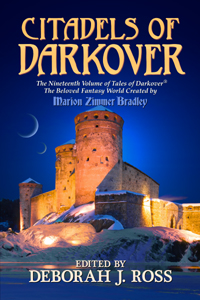 THE CITADELS OF DARKOVER is out in e-book and trade paperback. I have a short story in this called “Citadel of Fear,” and I hope you’ll enjoy it. I also was interviewed by the editor, Deborah J. Ross, at her blog; I did the interview in February (I think), and it went up in April. But I missed it at the time and only saw a link to it on Twitter a few days ago.
 I was one of two editors on Chris Nuttall’s newest novel, CURSED, which is out in e-book form now. CURSED is the seventeenth book in Chris’s long-running Schooled in Magic series, and I’ve been fortunate enough to edit all but two of those books. His heroine, Emily, is a young woman originally from Kansas who’s been transported to another world entirely (Chris calls it the Nameless World). But during a recent battle against a crazed monarch, Emily nearly died…and woke up without access to her hard-won magical powers. Now she must get them back, and has to cope with a host of unexpected challenges. (Further editor sayeth not.)
 Kayelle Allen has a new entry in her long-running Sempervians saga called BRO. It’s a fun story about two brothers who meet at an odd time; one (Senth) had no idea he had a brother, while the other (Khyff) has had the wrong idea about his long-missing brother for quite a few years. Neither is in an ideal situation, though both are making the best of things…will they manage to find common ground before it’s too late?
I was fortunate to edit Kayelle’s story, and know it’s excellent. It is also available via Kindle Unlimited, so if you have that, you should give it a try forthwith.
 Finally, I reviewed Jason Cordova’s newest novel, SONS OF THE LION, and as usual Amazon is playing silly buggers with the review. In case Amazon kicks it out (or just eats it), here it is:
SONS OF THE LION is a very well-written book filled with characters I adored and cheered for. The action works. The military ethos and care is profound. The distaste for child slavery and the uplifting of one exceptional child saved from the slavers into the merc company was perhaps my favorite thing overall.
So, you may be asking me, why didn’t I give it five stars if I liked it so much?
It’s the ending. I didn’t like that at all. And as I don’t want to spoil things, I will just say this: as an editor myself, I would’ve chosen a different route. I am unsure if the writer was boxed in by other issues in the Four Horseman Universe (I’ve read all the books to date, but the writer may be aware of things coming that I am not; surely the publisher, Chris Kennedy is). But I was very pleased with everything up to three chapters from the end.
Even with that — something that threw me out of the reader’s trance with great force — I thought this an exceptionally well-written book that did everything and then some that it was supposed to do. Military SF fans will love it. Four Horseman Universe fans will, too — that should go without saying — but anyone who loves military adventure (even if they don’t usually read SF) should appreciate it as well.
Four very solid stars. Recommended (despite its jarring and frustrating ending).
Barb Caffrey
I was happy to review SONS OF THE LION, though I had to tell the truth, the whole truth, and nothing but the truth about how I felt about that ending without revealing spoilers. That proved to be difficult.
But do I think you should read it anyway if you enjoy military adventure, military SF, or have read any of the other novels or anthologies in Chris Kennedy’s wildly popular Four Horsemen of the Apocalypse universe? Yes, I do.
Why? The writing is stellar. The characterization is great. And while I hated the ending — let’s get real here — everything until three chapters from the end was exactly what I wanted. (Am I going to make up alternate endings like some of the folks signing petitions asking for a different ending to Game of Thrones on TV? No. But would I like to if I had enough energy? Hmmm…have to ponder.)
So, there you have it. Some books to whet your interest that you may not have known about, and I hope at least one of them will be to your liking. Have at!
Asthmatic Thoughts
Folks, I’d intended to write two more blogs starting with “The Transformative Power of” rather than this, but here’s what I’ve got. Enjoy?
The last few days for me haven’t been that wonderful. I had an asthma attack that was bad enough to force me to go to the emergency room — something that hasn’t happened in years — and interrupted my rehearsal on Thursday night with the Racine Concert Band for the upcoming concert at Case High School on Tuesday, May 21.
At least, for me.
I hope I didn’t interrupt it for anyone else. But I had to leave. I couldn’t breathe well. And about fifteen minutes into rehearsal, I took four hits on my albuterol rescue inhaler — the max dose. But all that did was get me to the break without passing out. It didn’t allow me to regain my energy or breath well enough to continue playing my saxophone, and I only barely had the energy to concentrate on driving to the ER.
I’ve been asthmatic most of my life, but it wasn’t diagnosed until age 27. Most of the time, I’ve been able to do everything I want to do, including five K walk/runs (I used to power walk, when my back still allowed me to do such). With a little prudence, even on very hot and humid days, I can do what I need, providing I rest a great deal and be sure to have my rescue inhaler handy.
But that’s why this was so frustrating. I know what to do. And yet, I was running a bit late, was afraid I’d get into rehearsal late, and I didn’t want that. While I’d taken my rescue inhaler around five p.m. — meaning it should’ve still been able to help for the 7 p.m. rehearsal — I had just done the fastest walk I’m capable of from the parking lot, with my cane, sax, and big, heavy purse in tow. So that, right there, was probably all I had, breathing-wise…and that’s why, fifteen minutes in, I had to take four puffs of albuterol.
What also was difficult for me, then, was not realizing how bad off I was. My stand-partner, Vivian, who’s known me since I was 18, is the one who realized what was going on. She told me I should go seek medical attention, and get a breathing treatment; I told her that I wanted to stay at rehearsal, so I’d try to take the rescue inhaler instead.
And you already know what happened then.
When I got to the ER, they took me right back to a room. (The local hospital, Ascension-All Saints, takes shortness of breath in an asthmatic seriously, which I greatly appreciate.) Within a half an hour or so, I was given a breathing treatment on a nebulizer, and my mind started to clear. (That my oxygen saturation when I got there was approximately 85% did not help, though it did go back up after I sat for a few minutes.) They then gave me three tablets of prednisone, and while that made me very jumpy and jittery, it also allowed me to have enough energy to drive home a few hours later.
I didn’t call my parents, or my sister, until I knew what was going on and could talk without gasping. (My sister works very early in the morning, and I was in the ER until after midnight.) As my brother lives in another state entirely, I didn’t think to even tell him about this, either. But I wasn’t thinking too clearly at the time.
I did text a few friends who were expecting to hear about my rehearsal, and had been worried as they knew I didn’t feel that wonderful when I left on Thursday for rehearsal in the first place. I did that mostly because I knew they were waiting to hear from me. I always try to keep in contact when someone’s expecting to hear…anyway, fortunately for me, one of my best friends I’d texted lives in town. She came over to the ER, sat with me the last half-hour until they let me go, and drove behind me all the way home to make sure I’d get there all right.
This gave me great comfort.
I was told by the doctor to take it easy over the weekend. No practicing at all. No heavy shopping trips for my mother, if I could avoid it. (Light stuff was OK providing I took my time about doing it.) No editing, if I could avoid it. I could write, to tolerance, and I have — not just this blog either. (1000 words of fiction, yay!) And providing I do take it as easily as possible, he said I could play the dress rehearsal on Monday night, and the concert on Tuesday night — providing I take my rescue inhaler beforehand and after, and continue to take steroids for several days to aid my breathing overall.
I still have hope that I will play this concert. It isn’t going to be easy for me. I am not going into it with much strength, energy, or clarity of mind. But I can do it, and have promised I would…so I will find a way, if at all possible.
I was very scared by this episode. I used all the biofeedback techniques I have learned recently to stay as calm as possible on the road to the ER, and was able to “stay in the moment” to drive safely over there even feeling the way I did. (Why did I do this, you ask? They tow cars if you leave ’em at the practice site overnight. I can’t afford that!)
But I was fortunate. My stand-partner knew I was ill, which prompted me to take my rescue inhaler in the first place. She also urged me to go to the ER when I was still ailing after. And after that, I got good attention in the ER; my friends helped as much as they could from where they were; my family, while being miffed that I didn’t call or text or do anything to let them know in the moment, has been very understanding of how little I’ve been able to do over the last two days since that happened.
I promise you all, I will take my meds on time. I am not going to ever forget to take my rescue inhaler directly before practice again, either, even if I’m already fifteen minutes late…though I hope I won’t be late at all, so I can go in without feeling like I have to “haul ass” and thus have almost nothing to work with from the get-go.
All I can say, else, is that I survived this. And I’m glad, though I wish I hadn’t had to deal with it and had just been able to play as normal.
Anyway, I do hope to write the other blogs about “the transformational power of” later this week, if all goes well. And I would like to know what you think about this, the most personal of blogs I’ve written in a very, very long time…tell me about it in the comments, please. (You are reading, right?)
It’s All Grist for the Mill…
As a storyteller, no matter how halting I find the process to be sometimes, I’ve learned one thing and one thing only in this life:
It’s all grist for the mill.
What do I mean by this? Well, everything that happens, good and bad — but most especially the bad — can be used in a positive way toward illuminating your stories.
Why?
Well, think about it. When someone tells you off, how do you feel in that moment? What would you do differently, if you could? What would you do better? Or what, if the devil on your shoulder was in charge for a moment — for story purposes only, of course! — would you do worse, to get a bit of your own back?
See, we’ve all been there.
We’ve all had someone tell us off. We’ve all had someone treat us terribly, for no reason, without warning.
And we’ve all been unable to do what we wanted in those moments, for good or ill…and the virtue of storytelling is, you get to figure out what you might’ve done, and how it might’ve been, without hurting yourself or anyone else. (While making it fun to read, too, if you do it right. Otherwise, why bother?)
Mind, the good things are also grist for the mill.
We’ve all had wonderful, amazing, spine-tingling things happen. Maybe they’re split-second things, like seeing a double-rainbow (or better yet, the Northern Lights — I hope to see that someday). Or they’re the most astonishing things ever known to man, like climbing Mount Everest…or, closer to home, finding someone who loves you, warts and all, and cares only about you and nothing but you — not your bank account, not your health or lack thereof, not your putative beauty or lack thereof either, but YOU.
These things all illuminate your stories. They make them deeper. Richer. More intense. More believable. More relatable. And more interesting by far.
So, the next time you have a bad day, try to remember this: it’s all grist for the mill. It may help. And even if it doesn’t, you can tell yourself in your best Evil Writer (TM) voice, “Hey, I’m going to remember this person, and– (insert worst possible thing you’d do to him/her here)” and that may get you to laugh.
What’s grist for your mill? Tell me about it in the comments!
 Barb Caffrey's Blog