Archive for the ‘Writing’ Category
Dog Days of Summer…
Why do they call it the “dog days of summer,” anyway?
I mean, not everyone has dogs. And those who do mostly worry about how well their dogs will do in the heat.
But perhaps that’s why…the heat is notoriously bad for most dogs, and it’s also notoriously bad for humans with asthma (raise your hands in solidarity, people), or heart issues, or those with any long-term illnesses whatsoever.
Dogs, mind you, are very cute, heat or no heat. They always let you know they love you. They want to be petted and coddled. And they certainly love their food, as unlike most humans in the heat, dogs do not care when it comes to their dinner. (Wink.)
Anyway, if you live in much of the United States this week, you know the heat is dreadful, and the humidity is worse. But if you live in Southeastern Wisconsin, you may be pardoned if you think this weather is closer to the tropical rain forests of Brazil, or maybe Malaysia, than Wisconsin.
Why? Well, our heat index is very high at the moment. That’s because the humidity is exceptionally high for this area, and it adds to the misery of high temperatures something fierce. (They may as well call it “heat misery index,” as that would be truth in advertising. But I digress.)
All we can do is wait this bad weather out. Pay attention to it, of course. Pay attention to your animals, too, and make sure they always have cool water.
And if you’re asthmatic, make sure you know where your rescue inhaler is at all times.
But for all of you dealing with the high heat/humidity mix right now, just remember this: be good to yourselves. Don’t expect miracles, as the heat scatters thought and makes it harder to follow through, physically, on any number of things.
That said, you can still do things, even in this horrible heat, if you are careful and plan well and take breaks. So do be careful, do plan well, and do take many breaks…and stay as cool as possible, OK?
How do you stay cool in the high heat? Tell me about it in the comments!
Risk-taking and Concerts
A few hours ago, I finished a concert with the Racine Concert Band. I played a solo on clarinet in front of about three hundred people at the Racine Zoo; they weren’t there to see me, because we had vaudevillian Pinkerton Xyloma there and he’s always extremely popular. (He’s a man of many talents, is Pinkerton Xyloma. But I digress.)
Anyway, the piece I played was the “Pie in the Face Polka,” by Henry Mancini. It has a lot of runs, arpeggios, and is meant to be bouncy, a little jazzy (in an old-timey way), and fun.
Now, why was this a risk, as if you’ve read my blog for a long time, you know I play clarinet as well as alto saxophone? Simple. I haven’t had as much time for my clarinet in the last few years as I’d like. I’m not playing steadily in any groups on clarinet. And my health has not been what I’d like it to be, so that means I have had to concentrate on what is in front of me — the groups I’m already playing in, on saxophone, mostly — rather than other things I’d like to do in addition (that is, playing my clarinet much more often).
Even so, I’d asked to play a clarinet solo for three years running. This year, I got one. I learned it in a couple of weeks.
And then we had our rehearsal — as we have one rehearsal for each summer concert — and I thought I played terribly. At best, I got seventy-five percent of it, but between playing sax for most of the rehearsal (as I also did on the concert) and being tired to start with, I knew that was the best I could do at the time.
Of course, I practiced even harder in the intervening three days. And I felt much more confident with it tonight, even though I still made mistakes and played at about ninety percent of my own personal capacity.
In other words, I didn’t embarrass myself. And while it’s not the best I’ve ever played, it’s possibly the best I’ve played in two or three years on clarinet.
I’m very glad I had the opportunity to play the “Pie in the Face Polka.” But it was a risk. And not just because of the information I’ve already given you.
See, I was recovering from some sort of upper respiratory infection (again). My back went out (again). And during the previous Sunday night concert, I’d managed to turn my right ankle — meaning I was walking with a notable limp (and very slowly, besides).
Not to mention, it was also my late husband Michael’s birthday. (Yes, he was born on Bastille Day.) He wouldn’t have celebrated it, but he’d have turned sixty-one, had he lived. And of course I knew that…so I wanted to play the best I possibly could in honor of him, wherever he is in the cosmos. (As matter can’t be created or destroyed, I firmly believe at least a little of Michael continues to exist outside of me, somewhere and somehow.)
You see, Michael always enjoyed hearing me practice my instruments. (Any and all.) He also read any of my music compositions, as he could read all clefs, and he could talk intelligently about music. I knew if he’d have been here, he’d not have BSed me in any way, but he’d still have enjoyed himself — the ten percent I didn’t get, he’d have said was due to the vagaries of performance and art…and that who wants to hear a perfect concert, anyway? (It’s the imperfections that make it interesting, he always said.)
So, despite all the obstacles, I got it done. That’s the important thing.
And the audience seemed to enjoy it, too…even though I still think they were there for Pinkerton Xyloma! (Wink.)
Dealing with the Internet Age
Folks, I have been thinking hard about a story I’m trying to write — and am stalled at doing, of course — so all sorts of other things have come into my mind.
For example, in the 1930s during the Great Depression, comedies — the wilder, the better — were all in vogue. Yet now, in 2019, after what some call the Great Recession of 2008 (that hasn’t fully recovered in some areas, at least not to pre-Recession levels), what’s in vogue? Depressing stories — such as The Walking Dead. Or George R.R. Martin’s “A Song of Ice and Fire” epic (AKA HBO’s Game of Thrones).
That doesn’t mean comedies can’t still find their way, mind you. But the comedies that have succeeded, such as Bridesmaids or the various instances of The Hangover (last I knew, it was up to part three), all have a darker edge to them than the ones did in the 1930s.
I hate to think that the 1930s were a simpler time, because that can’t be true. They’d endured what was then called the Great War — what we call World War I — and so many men died there, at least half a generation of men were wiped out. (Note that I say “men” because very few women fought in those days, and even those serving in hospitals and as ambulance drivers tended to be as far away from the fighting as humanly possible. Not that this was all that much all the time, of course — but it was the principle of the thing.)
But the 1930s didn’t have today’s instantaneous communication, either. While they certainly had telephones, and they had telegraphs as well (kids, think about text messaging, and then think about it going over telephone-type wires…while this is imprecise, that’s more or less what telegraphy was meant to be), they lacked 24/7 news coverage. Or the ability to wake up and know what was going on, say, in Bangladesh, even if you were asking from your living room in San Francisco, California.
I’ve read a few stories recently that make me wonder if the world at large knowing so many things at such a shallow level is actually good. Many people, just run-of-the-mill folks, feel either isolated or inundated, and don’t know what to do with themselves.
Moderation is meaningless unless it’s taught. And no one’s taught anyone online how to be moderate whatsoever.
Thus Tweetstorms. Thus random comments from 2013 (or whatever) coming back to bite people…
And that’s why some folks think it’s OK to gang up on others online, because there’s this ideal out there that you’re supposed to be perfect 24/7. And if you can’t be the pattern card of propriety (as the Regency Era would put it), you aren’t worth anything at all.
This era of ours, the Internet Age, sometimes lacks humanity. It also lacks soul. And the reason for both of these problems is very simple: there are too many people who seem to have forgotten to show compassion, or maybe to even feel it.
I don’t know what the answers are to fix these dilemmas. But I do know what you can do to try to moderate yourself as best you can amidst the screaming and the shouting and the horrors often seen.
(Make no mistake, there are plenty of horrors out there. And they should be dealt with. But dwelling on them all the time does not do any good. Back to the post.)
My simple, five-point strategy is this:
- Read widely, but take breaks. This means you should question yourself and your assumptions, but you also should take a day off here and there from all of this questioning and assume the world is going to keep spinning.
- Practice compassion toward others, even when it’s hard. Try to find someone else’s point of view if at all possible, and if you can’t, ask the other person — the one you don’t understand — to explain himself/herself/themself.
- Remember that every day is a new day. And that you do not have to carry yesterday’s mistakes with you forever.
- Do what you can to help, or at least not hinder.
- And finally, try to find fun amidst all the meaning in your life. Because life is very short, and sometimes the end sneaks up on you in a big hurry.
If you can do all these things, you will be able to shut out some of the yelling, the screaming, the argumentation for the sake of argumentation…and thus be able to live a better and more fulfilling life.
What do you do to find balance in your life during the Internet Age? Tell me about it in the comments!
“Writing After Widowhood” Essay Is Up…
Folks, author and editor Deborah J. Ross asked me, a while back, if I’d be willing to write an essay for her about the differences between writing before my husband Michael died, and after. I called this essay “Writing After Widowhood,” and it is up now at her blog. Here are a few excerpts, though I do hope you’ll go over there and read it…then let people know, far and wide, about it.
(In particular, if you can leave a comment at her blog, do. I am all thumbs today, and can’t seem to get Blogger to accept my profile for love or money, meaning I can’t even comment over there. This is very frustrating. So if you can do it instead, that would be great.)
Here’s a bit of what I remember about writing before widowhood, mind:
Anyway, when Michael was alive, we wrote some short stories together despite having very different writing styles. We could do this because we’d heard Eric Flint, in 2002, discuss how he collaborated with other authors. It was all about communication, Flint said, “Also, if you could check your ego at the door, that would help immensely.”
That wasn’t all Michael did, mind you. He edited for me, as I edited for him. He and I talked about our stories for many hours a day, every day of the week, a great gift…and he made sure to do all the things a good husband does for his wife without prompting—and without fanfare.
My quote there is my best remembrance from 2002. That comment from Eric Flint was made at a gathering of Baen Barflies (or Barfly gathering) in July of 2002 in Chicago to the best of my recollection. It was only a few, short weeks after our marriage, and it made a huge impression on me.
I discuss Michael’s passing (which you should go over there and read about), its effects on me, why I decided to keep going with his stories as best I could and get at least a few of them out there, and a bit about how frustrating it was to write for a few years after Michael died.
Then I got into the nitty gritty about what it’s like to write now:
But as I started writing again, I realized something. I am a verbal processor. I need to talk my stories out with someone who wants to hear about it. And since Michael died, I really haven’t had that. Though I do have some very good friends who will let me bend their ears on occasion, they are working writers. They are doing more in the field than I am currently, and I don’t want to be a millstone around their necks.
(And yes, I listen to them. Of course I do. But that’s not the point.)
With Michael, I knew if I made mistakes, he’d fix them. Or he’d show me where I’d made mistakes, and I’d fix them myself. I had more confidence in going to write on a day I had little energy (as I have battled lifelong health issues), because if I screwed up on a name or made an unnecessary tense-shift, he’d catch it. So I could relax and create.
Those were the good old days.
And I discuss what I try to do now to get around what I call “Life, Interrupted.” I write prose notes on days I can’t do anything else. I think a lot about my stories (I didn’t say this at Deborah’s blog, but I hope it’s implied in subtext). And I do my best to keep my husband Michael uppermost in my mind on the worst of days, because he believed in me — and dammit, if he could believe in me, so can I.
I do hope you will read the rest of the essay. It’s about 1400 words long, so I only excerpted a little bit of it here to whet your whistle.
For other widows and widowers out there, or those touched by tragedy in other ways who are struggling, know that your life can continue. It is frustrating, difficult, sometimes exasperating, but you can keep creating if you make the effort. It won’t be the same — it can’t be the same — but you don’t have to lose all of yourself when your spouse dies.
It took me a while to learn this. But now that I have, my hope is that I can help others along the way.
Book Recommendation: Leo Champion’s “Warlord of NYC”
Folks, I’ve been meaning to write this blog for several weeks. I knew about Leo Champion’s book WARLORD OF NEW YORK CITY for quite some time, mostly because I was one of his beta-readers and proofread the final version. But the time never seemed right to talk about Leo’s book.
Now, the time is right. The word is given. (Abandon all hope, ye who enter here? /snark)
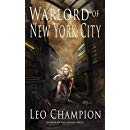 First, let me show you the book’s blurb:
In the twenty-second century, global civilization has moved into networks of arcology-skyscrapers that tower hundreds of stories above streets abandoned to anarchy. Inside the arkscrapers, a neo-Puritan cult of social justice rules absolutely; on the streets, feral gangs raid between feuding industrial tenements.
Diana Angela is a hereditary executive in the bureaucracy that runs the world, with a secret life as an assassin on the streets. A burned-out idealist, she’s long ago given up on trying to change the world – the best intentions of the past have only led to greater misery.
And she has no reason to think precinct boss Jeff Hammer’s intentions are even good. A former mercenary who may be a military genius, Hammer’s narrowly taken control of a small tenement. Now he’s facing vengeful exiles, aggressive neighbors, and uncertain internal politics.
Which might be the least of his problems now that he’s drawn the attention of one of the city’s most dangerous women…
And now, my comments.
Diana Angela, also known as DA, is a badass. There’s no question about it. She is tough, smart, strong, somewhat of a chameleon as her society requires it (she lives in the arkscrapers, and is a part of the Intendancy, an extremely corrupt yet also extremely politically correct society). She hates what she’s forced to do in her day job, and has worked all her life to do some good on the streets of New York City as an assassin.
(Yes, an assassin. And she’s damned good at it, too. But I’m digressing, and I shouldn’t.)
DA is a fully actualized woman. She cares about people and has compassion, but it comes out in very unusual ways. She also loves sex — why not? — and her society, with its beliefs that you have to do this (and “this” changes weekly, it seems) and you can’t do that (with “that” also changing weekly), makes it hard to enjoy it. (That you have to get permission for every sex act from the worst of the toadies she deals with — “Can I touch you here? Can I touch you here?” — drives her crazy. And it should.)
The fact that sex, itself, has become so far away from what it can be in taking you out of yourself for a moment and losing yourself in someone else is a huge symptom of what is wrong with the Intendancy.
Simply put, the Intendancy has got to go. But they have enormous power, and DA can only do so much topside in the arks.
She can do a great deal more on the streets, and she does. I do warn you, some of what she does is bloody and there’s a whole lot of violence. She kills people who “need killing,” and for the most part you’ll agree with her once you realize what these people have done — though in the moment, you may think, “Why be so happy about killing them?”
Diana is not a sociopath, though. She’s more of a frustrated idealist with a set of skills — judo, aikido, various other martial arts, swordsmanship, archery, guns — that allows her to live with the terrible things she has to put up with in the arks by balancing it with her vigilantism below.
But then, she realizes there’s a new player on the streets of NYC. A guy named Jeff Hammer (from Leo’s first book in the series, STREETS OF NEW YORK CITY) has overthrown the corrupt regime in his own tenement, and has started a new one. He’s an ex-flyboy (and flying, in his world, means using something akin to a bike with wings; I am not doing this concept any justice, and I apologize for that), he’s smart as a whip, and he knows things have been off for a very long time. And he’s going to do something about it…
DA goes to look in on Hammer, and can’t decide if he’s a criminal, a madman, or worse. That the last time someone like Hammer arose caused a bloodbath that DA, herself, was a part of, makes it even tougher for her.
So, will she decide to help Hammer? Or won’t she? And if she does, will NYC ever be the same?
Thus ends my plot summary, hoping I didn’t spoil it too much for you.
I still have one more comment, though: Leo’s book is damned good. Really, really good. It reminds me in some ways of Lois McMaster Bujold, even, though it’s far bloodier and DA’s overt sexuality is not something LMB would ever cotton to. I think the reason it does remind me of LMB, though, is because of the assuredness of the writing on the one hand and the capability of the female protagonist on the other. DA knows who she is, what she wants, and knows exactly how to get it…so don’t get in her way, as the only person she needs to fear is herself. (In that way, she reminds me a little of Cordelia Naismith Vorkosigan, or better yet of Elli Quinn or even Sergeant Taura. And if you don’t know who I’m talking about, go read every book LMB has ever put out, then come back, will you?)
In other words, you need to read this book, even if you’re normally squeamish regarding violence (as I am). It is funny. It skewers with manic glee many stereotypes regarding how “wonderful” a politically correct civilization would be if given its head. It has some interesting things to say about sex, power, and money. And the way DA is, herself, matters greatly…as does the way Jeff Hammer tries to change things for the better.
WARLORD OF NYC will make you think. And will make you root for DA, even when she’s at her most obnoxious…and wonder how on Earth she’s going to deal with Jeff Hammer when she can’t always see the forest for the trees.
It is, by far, the best thing Leo Champion has written yet. And he needs to be encouraged to write more in this vein. (Who knows what’ll happen next? I want to find out!)
Again, the Amazon link is here for WARLORD OF NEW YORK CITY. It is available on Kindle Unlimited. (Unfortunately, at this time, it’s not available at Barnes and Noble or anywhere else.) Or you can buy it outright for $3.99 (again, only at Amazon).
The Transformative Power of Writing
Writing is one of those activities that can transform you, if you let it.
How? Well, it’s simple. You have to throw enough of yourself into your writing to inform each character, at least enough so they’ll feel real. And in so doing, you can make more of your memories, or your abilities, or your hopes/dreams/fears, by working them out to their natural conclusions.
(Or, as I write a lot of fantasy and we all know it, their unnatural conclusions. But I digress.)
Giving yourself the permission to explore sides of yourself you’d rather not — such as when you write villains — helps you to harmlessly bleed off your worst impulses, and transforms that into something more. Something better.
Or at least something different.
Writing, as a transformative ability, is something writers almost take for granted. I can almost hear some of you going, “But Barb, really! Here we are, writing our stories, doing what we need to make our stories sing…why do we need to think about it as a transformative ability, anyway? What’s the point of that?”
Well, you don’t have to think of it as transformative, if you don’t like. But that doesn’t make it any less the case.
Every single thing we do as writers is intended to create something. Or transform something. Or inform something. Or maybe educate you, along with your enjoyment of same…no matter what book or story you might be reading (and no matter how awful it may be in the moment), there’s something you can take out of nearly every piece of writing. (Yes, even the dullest Puritanical “erotica” out there, that was Bowdlerized before Bowdler even came onto the scene.) Even if it’s just what you know you definitely don’t want to do, you learn something from everything you read — whether you realize it or not.
Some folks refuse to throw out anything they’ve ever read, no matter how boring or mundane or stupid or pointless. I’m not necessarily saying you need to go that far, because I think it’s more important you learn whatever it is from stuff you can’t stand as quickly as possible (thus keeping you from having to go back and read it ever again). But whether it’s mores, culture, language, description, dialogue, or all of the above, there’s something in just about everything to appreciate — even if you decidedly don’t like it.
ALTERNATIES, by Michael P. Kube-McDowell, is one such book. It’s well-drawn, the different alternate realities stark and compelling, and the characterization is professional. But the protagonists are, to a person, unlikable. There are some things done in this book, such as torturing of sex slaves, that turned my stomach so much that I would never read the book again even though it is very good.
What I took from reading this book at the time was, “Sex sells. And dysfunctional, sadistic sex sells even more.” But now, with the perspective of an author with three novels and any number of shorter works under my belt, I look at it a little differently. I think what Kube-McDowell was doing was masterful, in its way — but I don’t have to like it, and I don’t.
So, appreciate the craftsmanship, yes. Appreciate the time and effort and hard work, yes. (Respect the hustle, as Jason Cordova would say.) But don’t get lost in the depravity of it all, or the enervating sense of despair…because while that is in its way transformative, that isn’t at all what most people would like to be transformed into, if you get my drift.
And in your own work, look for ways to find hope, if you can. Even the worst situation may have one hint of hope; for example, all those French resistance folks trying hard during the occupation of France (Vichy France) in World War II had to deal with many stark and terrible realities. But they had hope nevertheless; they could believe their hard work would make a difference, no matter what it looked like, and no matter how long it took.
Ultimately, they were right.
So when you write a book with a lot of stuff that’s depressing or enervating or hopeless, try to find at least a few moments of comedy or light to balance it out. When you’re able to do that, that’s when a book really sings.
And if you’re writing something lighter (as I tend to do), finding moments of darkness to set off the light also works. (It’s all in the contrast, ultimately.)
So, how do you feel about the transformative power of writing? Tell me about it in the comments!
Narrative Framing, the Milwaukee Bucks, and You
Folks, over the past week or so as I’ve battled an illness, I’ve been thinking about how we shape our own narratives. (Again, as this is one of my besetting sins as a novelist.) And that led me to ponder the Milwaukee Bucks, which have had one of the best years in their team’s history and have made it all the way to the Eastern Conference Finals…which you’d think would be good enough for anyone.
But as the Bucks were expected throughout to go to the NBA Finals, people have been up in arms (including yours truly) when they lost game 5 to the Toronto Raptors at home to put them down three games to two. They now face elimination in game 6.
The thing is, if you think about it, just getting to the Eastern Conference Finals is wonderful. The Bucks were “one and done” last year. And, I believe, the year before that.
But this year, they swept their initial playoff series, against the Detroit Pistons. And then they won easily over the Boston Celtics in the second round.
This, mainly, along with a stellar regular season, is why Bucks fans have taken a doom-and-gloom attitude.
And that led me to consider how else we tend to frame our own narrative in our lives. Do we think of the bright side? (Should we is another question, but that’s for another day.) Or do we think of what’s not working rather than what is, and concentrate on our failings rather than our successes?
I don’t know about you, but I tend to think about the failures, myself. I think about how I could’ve done this, that, or the other better. Sometimes, in the moment, it’s almost like I see myself from above and wonder, “Why can’t I do better than this? Why is it that I can barely explain myself? Why is it that I can’t make better decisions? Why do I run out of time?” and so on.
I wonder if that’s where the Bucks are at, right now. But I strongly suspect, as their season is not over, that they aren’t.
Are they happy to be down 3-2 and facing elimination? Of course not. (Who would be?)
But they have things they can still do. And I believe they’re most likely concentrating on them, and how they need to just do a few more things to get a win (in sports parlance, a W)…they may even be focusing on past success against the Raptors, and be looking at what they’ve done differently (and worse) in this series that hasn’t been working.
Forward, they are probably looking. Not back.
Now, does this make any difference in what happens in Game 6? You better believe it does. They can go in there and do their level best, knowing their season will be over if they don’t give it everything they possibly have.
And of course they could still lose. But if they do, they’ll know — providing they gave it their all, and tried their best, and focused their minds and bodies properly — it wasn’t their time to shine after all.
That can be a bitter lesson, sometimes. Because we try our best, and we want to shine all the time.
But no one — not Michael Jordan, not LeBron James, not Wilt Chamberlain, not George Mikan, nor any other basketball superstar over the years — has ever shined all the time. Because it’s not humanly possible.
So, let’s take a step back, and frame this differently, OK?
The fact is, the Bucks’ Giannis Antetokounmpo is a great player. He may well win the NBA Most Valuable Player award this year, and if so, it’ll be richly deserved. And he’s led the Bucks to an excellent season.
These pluses are not negated, nor should they be, if the Raptors do succeed in beating the Bucks.**
How does that relate to your own, personal situation, though?
In essence, you need to learn how to frame your own narrative. Stop beating yourself up because you can’t seem to get ahead no matter how hard you try. Think about your successes once in a while, rather than always and only your failures. And do what you can to remember that you are a vital person with a role to play whether it seems like it or not.
That’s how you can learn from the doom and gloom over the Milwaukee Bucks and their current situation.
What do you think about this blog? Tell me about it in the comments!
———-
**As a fan, I will admit that if the Bucks can’t win game 6 and force a game 7, for a few days I will go around with a bad taste in my mouth. (That comes with the territory.)
The Transformative Power of Music
Folks, this is the first in a three-part series. All will start with “The Transformative Power of…”, so you have been warned if this isn’t your thing. (Though why it wouldn’t be, I haven’t any idea whatsoever.)
Music can transform your life, if you let it.
What do I mean by this? (I can practically hear a few of you thinking, “Barb, you have gone off your rocker with this one. What gives?”) It’s simple: music can actually heal you. Or at least improve your mood while giving shape to your feelings, which is nearly as good.
Who hasn’t felt better after singing in the shower? Who hasn’t felt better after singing along to their favorite songs in the car?
For me, playing music takes that feeling and amps it up to eleven. (H/t if you got the Spinal Tap reference, there.) And being able to play music in a group, whether it’s a concert band, a jazz band, a small group, or just by myself, is one of the best feelings there is when it’s going right.
But as this post is titled “the transformative power of music,” I suppose I should get down to brass tacks.
After my husband Michael died in 2004, I didn’t want to do anything. My grief was so profound, it took me at least five years to process, and another few after that to realize I still had a life to live — and what was I going to do about it? All that time, my health worsened, my hands especially, and when I decided I wanted to play my instruments again (sax, clarinet, and oboe), I was barely able to do it due to my hands aching so much.
And it wasn’t just trying to play my instruments that made me frustrated. I was to the point with my hands that driving in the car was painful. I could only use one hand a few minutes at a time, and then switch off to the other. It was just that bad.
Fortunately, I went through a few rounds of occupational therapy, which helped a great deal. The pain lessened, I gained range of motion again, and I learned how to properly stretch the areas. And ever since, when my hands have started approaching that state again, I’ve asked for — and received — another date with the occupational therapist, and gone through more therapy as required.
Mind, I’d have never gone through with any of that if I hadn’t wanted to play my instruments again. But I did. And that allowed me to make a positive decision in the depths of my grief to do something positive, meaningful, and healthy.
Anyway, in September of 2011, I asked to play in the UW-Parkside Community Band again. (I’d been a member before I left the area for graduate school, back in the day.) One of my professors from Parkside, Mark Eichner, was still conducting it, and he told me when rehearsals were for the December concert. So I rejoined it in late October, played the next concert, and voila! I was a performing musician again.
(For the record, my first concert back was on alto sax, and I played a lengthy solo on a piece called “Roma.”)
Soon after, I rejoined the Racine Concert Band in 2012, again on alto sax. (I’d been a member of this in high school and again in college, and only stopped when I moved away to attend graduate school in Nebraska.) Ever since, I’ve played many concerts with them. Most have been on alto, but a few have been on clarinet.
And last week, on Saturday, I played clarinet — first chair, de facto concert master/mistress — with the UW-Parkside 50th anniversary alumni band. That was an exceptionally challenging concert, as we had only one rehearsal beforehand and the parts were very tough. But I was there early, practiced my parts, and was as prepared as I could be.
It paid off. The concert went well. And I had a few folks come up to me afterward, praising what I did (nice, when you can get it), along with asking why I wear a neckstrap to play the clarinet as few clarinetists do. (It helps keep the weight off my hands, and allows me to play for a longer period of time with a whole lot less pain.)
Why am I going into all this detail? Mostly to explain what playing music has done for me. It has given me my confidence back. It has reminded me I can still do something, something positive, something very few other people can do. It has rewarded my perseverance and search for excellence…it has allowed me to give the gift of music to others in performance, also.
All in all, music has transformed my life.
You don’t have to be a musician to allow music to transform yours, though. Just listen to whatever you want. If you are hurting, let the pain out. If you are healing, allow yourself to feel safe and comforted. And if you just want to hear music for the sake of music, good for you: that’s the best listening experience of all.
What do you think of this blog? Tell me about it in the comments!
Computer Woes: Stuff I Learned While The Computer Was Down
As the title says…here we go.
- I am very impatient. Waiting to get my computer fixed seemed like forever, rather than nearly eight days.
- I was more stuck in ruts than I’d previously thought.
- Trying to type on a phone — even on a smartphone — is much harder than I’d thought, and it’s not just because of my quasi-carpal tunnel syndrome.
- Following from #3, I figured out I owed a friend an apology from a while back. He and I got into it because I was being very chatty, and on a good day — and with a good computer, complete with a proper keyboard and my hands cooperating, I can type nearly 80 words per minute. He could not follow me on his phone, and said so. (He later admitted he wasn’t particularly nice about it and did apologize.) At the time, I didn’t understand this…but boy, do I ever, now.
- Following from #4…yes, I did apologize. Because it’s better to apologize late than never. And it’s a lot better to know, in and of yourself, that you tried to do the right thing, albeit late, and albeit when the other person may not even care anymore…because it was important once, and I muffed it. It’s a statement that I won’t do it wrong–at least not intentionally, anyway–again. (Of course, that leaves all the other stuff that I haven’t run across yet as potential things to do wrong. But I could do ’em right, too…moving on.)
- Tablets are damned hard to use.
- I don’t enjoy texting. Not on a flip phone, not on a smart phone, not at all. (“I do not like this, Sam I am.” — Dr. Seuss.)
- That said, texting my best friends when the computer is down beats staying out of contact all to Hell.
- And using a tablet is better than using a phone of any sort to stay in contact.
- Sometimes, life doesn’t go as planned, at all. And while I’ve known that for a damned long time, it bears repeating. (Like a clue-by-four upside the head.)
- I have a hard time reframing a bad situation, something I truly can’t stand, into anything remotely resembling a good one. I did try. I told myself over and over that I had more time to read. (I read all sorts of stuff, too. Found a couple of good new authors — new to me, anyway. One of ’em is Kate Stradling. Really am enjoying her work.) I told myself, over and over again, that I was still thinking about my stories — which I was — and that there have been times I’ve not been able to write for seven or eight days before, and I didn’t panic, so what’s the big deal?
Enter panic. (Ding, ding, ding!)- Getting my computer back was useful. I’m still not back up to speed. But I have friends to help. And I’m grateful for that.
- I have to believe, despite it all, that there are better days ahead. We all have trials and tribulations. That this affected my livelihood for a week-plus in addition to my communication and my mode of living wasn’t good. (To put it mildly, but I digress.) But several of my friends made a point of calling or texting daily. They were concerned. And they made absolutely sure I knew they were concerned. (Bless them forever for this.)
- My family was also very good through this crisis. (It wasn’t just this I was dealing with. This is just what I’m willing to talk about. Further writer sayeth not.)
- “Sufficient unto the day are the needs thereof.” (Intentional Biblical misquote by my husband, Michael.) I have to meditate more on this one, I guess.
- Buddhists point out that you don’t have to enjoy your circumstances. You just have to accept them.
- But yes, when you get an ounce of joy, wring it out to the fullest! (I intend to do so, just as soon as I get some sleep. I’m going to write, and edit, and write some more…)
What do you think of this stream-of-consciousness blog? And what have you, yourself, learned when you have not been able to be online for a significant amount of time due to a computer failure, power outage, or any other reason? Tell me about it in the comments!
 Barb Caffrey's Blog